


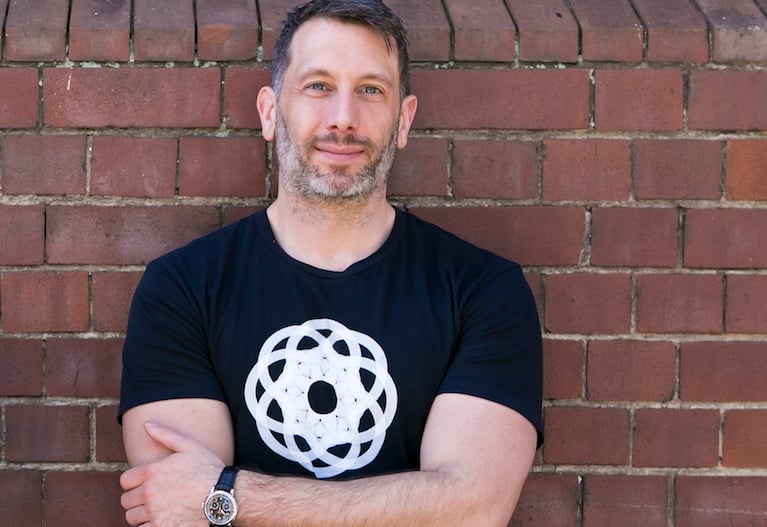
Sydney-based quantum tech startup Q-CTRL has landed a deal with the Department of Defence to develop quantum sensors for navigation without GPS.
Quantum-assured navigation is useful for craft that operate in locations where GPS doesn’t work – like underwater and deep space – or in wartime contexts where GPS can be disrupted.
“From day one we knew that our specialised expertise in quantum control could unlock totally new applications of quantum technology,” said Q-CTRL CEO and founder Professor Michael Biercuk.
“We’ve shown we can boost the performance of quantum computers and quantum sensors by orders of magnitude entirely through software.
“Now we’re pleased to be applying these capabilities to a critical defence mission for Australia.”
A 2017 report from London Economics estimated that an outage of global navigation satellites would cost the UK £1 billion a day as it disrupted road and maritime goods transportation and emergency services to a grinding halt.
To mitigate the potential risks of over-reliance on GPS, the British Royal Navy, in conjunction with the Imperial College, recently tested a quantum sensing-based navigation prototype aboard a research ship. Essentially, that device is an extremely precise accelerometer.
An object’s location can be calculated by using its starting point, rotation, and change in velocity over time (acceleration). Accelerometers measure an object’s acceleration and have been used in inertial navigation systems for years – equipped on missiles, submarines, aircraft, and spacecraft to help know where they are.
The problem is, conventional sensors have a tendency to produce errors. When small errors are baked into successive calculations they compound, creating a need to supplement inertial systems with other forms of navigational guidance.
Quantum sensing navigation is so sensitive that it severely reduces this drift meaning it should provide accurate readings for longer, reducing the need for external intervention and signals.
It works via cold-atom interferometry, a technique that involves cooling atoms down to a temperature where their quantum effects come into play. Then the device pings precise, finely controlled lasers against that cloud of ultracold atoms and measures differences in movement.
Scientists have famously been using interferometry at a much larger scale to detect waves rippling through spacetime caused by unreal intergalactic events like black holes colliding.
Recent research from Q-CTRL sought to validate its techniques for suppressing errors in cold-atom interferometry techniques with a view of bringing the cutting edge technology out of the lab and into real-world environments.
Professor Emily Hilder, interim head of Defence’s advanced strategic capabilities accelerator, said this kind of partnership demonstrates the department’s “capacity to translate innovative concepts into capability”.
“Defence recognises that quantum sensing has the potential to fundamentally transform Defence capability,” she said.
Q-CTRL has signed a three-year research and development contract with Defence worth $1 million.
Earlier this year, it raised $39 million as part of an extended funding round with a view of expanding headcount by 50 per cent.
Read the full article here


