After a long, hard day of pillaging with axes and swords, Vikings likely celebrated their victories with a feast that included a roasted pig or ox and goblets overflowing with ale. In movies and books about the ancient seafaring conquerors, they don’t pause from their revelry to remove gristle from their teeth with toothpicks. But in real life, they did, according to a new study.
And toothpicks are just one way they cared for their smiles.
The study, published in the journal Plos One, describes what scientists found when they analyzed human teeth from about 800 to 1,000 years ago to gain a better sense of everyday oral health and habits in one community of Swedish Vikings. The researchers describe the sort of bleak dental picture common to medieval Europe—frequent tooth decay, plaque, infections and tooth loss. In the Viking population studied, 49% had one or more cavities, due largely to a high intake of starchy foods combined with a lack of dental care. Adults lost an average of 6% of their teeth, excluding wisdom teeth, over the course of their lifetimes.
But on the surface of the excavated teeth, close to the root, the researchers also found signs of abrasion like that caused by toothpicks, an indication Vikings made deliberate attempts to tend to their pearly whites. And the scientists spotted molars with holes from the crown into the pulp, likely dug to relieve pressure and alleviate excruciating toothaches due to infections that would have resulted in pus-filled abscesses.
“This is very exciting to see, and not unlike the dental treatments we carry out today when we drill into infected teeth,” University of Gothenburg researcher Carolina Bertilsson, a practicing dentist and one of the study’s co-authors, said in a statement.
Given the lack of anesthetics at the time, the treatments were no doubt less exciting to those undergoing them. But the drilling targeted infections that could be severe, even life-threatening. The study describes one woman between the ages of 30 and 35 with an extensive infection that spread through her soft tissues and may have killed her, either by obstructing her airways or leading to sepsis.
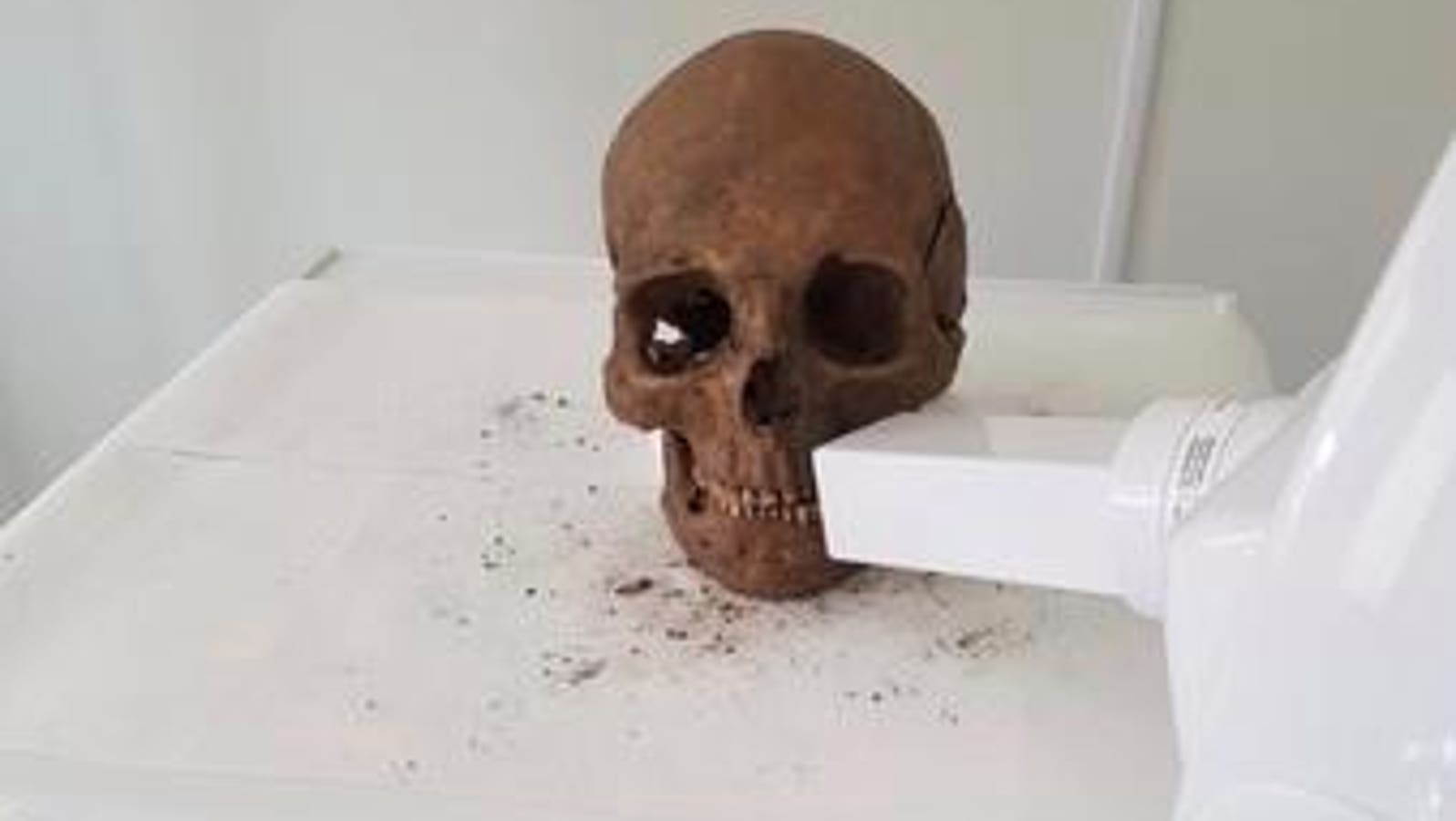
Bertilsson and team worked with an osteologist from Västergötland’s Museum to analyze 3,293 teeth from 171 individuals whose remains were excavated from a large cemetery near Varnhem Abbey, site of a stone church built in the 11th century and one of the earliest Christian settlements in the country. The remains of the Vikings, who once worked in a nearby farming community, were exceptionally well-preserved due to favorable soil conditions at the site.
Bertilsson and two undergraduate dental students examined the Viking jaws and teeth using standard modern tools like a dental probe, round mirrors and soft toothbrushes under a strong bright light. They also took X-rays of the teeth using the technique used today that involves patients biting down on a small imaging plate.
Biting Back In Time
In addition to drilled holes and marks from toothpicks, the researchers found evidence of upper front teeth deliberately carved with grooves, mostly horizontal, a known practice among Viking men. It’s unclear whether these skillfully filed lines were decorative, an identifying symbol or a sign of social standing (a past study on the phenomenon in Britain suggests male Vikings may have filed their teeth to appear more menacing). The filed marks may have also been another attempt to reduce pain, according to the new study.
The research into Varnhem Vikings is yet another intriguing example of how bones and teeth can provide stunningly detailed portraits of our forebears’ lives. In another recent instance, the new website After the Plague presents the thorough “bone biographies” of 16 people who lived in medieval Cambridge, England, as revealed by their skeletal remains.
Likewise, the new study offers new insights into Viking oral health, “and indicates that teeth were important in Varnhem’s Viking culture,” Bertilsson said. “It also suggests that dentistry in the Viking Age was probably more sophisticated than previously thought.”
Reaching even farther back in time, past dentistry practices gleaned from skeletal remains include prehistoric beeswax dental fillings found in Slovenia, and evidence of tooth drilling in Neolithic Pakistan using flint tips. The most recent findings, however, appear to mark the first time signs of dental treatment have been found in Swedish Viking remains. Skål?
Read the full article here