


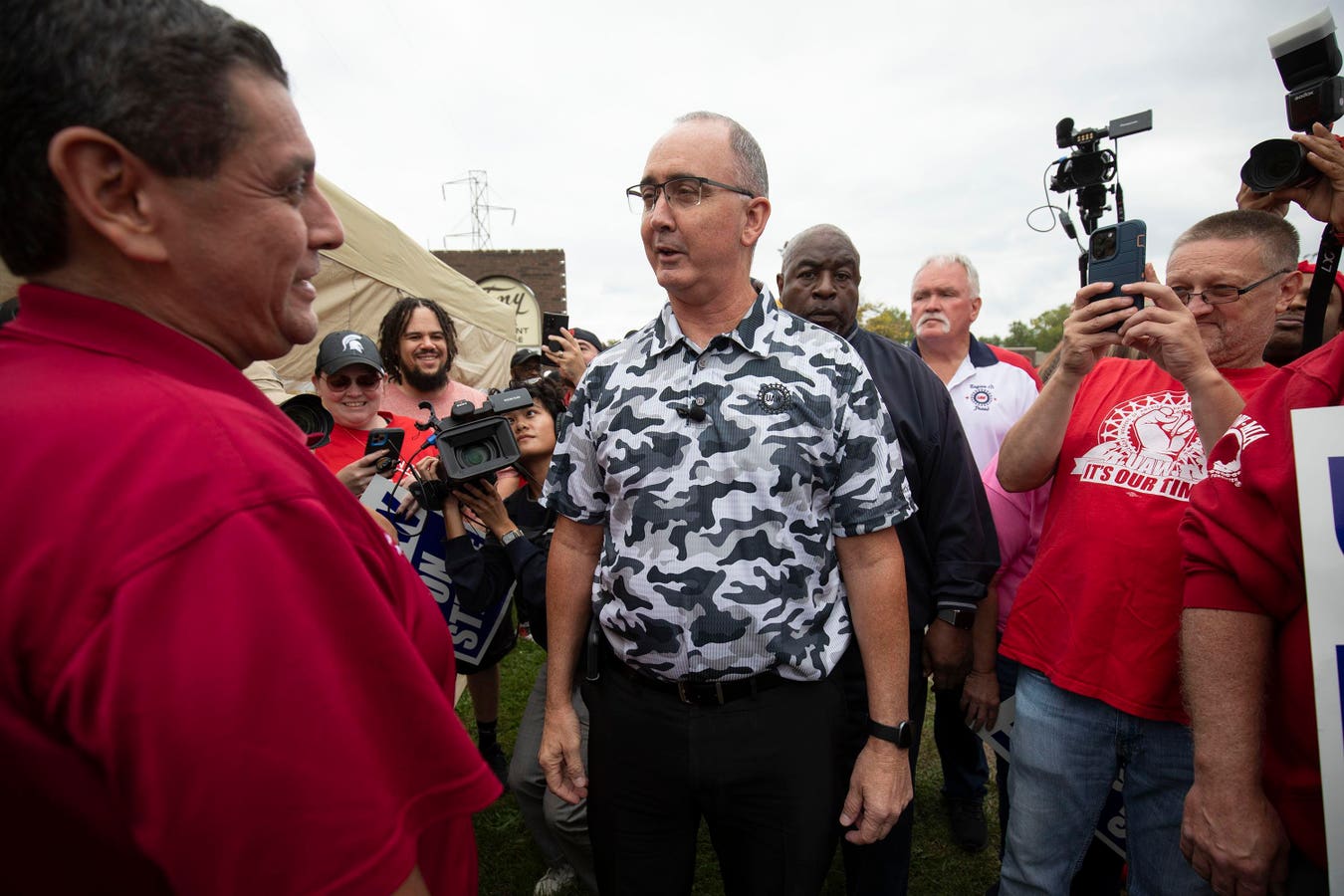
The United Auto Workers union has achieved what it calls an unprecedented achievement in reaching tentative labor contracts with General Motors Co., Ford Motor Co. and Stellantis.
If union president Shawn Fain is to be believed, there will be more challenges for automakers – and then some — in the future.
With this round of labor talks, the UAW has won, pending ratification votes, pay raises of 25% over the course of new four-and-a-half year contracts. The agreements came after the union conducted strikes at some operations of GM, Ford and Stellantis.
Since 1999, the UAW has negotiated four-year labor contracts. With the extra six months, the UAW contracts will last until the end of April 2028. If a strike (or strikes) take place after that, a walkout would occur on May 1, 2028 – or May Day. That date has symbolic importance for labor movements globally.
Outside the U.S., May Day has major importance. Inside the U.S., not as much. For decades, the U.S. labor movement has been back on its heels. In 2023, the UAW strike and other labor actions have reinvigorated labor.
What’s more, the UAW signaled that it wants to expand automotive labor talks beyond GM, Ford and Stellantis.
“When we returning to the bargaining table” in 2028, “it won’t just be with the Big Three but with Big Five or Big Six,” Fain said on Oct. 28.
For decades, the union has attempted to organize factories owned by the likes of Toyota Motor Corp., Honda Motor Co., Nissan Motor Co. and other automakers.
To date, the UAW has been unsuccessful. When new U.S. factories were announced, the union would, on occasion, lease billboard space near those plants. Officially, the union was welcoming them. Between the lines, it was a signal the automakers could look forward to organizing efforts. Occasionally, union would conduct an election, such as at Nissan in Tennessee in 2001 or 2014 at Volkswagen also in Tennessee, only to see workers at such factories reject UAW representation.
To be sure, this round of talks with GM, Ford and Stellantis saw the biggest gains for the union in years.
Can the union build on those gains with organizing? That’s the challenge for the future.
Read the full article here



