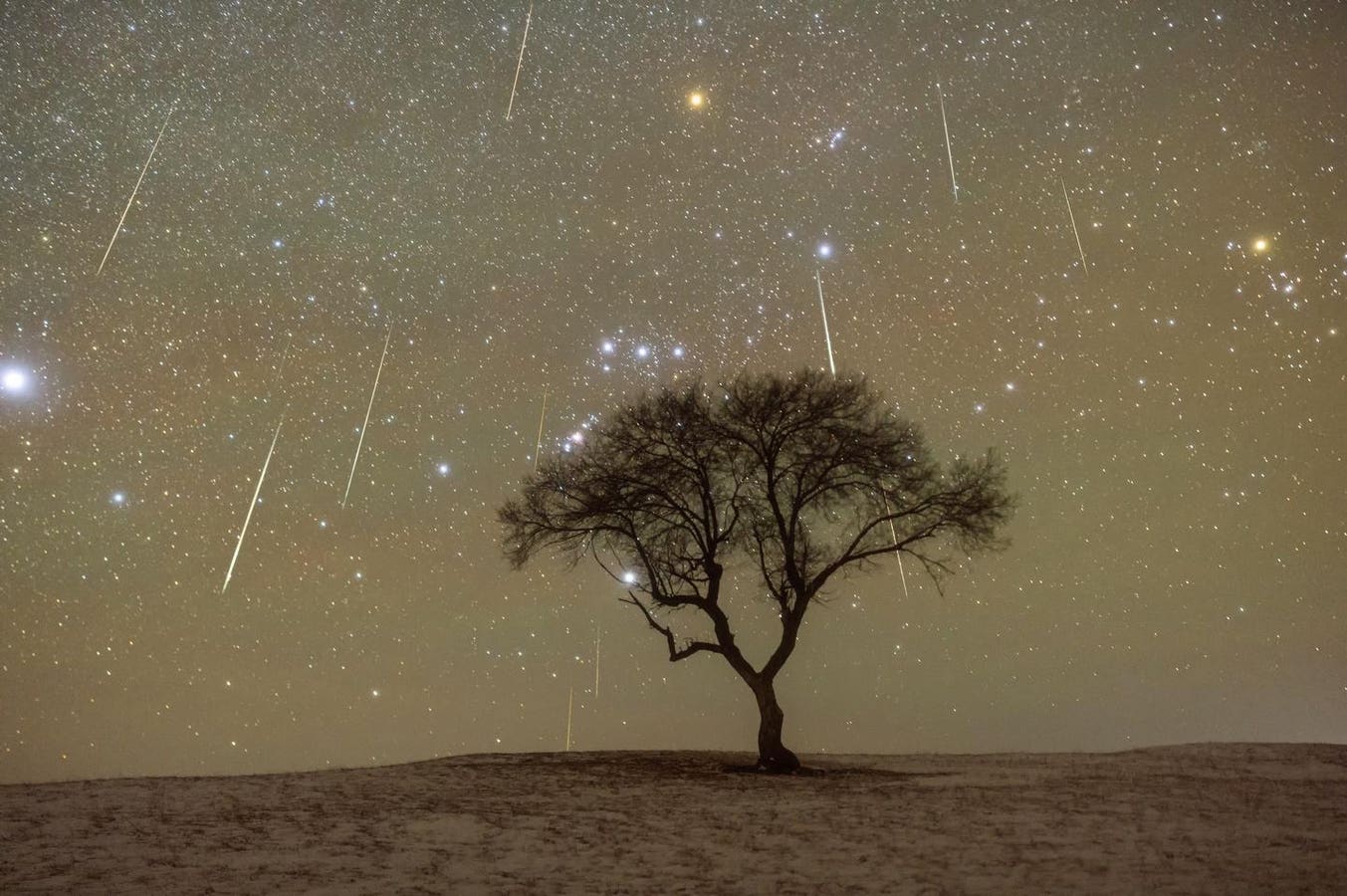
The Quadrantids—2024’s first meteor shower—has started, and you can already see “shooting stars” light up the night sky in the northern hemisphere. There’s a growing interest in stargazing and astronomy, which is one reason why meteor showers are becoming more popular. We’re seeking natural experiences with wow-factor—and what better example of that than a bright “shooting star” above our heads? Better still, you don’t need any knowledge or equipment, just a clear sky, patience and perhaps a warm jacket.
However, it would help if you also had a clear, dark sky. Light pollution is getting worse, but the moon makes a bigger difference to the visibility of “shooting stars.” If a meteor shower peaks close to a full moon, forget it—you won’t see much.
So, from the dozens of meteor showers in 2024, there are only three majors that will take place under moon-free dark skies that will be worth clearing your calendar for:
First up is the Quadrantids in early January (60-200 “shooting stars” per hour at the peak), followed by May’s Eta Aquariids (10-20 per hour) and, thankfully, August’s Perseids (100 per hour)—the latter being the best and most popular.
Here’s everything you need to know about the best meteor showers in 2024:
1. Quadrantids 2024
Peak: before midnight January 3, 2024 (December 28-January 16)
Where: anywhere in the night sky
The Quadrantids meteor shower is not as famous as December’s Geminids and August’s Perseids, but as well as being one of the most prolific, it’s also potentially one of the most exciting sky events to see in 2024. During its peak, you may witness around 120 shooting stars per hour, as many—if not more—than its better-known rivals.
Its “shooting stars” are caused by an asteroid or “rock comet” called 2003 EH1 and can appear anywhere in the night sky. Still, they usually come from a spot close to the end of the handle of the Big Dipper, specifically from a group of stars once a constellation called Quadrans Muralis. The name is no longer used, but the meteor shower remains.
2. Eta Aquariids 2024
Peak: around midnight May 5/6 (April 19-May 28)
Where: anywhere in the night sky
Caused by tiny particles of dust and debris left behind by Halley’s comet, the Eta Aquariid meteor shower will, in 2024, end a drought of meteors between January and April.
On the night of May 4/5, the moon will only be a small crescent and will rise just before dawn, which won’t get in the way. You can expect to see around 10-30 shooting stars per hour in the days leading up to the peak night and up to 50 per hour during the peak, though those in the southern hemisphere will get the best view since the radiant constellation Aquarius will get higher in the sky.
3. Perseids 2024
Peak: around midnight August 12/13 (July 17-August 24)
Where: anywhere in the night sky
If you love watching meteor showers, mark your calendar for August 12/13, the night of the year’s biggest and best meteor display. The moon will set just before midnight, making for an utterly moon-free night sky, which means that the Perseids in 2024 will be worth staying up late for.
To enjoy the Perseids at their best:
- Take a few days off work and find a place in the countryside where you can stay overnight.
- Go camping in a national park, try glamping or have an RV adventure—and stay up until the early hours, enjoying the warm-ish temperatures, to see as many “shooting stars” as possible.
- If you don’t want to stand around in the cold for hours (or get a sore neck), find a place with an outdoor hot tub.
Best Ways To See More ‘Shooting Stars’
Most failed attempts to see “shooting stars” are caused by a lack of patience. You must watch for at least half an hour, preferably sitting on a reclining chair or lying on a ground pad. Don’t use a telescope or binoculars—they will massively reduce your chances of seeing “shooting stars”—and avoid looking at your cellphone or any other white light, which will destroy your night vision.
I’m an expert on the night sky and author of Stargazing In 2024: 50 Easy Things To See In The Night Sky From North America. For the very latest on sky events please subscribe or check my main feed regularly for new articles.
Wishing you clear skies and wide eyes.
Read the full article here