


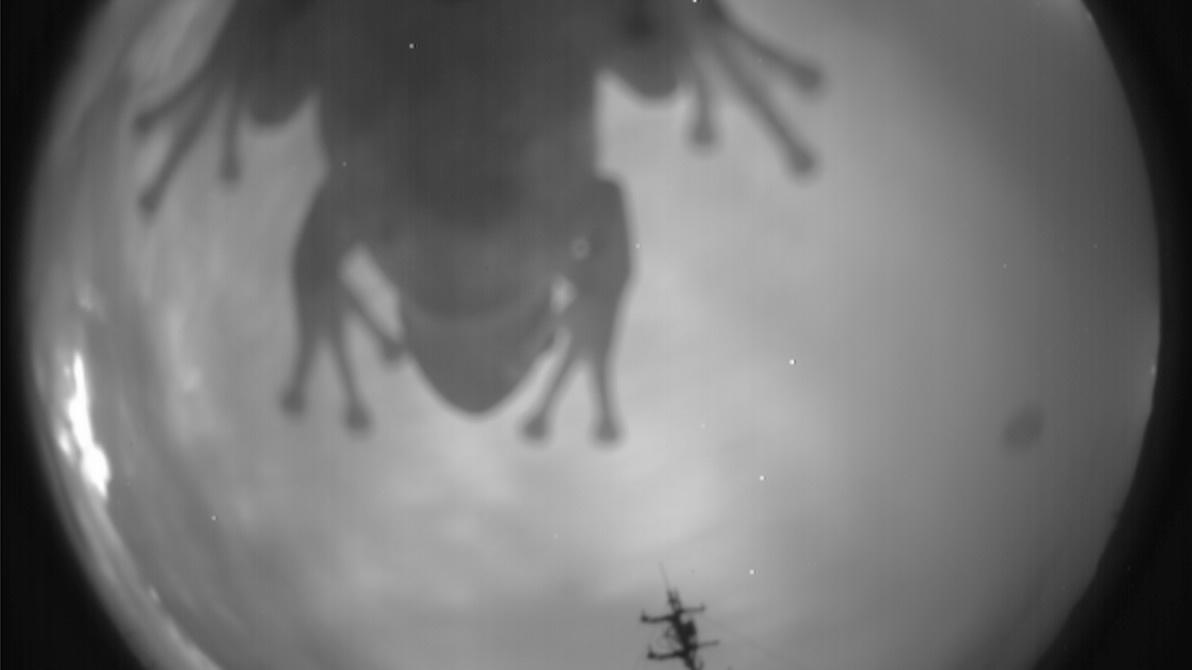
It’s Halloween and the folks at the NASA Marshall Space Flight Center are probably feeling a chill up their spines thanks to some spooky images captured by sky-watching cameras. The cameras are designed to pick up fireballs crossing the night sky, but sometimes weirder entities appear.
NASA Marshall shared a collection of creepy images on X, formerly Twitter, on October 31. Some of the shots are easy to figure out. That’s definitely a frog in one of them. The others, however, require some explanation, though it’s nothing supernatural.
One photo shows a series of bright lines squiggling all over the place. Those aren’t tipsy meteors. The NASA team said it’s a long exposure shot of bugs that look “like a group of witches flying on their brooms.” Another photo shows the bottoms of a bird’s feet as it perches atop the camera.
Perhaps the most eerie image of them all is one that shows a meteor (as a bright streak on the right side) with what looks like a shadowy hooded figure emerging from the lower corner. It’s likely just a trick of light and reflections, but it’s perfect for Halloween.
NASA Marshall is located in Huntsville, Alabama. It’s been a hub for rocket engineering and development of space systems since the 1960s. The cameras are part of the NASA All-sky Fireball Network, a group of cameras that track the brightest meteors as they blaze through Earth’s atmosphere. These meteors are known as fireballs for the spectacular displays they put on.
The All-sky Fireball Network consists of 17 cameras located in Alabama, Georgia, Tennessee, North Carolina, Ohio, Pennsylvania, New Mexico, Arizona and Florida. The specialized black and white video devices point upward to capture a full view of the sky overhead. “The cameras have overlapping fields of view, which means that the same fireball can be detected by more than one camera,” said NASA. “This allows us to calculate the height of the fireball and how fast it is going.”
The NASA Meteoroid Environment Office set up the camera network. Meteoroids are small rock or iron objects that orbit the sun. When a meteoroid hits our planet’s atmosphere, it’s called a meteor. These are the shooting stars and fireballs you might see blazing across the night sky. Sometimes, pieces survive the fiery entry and reach the ground. Those are called meteorites. MEO is located at NASA Marshall.
MEO is tasked with studying meteoroids, which can be a hazard to spacecraft. Those little pieces of rock and iron can cause damage if they impact a satellite, space station or cargo or crew capsule. “Understanding the meteoroid environment can help spacecraft designers to better protect critical components on spacecraft or avoid critical operations such as extravehicular activities during periods of higher flux such as meteor showers,” MEO said.
The positioning of the all-sky cameras and the views they capture allow researchers to calculate the orbits of the meteoroids that create the fireballs. They can even track down the origin and figure out whether an asteroid or comet was responsible for the light show.
The meteor-watching cameras are protected by clear domes. That means animals can land on top of them. That’s how you get a frog or a bird in view. Or, if you like to let your imagination run wild, a photobombing ghost.
Read the full article here



