


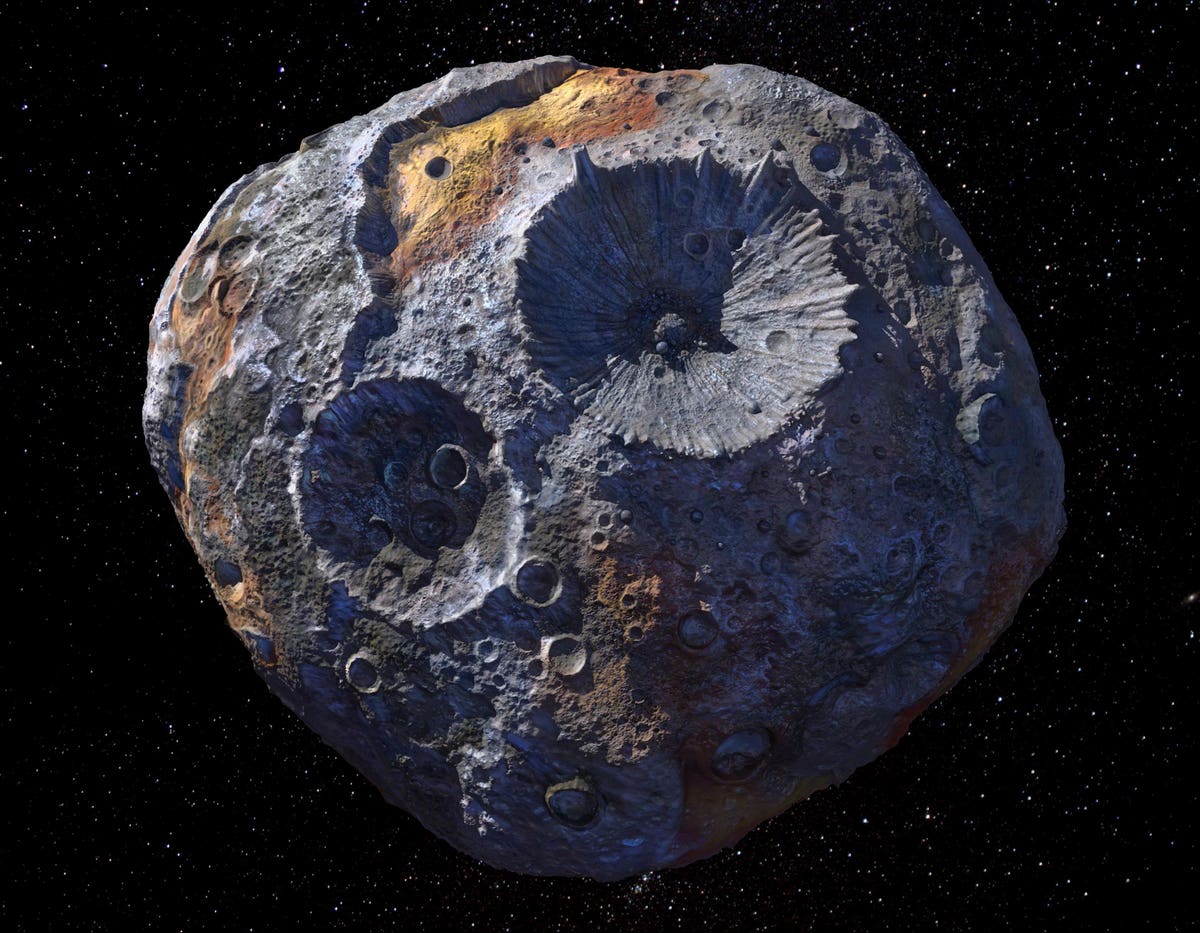
In two weeks one of the highest profile space missions for years will launch from Florida.
The launch window for NASA’s Psyche mission opens on Thursday, Oct. 5 and will see spacecraft set on a trajectory to one of the most exciting objects in the asteroid belt between Mars and Jupiter.
However, as well as NASA’s journey to uncover the secrets of 16 Psyche—one of the most metallic objects ever observed and possibly the core of a baby planet—the space agency has three other asteroid-related landmarks coming up this season.
“NASA has invested in multiple missions that are focused on the richly diverse populations of asteroids and the unique roles that each of those populations can play in telling the story of our solar system’s history,” said Lori Glaze, director, Planetary Sciences Division, NASA Headquarters in Washington, in a press briefing. “Three of those missions are having big milestones this fall in what we’re calling ‘asteroid autumn.’”
Here’s everything you need to know about the three landmark moments in “asteroid autumn:”
1. NASA’s OSIRIS–REx Mission Launches Drops Off A Sample From Asteroid Bennu
Landmark moment: Monday, Sept. 24
Kicking off “asteroid autumn” is a flyby of Earth by NASA’s OSIRIS-REx spacecraft that visited the distant Bennu asteroid and scraped-up a pristine sample in Oct. 2020. On Sept. 24 it will deliver that sample next week, releasing it into Earth’s atmosphere, where it will parachute down into the Utah desert. It will bring a rare chance for researchers to get their hands on pristine examples of what the early solar system comprised.
Here’s everything you need to know about NASA’s first-ever sample-return mission.
2. NASA’s Psyche Mission Launches To 16 Psyche
Landmark moment: Oct. 5
Scheduled to launch atop a SpaceX Falcon Heavy—the first planetary mission to do so—NASA’s Psyche mission to 16 Psyche will give planetary scientists their first-ever glimpse of the most metallic object observed so far. As well as being worth a lot of money—in theory—this metal asteroid orbiting the sun between Mars and Jupiter is suspected of being the dead core of a baby planet that never made it—and it can teach us about how planets form, and what Earth’s core may actually be like.
Once it arrives in 2029 after a 2.2 billion mile journey the solar-powered spacecraft will orbit 16 Psyche for 26 months, mapping and studying the asteroid’s properties.
3. NASA’s Lucy Mission Encounters Asteroid Dinkinesh
Landmark moment: Nov. 1
NASA’s Lucy mission launched October 2021 on a mission to visit a group of asteroids called Trojans, ancient remnants of the early solar system clustered in two “swarms” leading and following Jupiter in its path around the sun. Before it reaches a Trojan in 2027 it will in November flyby a main belt asteroid called Dinkinesh, the smallest main belt asteroid ever explored. Although the encounter is largely an engineering test for the spacecraft, mission scientists are excited by what they could learn from this tiny main belt asteroid.
Why NASA Is Obsessed With Asteroids
Part of NASA’s current obsession with asteroids—small rocky, metallic or icy bodies with no atmosphere that orbit the sun—has to do with planetary defense. Ever-better telescopes have, in recent years, found more and more near-Earth asteroids whose orbits come very close to, or even sharem Earth’s orbital path around the sun. A great example of that was its Double Asteroid Redirection Test mission, which in September 2022 successfully impacted an asteroid called Dimorphos and changed its trajectory.
However, mostly NASA is interested in asteroids because of the story they can tell about how the solar system formed. Every asteroid is a remnant of the earliest building blocks that made up all the planets and moons. “The Psyche asteroid is representative of one type of asteroid, but there are several—some with different chemical or physical properties and some that are found in distinct locations within the solar system,” said Glaze. By studying these small bodies planetary scientists can learn about the origin and evolution of our solar system as well as the processes that are still at work today.
Wishing you clear skies and wide eyes.
Read the full article here



