


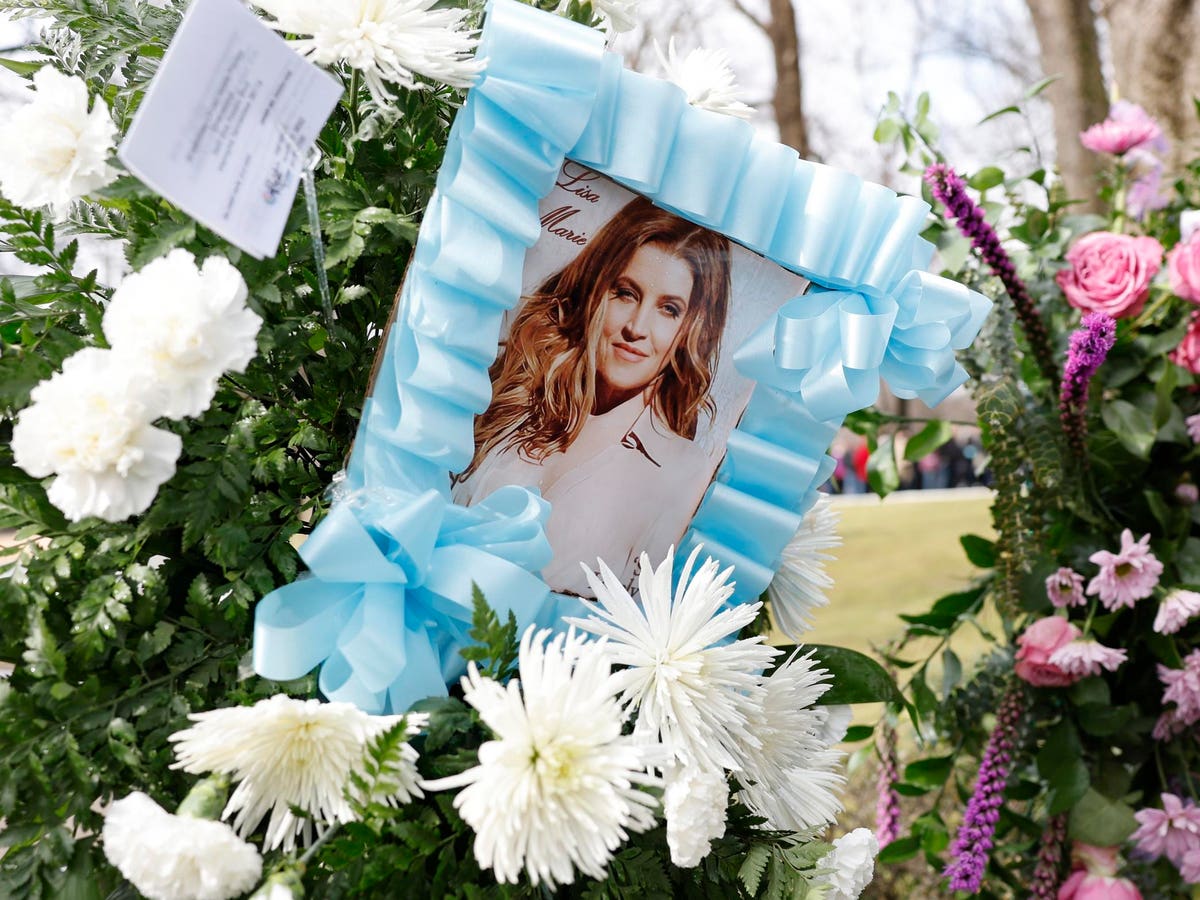
A small bowel obstruction (SBO) is no small deal. And a SBO is reportedly what led to the January 12 death of Lisa Marie Presley, the then 54-year-old daughter of Elvis and Priscilla Presley. That was the conclusion of the Los Angeles County medical examiner’s office, according to Diana Dasrath reporting for NBC News. Dasrath quoted the autopsy report as saying that this SBO was “in the form of a strangulated small bowel caused by adhesions that developed after bariatric surgery years ago.”
Now, the word strangulated rarely connotes a favorable situation. You typically don’t hear people say, “Things got better because my body parts got strangulated.” The Merriam Webster dictionary defines “strangulation” as “to become constricted so as to stop circulation.” So a strangulation of your small bowel would a situation where your small bowel—which is another name for your small intestines—got constricted to the point where they were not longer getting an adequate blood supply. This would be a medical emergency since no organ in your body can survive for long without fresh blood and the oxygen that such blood brings.
Your small intestines are pretty darn important too. When you eat 10 hot dogs along with 10 Peeps and 10 plum, for example, that’s where they go after they’ve gone down your esophagus and past your stomach. Each of the three successive parts of your small intestine—your duodenum, jejunum, and ileum—play vital roles in absorbing different nutrients from that plum-out-of-Peeps-and-hot-dogs mass. Your small intestine then moves this mass of stuff further down your gastrointestinal (GI) tract into your colon. When it reaches and moves through your colon, that’s when you have to tell your date, “I’m really enjoying the story about your haircut, but I need to find a bathroom pretty urgently.”
That mass may not even be able to get through your small intestine if you’ve got a SBO. A SBO may sound a little like HBO but is very different. If you’ve ordered HBO and somehow get a SBO instead, you should demand a refund. But not until you’ve seen a doctor urgently. There are two general types of SBOs. One is functional, where there is nothing physically blocking the small bowel. Instead, it’s just that your small intestines aren’t contracting adequately to move food along. Your small intestines normally move in wave-like motions called peristalsis that push the food gunk—which is not an official medical term—through the intestines like squeezing a toothpaste tube. Various muscle or nerve issues such as damage from abdominal surgery or Parkinson’s disease, medications such as narcotics, and infections can reduce peristalsis.
A second type of SBO is mechanical where something physically blocks the food gunk from moving through your small intestine. This can happen when the walls of your small intestine become too inflamed such as with some kind inflammatory bowel disease.
Physical blockage can also result when your small intestine gets turned or deformed in different ways. This can happen with intussusception, where part of your intestine collapses into itself. This can happen as well with volvulus, which is when your intestine gets twisted—twisted in a physical sense and not a moral and ethical sense.
Then there are masses such as tumors that can block your small intestine. Such masses can either develop within the intestine obstructing the passageway or be outside the intestine and compress or pinch off the intestine.
Speaking of compression, other structures besides masses can squeeze your small intestine by essentially trapping different parts of it. For example a hernia, which is when part of your bowels stick out of your body through an opening, can end up with that part your bowel being squeezed by the opening. Scar tissue such as adhesions from surgery can trap and compress your small intestine too.
This latter situation may have been the case with Presley. Her autopsy report did mention “adhesions that developed after bariatric surgery years ago.” Bariatric surgery is where a surgeon rearranges and potentially reduces the size of different parts of your gastrointestinal tract such as your stomach and small intestines to facilitate weight loss. Such rearrangement can leave different organs and tissues within the abdomen sticking to each other, hence the name adhesions. It sounds as if these adhesions may have eventually trapped parts of Presley’s small bowel leading to obstruction and even strangulation of the small bowel.
Strangulation is an emergency, typically a surgical emergency. Starving parts of your small bowel of blood oxygen can mean that such tissue will die without quick intervention to restore the blood flow. When the small bowel is not getting adequate blood flow, it’s called small bowel ischemia. This is potentially a life threatening condition.
Abdominal pain is the most common symptom of SBO. Vomiting, constipation, bloating, fever and an elevated heat rate can be present as well. Abdominal pain is a hallmark of acute small bowel ischemia too. This pain tends to be more sudden and severe. Fever, nausea, vomiting, and severe bloating are other possibilities. You may see blood in the stool as well. Eventually mental confusion can result.
An SBO and small bowel ischemia would be consistent with reports that Presley had been experiencing abdominal pain in the months leading up to her death. That culminated with her being found unresponsive at her home before being rushed to the hospital on the final day of her life. While Presley did have “therapeutic levels” of oxycodone and traces of other substances in her blood, the autopsy report indicated that such things did not contribute to her death.
Will this news finally end all that unfounded speculation from anti-vaccination accounts that Covid-19 vaccines were somehow involved, as I reported for Forbes on January 13? Don’t count on it. Many of those accounts never let facts get in their way.
Read the full article here