How many miles an electric vehicle can run on a charge is arguably the most important spec fledgling buyers need to strongly consider. Having sufficient battery power on tap could mean the difference between reaching a given destination and being left stranded at the side of the road. Being able to rely on an EV’s operating range is especially critical at a time when whatever passes for a public charging network (Tesla’s Superchargers excluded) can be frustratingly unreliable.
As it does with internal combustion vehicles, the Environmental Protection Agency rates EVs for both their energy consumption and their projected range under controlled circumstances in a laboratory with the vehicle on what’s called a dynamometer, which is like a treadmill for cars.
But as it is with the EPA’s fuel economy ratings, the real world results don’t always match the agency’s projections. Like conventionally-powered rides, an EV’s range can be affected by a number of variables, in this case including vehicle speed and acceleration, the weight of passengers and cargo, use of accessories and ambient temperatures. Plus, the EPA’s ratings are expressed in terms of combined city/highway driving, which might not jibe with a given motorist’s typical use.
“EPA’s testing procedures date back to the early days of EVs, and what’s included on the window sticker is partially controlled by laws written decades ago for gas cars,” says Chris Harto, a senior energy policy analyst with Consumer Reports.
To its credit, CR conducted a series of comparative tests of 22 EVs from U.S., Asian and European brands to find out how accurate the EPA’s range estimates would hold up under real-world circumstances. All were taken on a newly created highway-speed range test, which involves driving a fully charged EV at a fixed speed of 70 mph until it completely runs out of battery power and comes to a stop.
The tests were conducted during the summer months under ideal climactic conditions, with each model already being fully “broken in” with between 2,000 and 15,000 miles on the odometer, the climate control set to 72 degrees, cruise control engaged and regenerative braking at its lowest available level.
As for the results, four of the vehicles tested were reasonably close to being accurate, eight would be considered off the mark and 10 exceeded expectations.
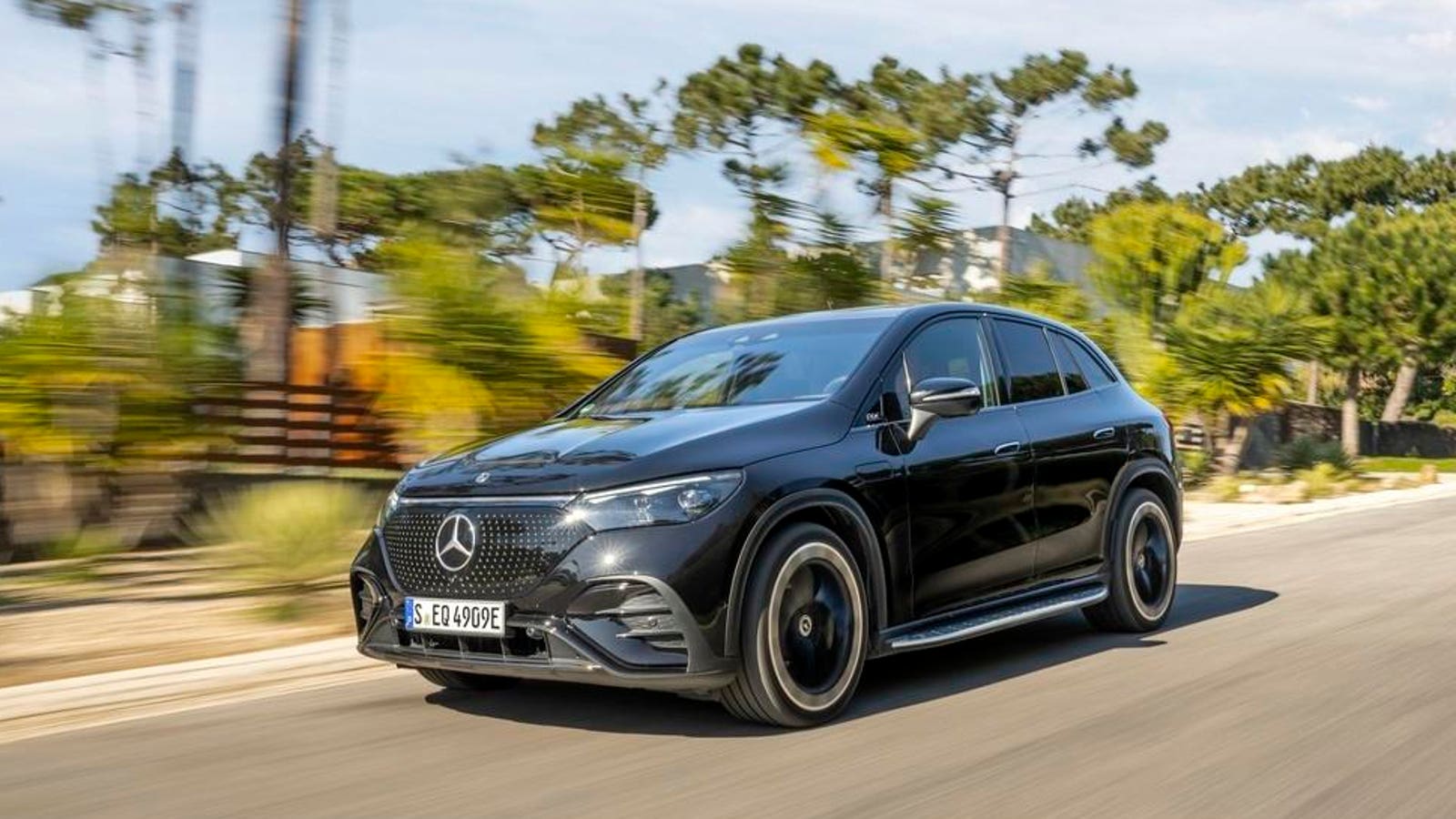
The biggest loser in this regard is the Ford-F-150 Lightning pickup truck in its Extended Range variant at a full 50 miles off of its EPA-estimated 320 mile capability. The top model is the Mercedes-Benz EQE 350 at an impressive 72 miles more than its projected 260 mile range. In fact all four Mercedes EVs evaluated achieved 29 miles or better than the EPA’s stated figures.
Here’s what CR’s range tests revealed:
More Miles Per Charge Than EPA-Estimated
- Mercedes-Benz EQE 350 4Matic: +72 miles
- BMW i4 M50: +47 miles
- BMW iX xDrive50: +46 miles
- Mercedes-Benz EQS 580 4Matic: +40 miles
- Mercedes-Benz EQE SUV 350 4Matic: +31 miles
- Ford Mustang Mach-E Premium AWD Extended Range: +29 miles
- Mercedes-Benz EQS SUV 450 4Matic: +29 miles
- Rivian R1T: +20 miles
- Volkswagen ID 4 Pro S AWD: +13 miles
- Hyundai Ioniq 5 SEL AWD: +11 miles
- Genesis GV60 Advanced: +3 miles
- Kia EV6 Wind AWD: +3 miles
Fewer Miles Per Charge Than EPA-Estimated
- Ford F-150 Lightning Lariat Extended Range: -50 miles
- Lucid Air Touring: -40 miles
- Tesla Model S Long Range: -39 miles
- Lexus RZ 450e Premium: -18 miles
- Audi Q4 e-tron Premium Plus: -15 miles
- Genesis Electrified GV70 Advanced: -15 miles
- Kia Niro EV Wind: -14 miles
- Subaru Solterra Limited: -12 miles
- Hyundai Ioniq 6 SEL AWD: -5 miles
- Nissan Ariya Platinum+ AWD: -4 miles
You can read the full report here.
Read the full article here