


Topline
This spring will be the first time in 221 years that periodical cicada broods XIII and XIX—which is the largest of all broods—will simultaneously emerge in the same place, with cicadas from both groups set to appear in Illinois and Indiana–-but experts say because they don’t bite or eat much, they only pose a threat to young trees used for laying eggs.
Key Facts
Periodical cicada broods are regional groupings that spend most of their lives burrowed underground, but emerge in the spring on a similar schedule as adults to mate either every 17 years or every 13 years, according to the University of Connecticut.
Social media posts about the event have gone viral, with a post on X, formerly known as Twitter, saying the synchronized emergence is a “bad omen for an election year,” while an Instagram post with over 400,000 likes called it a “simultaneous explosion” of bugs.
Although they’re known for their noisiness, the attention the bugs have received on social media has led some users to question whether they will negatively affect agriculture—but because their main goal when they emerge is to mate and they die shortly after, adult cicadas don’t eat much and don’t do a lot of damage to crops and gardens, according to the Clemson University College of Agriculture, Forestry and Life Sciences.
However, they can damage young shrubs and trees by laying eggs on the branches, which aren’t strong enough to withstand the weight of the up to 400 eggs laid at once, though the best way to combat this is by laying netting over young shrubs, according to the Department of Agriculture.
They also don’t pose any danger to humans or pets because cicadas don’t bite and aren’t poisonous, and provide benefits to the environment like adding nutrients to the soil when they decompose, aerating lawns and improving water filtration, according to the Environmental Protection Agency.
The bugs’ main annoyance is their loud mating call that can reach up to 100 decibels, according to the Centers for Disease Control and Prevention, which is as loud as a lawn mower, forklift or subway train.
Key Background
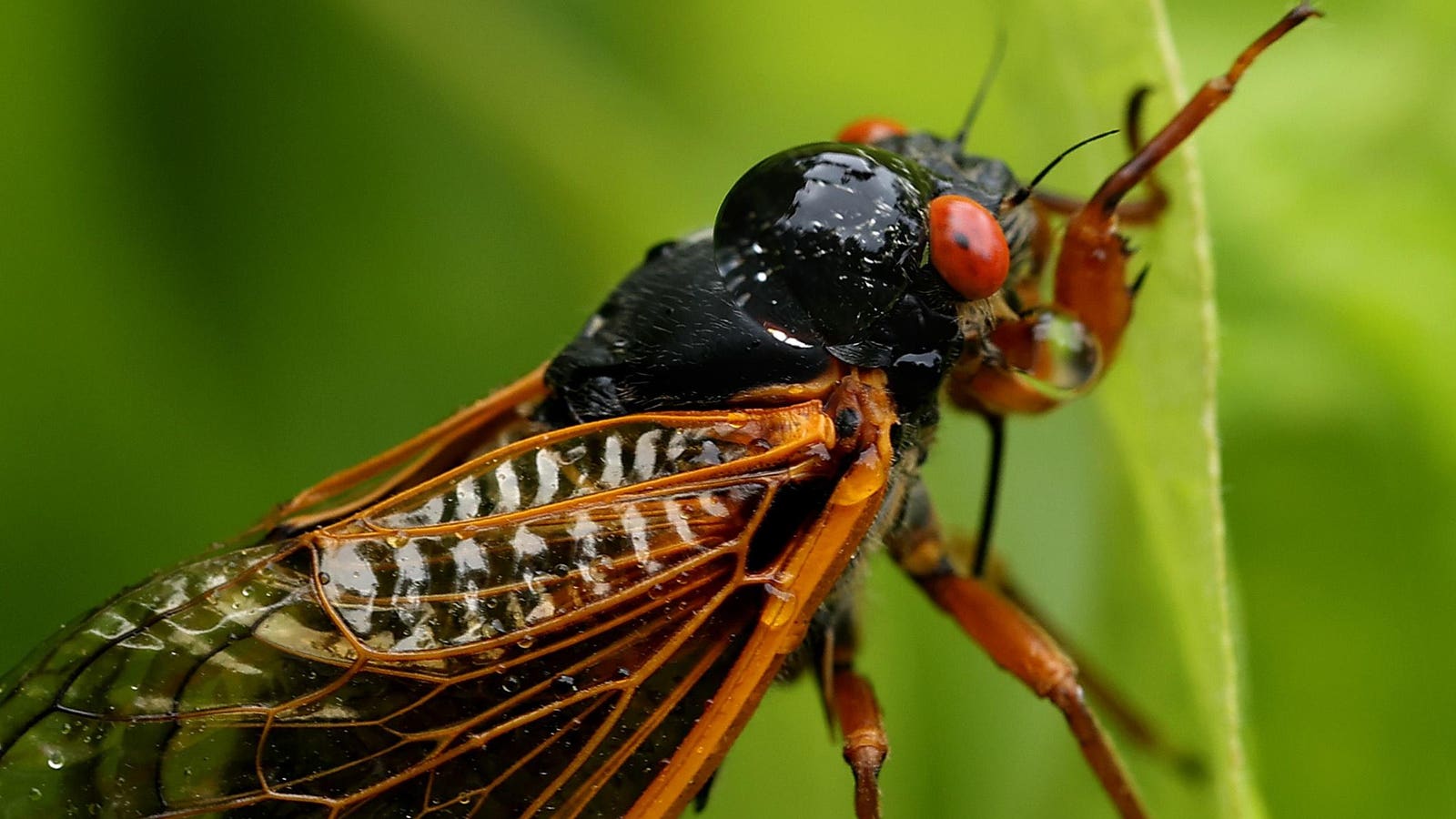
Though Illinois and Iowa are the only states that will experience both periodical broods, the cicadas will emerge in other states. Brood XIII, a 17-year brood, will emerge in Iowa and Wisconsin, and Brood XIX, a 13-year brood, will emerge around the same time in Alabama, Arkansas, Georgia, Iowa, Kentucky, Louisiana, Missouri, Mississippi, North Carolina, Oklahoma, South Carolina, Tennessee and Virginia. There are two types of cicadas: periodical and annual. Periodical cicadas are red-eyed bugs found in the South, East and Midwest that emerge by the millions every 13 or 17 years, according to the National Wildlife Federation. The loud noise they emit is the males’ mating call to attract female cicadas. Annual cicadas are larger and emerge every year in fewer numbers during late summer.
Tangent
Billions of cicadas from Brood X emerged across 15 states in 2021. Dubbed “Cicada Mania,” there were so many cicadas that the broods showed up on the National Weather Service’s radar. Because of the vast number of cicadas and cicada shell casings from their molting process—the shedding of the exoskeleton as cicadas age—people were able to collect them by the bucket full. Periodical cicadas emerge in such large numbers to “fill the bellies” of all their predators and have enough left over to continue advancing the species, University of Maryland professor Michael Ralph told Fox 5 Washington D.C.
Surprising Fact
Some people have turned cicadas into snacks. One Missouri ice cream shop turned the bugs into an ice cream that sold out instantly in 2011, according to NPR. Some people say the bugs have a similar taste to canned asparagus.
Further Reading
Making The Best Out Of Invasion, Missouri Shop Makes Cicada Ice Cream (NPR)
Brood X is almost here. Billions of cicadas are emerging in eastern US (CNN)
Read the full article here



