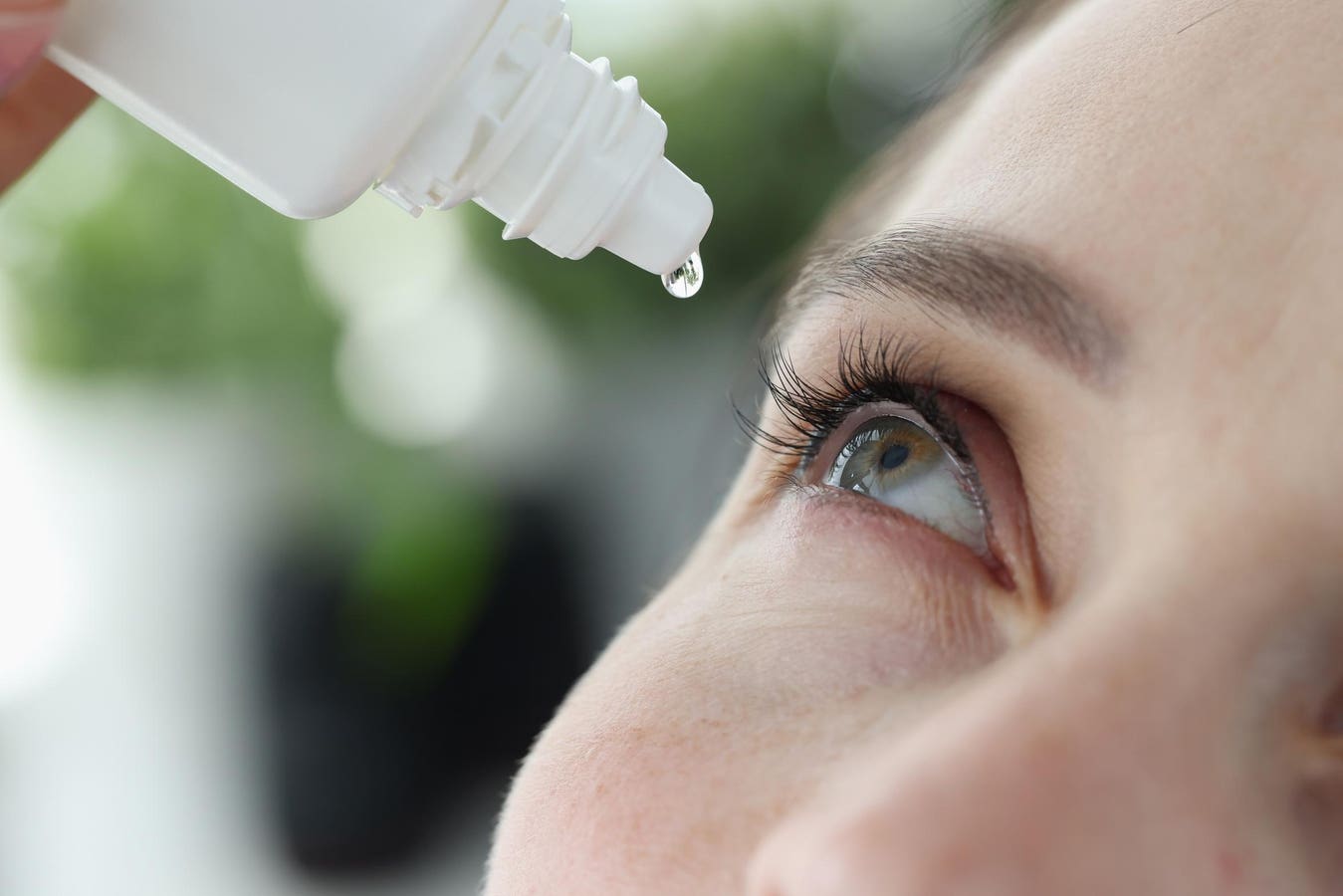
The U.S. Food and Drug Administration (FDA) has just dropped a series of really eye-opening warnings about 28 different over-the-counter eye drop products. The warnings are to immediately stop using any of these products because doing so could result in some pretty bad eye infections. What’s pretty bad? How about the kind that could lead to partial vision loss or even blindness? Yeah, if you like the whole being-able-to-see thing, you’d best stay away from these products that have been sold under CVS Health, Rite Aid, Leader (Cardinal Health), Rugby (Cardinal Health), Target Up & Up, Velocity Pharma, and Walmart brands.
The big, big problem is these eye drops may have been contaminated with some really, really small things that you cannot see without laboratory testing—namely bacteria and other dangerous microorganisms. Eye drops are supposed to be sterile, meaning free of all that tiny little infection-causing stuff. Your eyes are particularly susceptible to bad infections. Microorganisms can easily make their way into the cells that constitute the conjunctiva, cornea, uvea, and other parts of your eyes, since they aren’t protected by the thick skin covering that other parts of your body have such as your feet. This is yet another reason why you shouldn’t wipe your eyes with your socks after you’ve worn them on your feet all day.
So it is very important to keep facilities that manufacture eye drops very, very clean, like sterile clean. But apparently that hasn’t been the case at the various manufacturing facilities that have made the following nine CVS Health eye drop products:
- Lubricant Eye Drops 15 ml (single pack)
- Lubricant Eye Drops 15 ml (twin pack)
- Lubricant Gel Drops 15 ml (single pack)
- Lubricant Gel Drops 15 ml (twin pack)
- Multi-Action Relief Drops 15 ml
- Lubricating Gel drops 10 ml
- Lubricant Eye Drops 10 ml (single pack)
- Lubricant Eye Drops 10 ml (twin pack)
- Mild Moderate Lubricating Eye Drops 15 ml (single pack)
And the following six Rite Aid eye drop products:
- Lubricant Eye Drops 15 ml (twin pack)
- Lubricant Eye Drops 10 ml (twin pack)
- Gentle Lubricant Gel Eye Drops 15 ml
- Lubricant Gel Drops 15 ml
- Lubricating Gel Drops 10 ml
- Multi-Action Relief Drops 15 m
And the following three Target eye drop products:
- Up&Up Dry Eye Relief Lubricant Eye Drops 30 ml
- Up&Up Extreme Relief Dry Eye 15 ml (single pack)
- Up&Up Extreme Relief Dry Eye 30 ml (twin pack)
And the following two Rugby (Cardinal Health) eye drop products:
- Lubricating Tears Eye Drops 15 ml
- Polyvinyl Alcohol 1.4% Lubricating Eye Drops 15 ml
As well as the following five Leader (Cardinal Health) eye drop products:
- Dry Eye Relief 10 ml
- Lubricant Eye Drops 15 ml (single pack)
- Lubricant Eye Drops 15 ml (twin pack)
- Dry Eye Relief 15 ml
- Eye Irritation Relief 15 ml
And the Velocity Pharma Lubricant Eye Drops— specifically the 10 ml triple pack. Oh, and three days after its initial October 27 announcement about the 26 aforementioned products, the FDA put forth a similar warning about the Equate Hydration PF Lubricant Eye Drop (10 mL) products sold by Walmart in their stores and online. Then the FDA added a sixth Leader eye drop product to the list: Lubricant Eye Drops 0.33 FL OZ (10 ml). All told, that now leaves 28 different products on the no-no, don’t buy, don’t use list.
Unfortunately, FDA investigators found what was described as “insanitary conditions” at these manufacturing facilities. In fact, testing of environmental samples from key production areas in these facilities yielded positive results for bacteria, which clearly was not a very positive finding.
Naturally, when the FDA tells consumers not to use certain products, it’s a good idea for retailers to pull such products from their shelves and websites as soon as possible. CVS, Rite Aid, Target, and Walmart have already done so. Cardinal Health Inc. and Harvard Drug Group LLC have also initiated voluntary nationwide recalls of the products included in the FDA list. However, that doesn’t mean that you won’t encounter such products. These days you can get practically anything over the Internet, even stuff that’s supposed to be recalled. Plus, there’s always the chance that certain stores still haven’t pulled such stuff off their shelves. So, keep your eyes open for such products and don’t buy them.
If you have already purchased such products, discard them as soon as possible. In this case, discarding doesn’t mean giving them to someone else, like a frenemy. It means bringing them back to where you bought them or throwing them away in a manner that others cannot accidentally use or ingest them. There are also medication take back locations that can accept medications that need to be discarded.
If you’ve already used any of these products, keep an eye on, well, your eyes. Stay on the lookout for anything that may appear or feel different about your eyes. This includes your eyes appearing more red than normal, swelling, itching, or feeling irritated or pain. Beware of any unusual eye watering. Other possible signs of infection include discharge from your eyes, eye stickiness, sensitivity to light, or blurry vision. Also, if you are feeling like bleep in general, such as having a fever or flu-like symptoms, contact your doctor. You may not realize that your eyes are the sources of such symptoms. Again, since your eyes are very sensitive and susceptible to bad infections and damage, take any signs of eye infections very seriously.
So far, no one has reported to the FDA anyone having any such symptoms after using any of the 28 eye drop products on the FDA list. But who knows what new news may drop in the coming days and weeks.
Read the full article here