


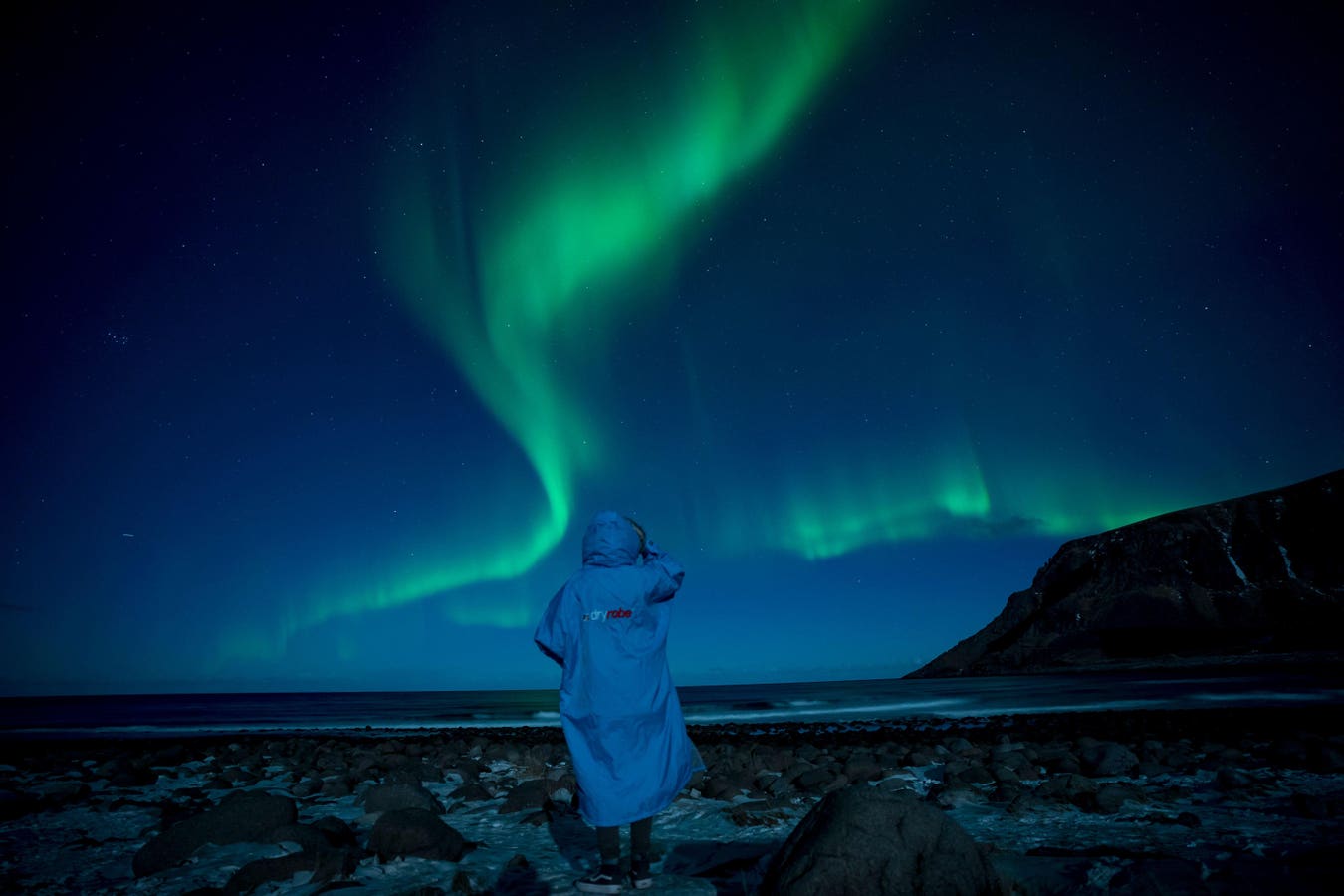
Minor to moderate geomagnetic storms are forecast for Saturday and Sunday, which could make the aurora borealis visible as far south as the northern tier of contiguous US states, including New England.
The storms are linked to a burst of activity near the surface of the sun this week, including the most powerful solar flare of the current 11-year solar cycle and the last several years.
That was an X2.8-class flare unleashed on Thursday, but the sun has been unloading an almost constant barrage of weaker flares since Wednesday. Flares are explosions that send charged particles flying across the solar system at the speed of light. When these energized particles reach Earth they can cause radio blackouts for mariners and some pilots and GPS systems, but are otherwise typically harmless.
Auroral displays are actually not a direct effect of flares, but of something called coronal mass ejections (CMEs) that often accompany flares. CMEs propel charged plasma outward and when a CME collides with Earth’s magnetosphere, the impact is most visible nearer the poles in the form of the aurora borealis in the north and aurora australis in the south. The larger or more energetic the CME impact, the farther away from the poles (i.e. closer to the equator) the light show may be visible.
Space weather watchers have observed at least three CMEs associated with the sun’s flaring activity this week. Whereas particles from a flare reach Earth in under ten minutes, plasma from a CME travels much slower, taking a few days to reach us.
According to astronomer Dr. Tony Phillips at Spaceweather.com, three CMEs are expected to make a direct hit on Earth at nearly the same time on Saturday. The impact should happen just before sunset on the east coast of North America, but these forecasts are not always precise and the resulting geomagnetic storm can last for some time, so it’s worth watching the sky Saturday evening.
Official NOAA forecasts call for a moderate storm, but there is a chance of a strong storm, which could make aurora visible farther south. Strong storms earlier this year triggered sightings of northern borealis in Arizona and New Mexico.
If the aurora don’t materialize in your location this weekend or cloudy weather obscures your view, don’t worry. This is likely just the beginning. Thursday’s flare is the strongest so far of a solar cycle that’s expected to build to a peak over the next year or two.
Read the full article here



