


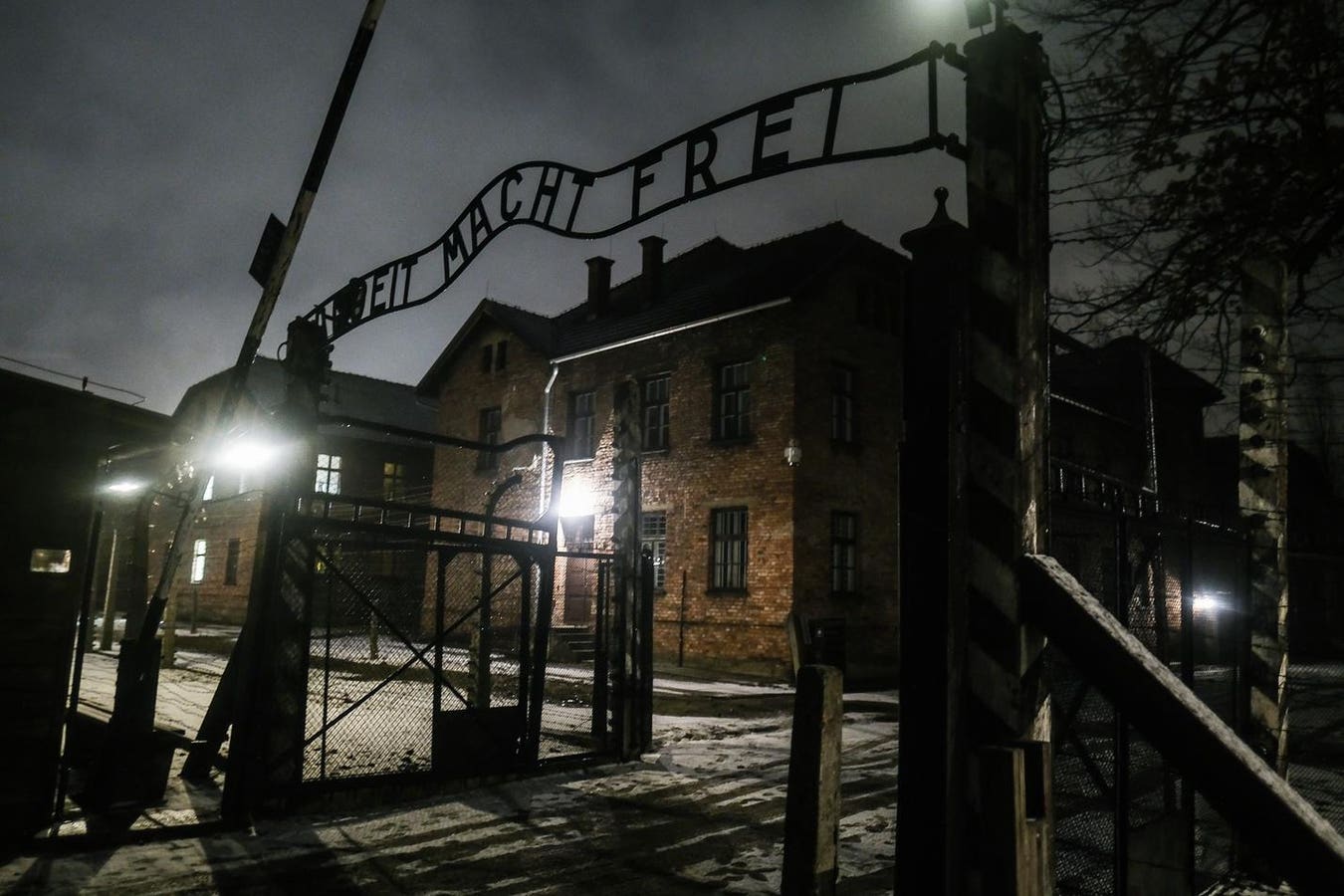
This year marks the 80th anniversary of the first Nazi death camps being liberated during the Second World War. Yet, instead of reflecting on all the millions who have been killed in the genocide of the Jewish peoples as well as those that have occurred since, this year’s Holocaust Memorial Day, Saturday January 27, could be marred by antisemitism on social media as a result of the ongoing conflict in Gaza.
It is also likely that anti-Jewish as well as anti-Muslim hate speech will grow louder on the social networks.
“As the Israel and Gaza conflict continues to unfold, polarization is at a significant high. Social media platforms have driven much of the divide,” warned Dr. Julianna Kirschner of the Annenberg School for Communication and Journalism at the University of Southern California.
“These platforms are designed to serve as echo chambers for their users, specifically in the notable emphasis of a user’s beliefs often found in their feed,” she added. “The consistent visibility of one’s own position being reflected back at them leads to a common misconception that their perspective is shared by more of the population than it is in reality. This is called a false consensus.”
This false consensus will continue to increase polarization with regard to Israel and Gaza—but also towards Jews and Muslims alike. Social media has emboldened many to engage in hate-filled speech.
“There are two things that make it so we are unlikely to have uncontentious, shared experiences around events like this,” explained Dr. Cliff Lampe, professor of information and associate dean for academic affairs in the School of Information at the University of Michigan.
“First, it is true that Internet communication broadly allows for people to find others who share their norms like antisemitism more easily than they could previously. Second, the personalization of information online means that people don’t get presented with the same view of content universally, meaning they interpret the same event in vastly different ways,” added Lampe. “Consequently, it would be a very rare event that would lead to a universal reaction at this point.”
More Than Differing Views
The social media platforms have enabled users to find other like-minded individuals with similar political views, but it has really only been since the conflicts in Ukraine and more recently in Gaza that social media has been an extension of those clashes.
In many ways, social media is just another “theater of operation,” albeit one fought with words rather than bullets. The campaigns aren’t about taking ground, and instead are about changing public opinion. In this case, it has allowed antisemitism to rise, and to blame all those of the Jewish faith for the conflict in Gaza—even those in America who have no ties to Israel.
“Negativity on social media is likely to grow as the conflict continues, and I do not anticipate an end to the polarization anytime soon,” acknowledged Kirschner. “Unless and until any kind of resolution happens in Israel and Gaza, division will only be magnified on social media. If it is possible to have a peaceful resolution, the likelihood that social media will follow suit is questionable, even as we remember the Holocaust.”
Although there have always been Holocaust deniers, their numbers have grown due to social media access to like-minded individuals. That problem is likely to increase in frequency, warned Kirschner.
“Antisemitism has always made Holocaust remembrance a challenge, but the current climate may lessen the possibility of these events, gatherings, and memorials to be held without disruption,” she continued. “Remembering the Holocaust is something we all owe to the victims and survivors of the death camps. However, the contemporary moment does not paint an optimistic image for continuing this important tradition.”
Holocaust Memorial Day should be when we come together and call for an end to genocidal conflicts while remember all of the past victims. Instead, we’re likely to see another day of hated fill rhetoric on social media.
Read the full article here



