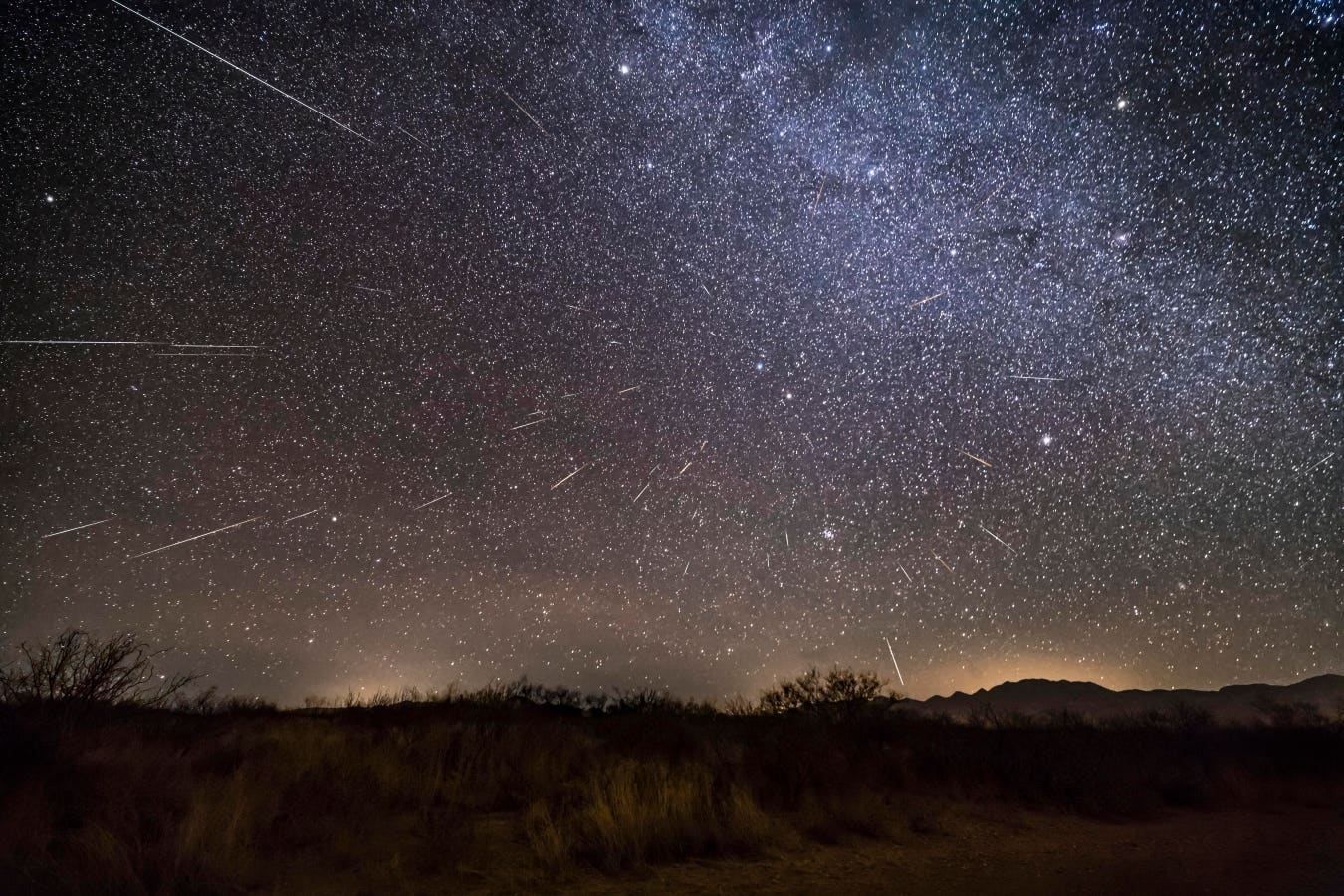
The Quadrantids, the first meteor shower to peak in 2024, has begun.
Running from December 28-January 16, according to the American Meteor Society, the Quadrantid meteor shower will peak overnight on Wednesday, January 3 through Thursday, January 4.
They come just a few weeks after the Geminids, which saw over 100 “shooting stars” during one of 2023’s strongest meteor showers.
The Quadrantids could be equally as impressive, with up to 120 “shooting stars” per hour at the peak, but the peak only lasts a few hours.
Why To See The Quadrantid Meteor Shower
Although there’s not much point in looking for “shooting stars” until the peak, the Quadrantids are the year’s first meteor shower. As the solar year begins, Earth busts through streams of dust and debris left in the inner solar system by a comet. The Quadrantids are also known for their bright fireball meteors.
What Causes The Quadrantid Meteor Shower
All “shooting stars” are caused by dust and dirt striking Earth’s atmosphere, though usually the source is a passing comet. For the Quadrantids, it’s asteroid 2003 EH1, which scientists think is an extinct comet. It takes 5.5 years to orbit the sun.
When To See The Quadrantid Meteor Shower
There will be a first quarter moon during the peak night of the Quadrantids, which means the best viewing will be had after moonset where you are (which will be around midnight in the northern hemisphere).
The radiant point of the Quadrantids—where the “shooting stars” will appear to emanate in the night sky—is the constellation Quadrans Muralis, which no longer officially exists. Although cut from the official list, it’s between the constellations of Bootes and Draco, near the end of the handle of the Big Dipper, according to NASA. That’s good news because it means it’s a circumpolar constellation—i.e., it’s “up” all night—you can start watching for “shooting stars” as soon as it gets dark (not so in the southern hemisphere, where the Quadrantids will not be visible).
However, while looking north for Quadrantids is a good idea, the “shooting stars” can appear anywhere in the night sky. Just leave your binoculars and telescopes indoors—they will only restrict your view—and stay outside for at least 40 minutes to allow your eyes to dark-adapt.
Wishing you clear skies and wide eyes.
Read the full article here