The internal combustion engine ruled the 20th century. In the 21st, electric motors and automation are reshaping the way stuff and people get around. Transportation workers aren’t entirely thrilled about how it’s going.
On Tuesday, a caravan of big rig trucks roared into Sacramento as the Teamsters union rallied support for a bill banning driverless trucks in California. Far away in the US industrial heartlands, autoworkers picketed outside Ford, General Motors, and Stellantis for better pay and job security as the industry transitions to electric vehicles. Meanwhile, newly expanded fleets of robotaxis tootled around San Francisco collecting fares, despite the objections of city leaders and unions concerned about the vehicles obstructing emergency vehicles and transit.
Transportation workers are on the front lines of two profound and accelerating shifts that promise to make getting around easier and greener but also threaten jobs. The Biden administration has devoted hundreds of billions of dollars toward greening the nation’s energy system, speeding the shift toward electric cars, trucks, buses, and rail lines. Some of that funding requires employers to pay union wages, but many of the “green jobs” being created pay significantly less and have worse conditions than the fossil-fuel-dependent jobs they’re replacing. Meanwhile, driverless vehicles are beginning to perform paid work previously done by humans. Labor leaders say that if they don’t act now, they risk widespread job loss or degradation, wherein humans become badly paid robot minions.
“When you have an introduction of new technology into a mature industry, there are opportunities where it can be used by employers to undermine strong collective bargaining contracts,” says Greg Regan, president of the Transportation Trades Department, a coalition of 37 transportation unions affiliated with the AFL-CIO, the US’s largest labor federation.
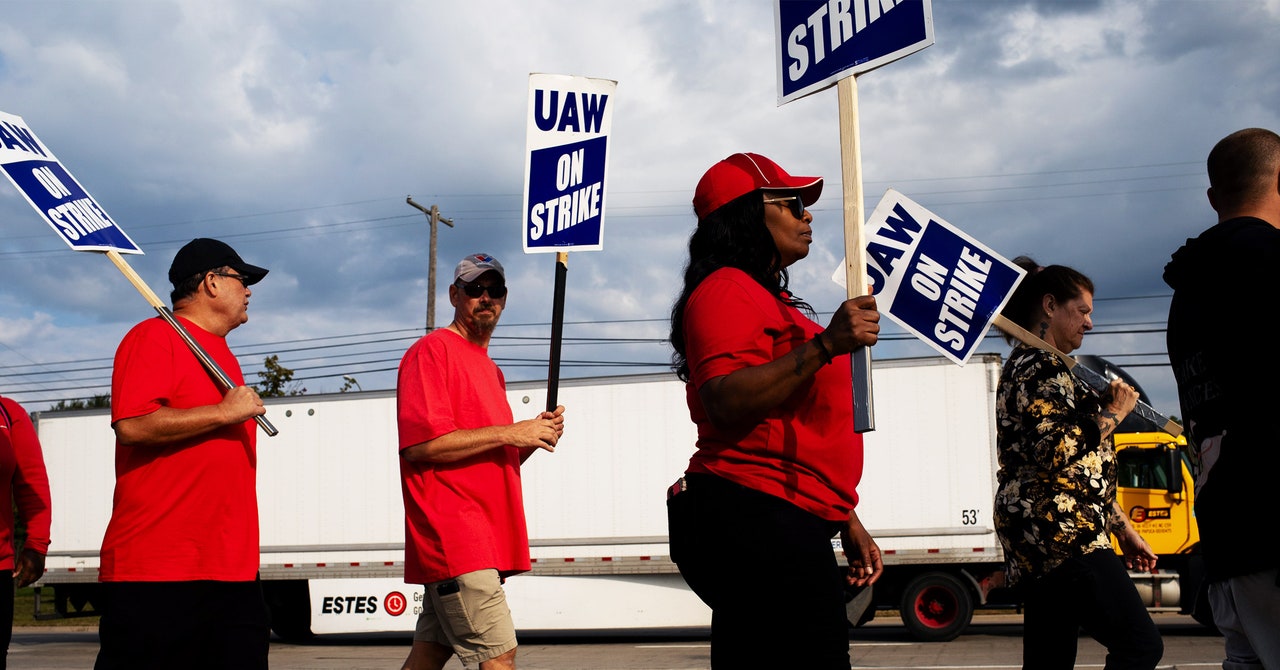
The United Auto Workers union, which just entered its eighth day of a strike against the Big Three US automakers, says car manufacturers are using the transition to electric vehicles to undermine workers. As of Thursday, the UAW said it would expand the walkouts Friday if negotiations didn’t progress sufficiently.
Ford, General Motors, and Stellantis have all launched joint ventures with South Korean electronics companies to make battery components for EVs. The plants aren’t covered under the UAW’s existing contracts, and the union says workers risk exposure to dangerous chemicals and receive unfairly low pay.
Concerns have also mounted about job losses after Ford’s CEO estimated that EVs would require 40 percent less human labor, although the true number remains a subject of debate. The UAW is seeking job security provisions to protect members during the transition, such as the right to strike over plant closures and compensation if a factory shuts down.
The Teamsters union is likewise worried about job loss from autonomous trucks. Truck driving is the most common job in 29 states, says Peter Finn, a vice president for the union’s western region. “This is going to have a dramatic and potentially disastrous impact on jobs, on communities, and on the economy.” Tuesday’s caravan to Sacramento was aimed at pressuring California governor Gavin Newsom to sign Assembly Bill 316, which would require the presence of a human safety driver in all autonomous vehicles weighing over 10,000 pounds. That would include even standard UPS or Fedex delivery trucks. While the bill passed the State Assembly and Senate with more than 90 percent support and 73 percent support among residents, according to one poll, Newsom’s office has indicated he may veto it, arguing that it could stifle innovation.
Read the full article here