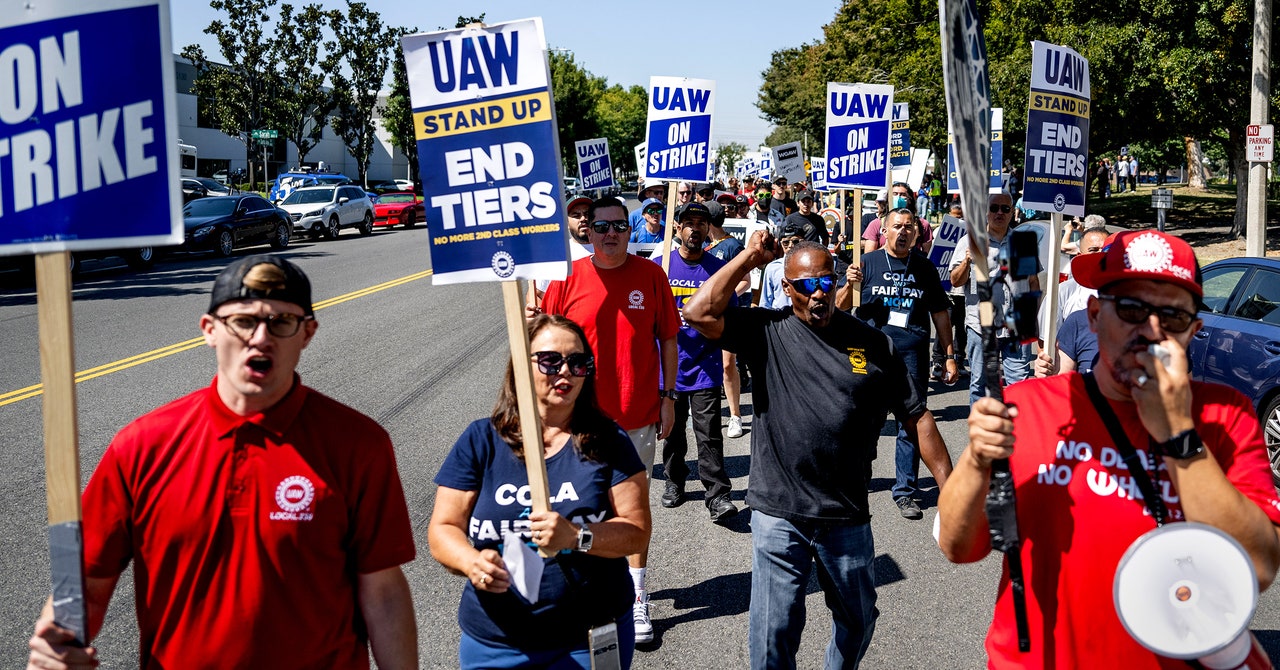
The United Auto Workers strike against Detroit’s Big Three—Ford, General Motors, and Stellantis—escalated into its third week on Friday. Workers at two additional plants operated by Ford and GM walked off the job, taking the number of union members striking for better pay and benefits to more than 25,000.
The dispute looks unlikely to end soon. As they try to understand where things are headed, economists, philosophers, labor experts, business professors, and a handful of boutique consulting firms see a juicy opportunity to put a 100-year-old economic theory into practice. Guys. It’s time for some game theory.
For those who learned it from memes, not in school, game theory is the “science of strategic thinking,” says Kevin Zollman, a professor of philosophy and social decision science at Carnegie Mellon University. It uses mathematics to model and predict human behavior when two or more people or parties have potential conflicting interests. Game theory has been used to plan out business negotiations, auctions, and poker strategies, and even to guide parenting decisions. (Zollman literally wrote the book on that last one.)
The current UAW strikes provide plenty for game theorists to chew on. Bargaining is a classic game theory problem, Zollman says, and a strike is a great example of a high-stakes contest between two players with different but definable interests. Adding to the intrigue—and game theoretic fun—is that this is the first time the union is moving against all three major US automakers at the same time. Even more interesting: The UAW is using escalating and targeted walkouts at specific facilities, dangling the threat of a wider strike if negotiations don’t go their way. The big game being played with the US industrial economy has four players, each with their own set of priorities and incentives.
No matter who you’re rooting for—automakers, workers, the UAW, or bystanders in the wider auto supply chain—game theory can provide a way to think through their strategies, and maybe even predict the future.
The first step is generally to figure out what’s at stake—the value or resources that would be created or lost in a future agreement. Barry Nalebuff, a businessman and professor at the Yale School of Management, likes to keep things folksy and calls that “the pie.”
Nalebuff is using the auto strike to illustrate the basics of game theory negotiation tactics to his students. He starts by breaking down what’s at stake for each player. The automakers’ meaty contribution to the pie begins with the sales they might lose because of the strike’s production shutdowns and the future cost of wage and benefit hikes. Nalebuff adds on ripple effects such as damage to their dealerships, which might run out of stock to sell, and the cost of losing customers to non-union automakers, such as Tesla and Hyundai.
The UAW and its members add to the pie the cost of striking from lost wages and withdrawals from the union’s strike fund, set up to support workers during their fight.
Read the full article here