Brunch tomorrow in Texas will take place under the eye of Sauron. From about 10:20 am local time in San Antonio, the sky will begin to darken with an annular solar eclipse, in which the moon crosses directly in front of the sun at a time the satellite is especially distant from the Earth. From an earthling’s perspective, the moon will be too small to blot out the sun entirely, leaving fiery tendrils at the edge of a deep black disk. About 10 percent of the sun will manage to flicker past.
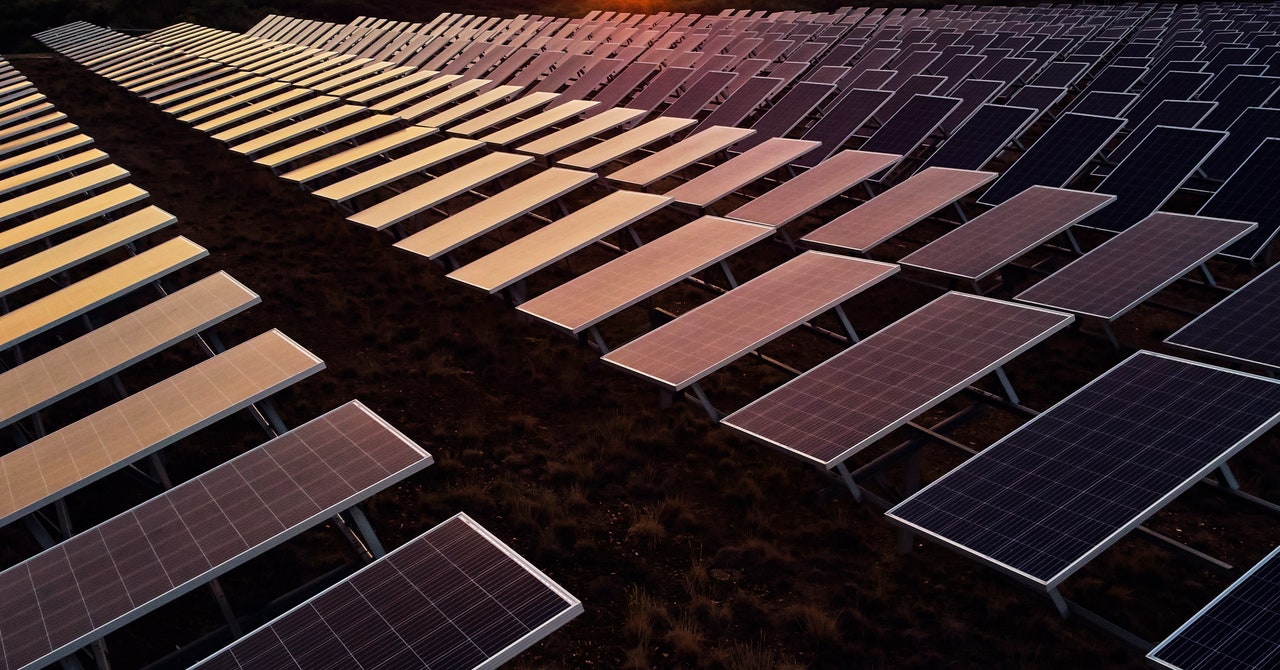
For those in charge of converting solar radiation into electricity, that remaining fraction provides little comfort. From California to Texas, grid operator estimates indicate that more than a third of the country’s solar capacity—enough to power about 20 million homes—will be unavailable at some point during the three-hour celestial event tomorrow, presenting a test for electric grids.
The challenge is twofold. Solar power is now far more dominant than it was in 2017, the last time a solar eclipse traversed the continental US. (That was the one where then president Trump stared directly at the sun.) In California, solar generation capacity, including panels on private rooftops, has doubled since then, and the sun now regularly provides more than half the state’s midday needs. Elsewhere, growth has been even stronger, albeit from a lower starting point.
Saturday’s eclipse will take a southerly route across the US, starting on the West Coast in Oregon, and head straight across the nation’s Sun Belt. The entire state of California will fall under partial shadow, dimming solar output to less than a quarter of its typical capacity on a sunny October day, according to the California Independent System Operator (Caiso), the organization that runs the state’s grid. Minutes later, the shadow will reach Texas, where local grid operators forecast output to plunge to 13 percent of its “clear sky” maximum. In between, the eclipse will traverse the additional solar hot spots like Arizona and Nevada. “We’re poised to take much more of a direct hit from this one,” Jessica Stewart, a senior energy meteorologist at Caiso, warned solar providers at a workshop earlier this fall on how they could prepare for the eclipse.
Despite the projected impact of tomorrow’s celestial show, grid officials in those states say that any and all mood lighting tomorrow should come from natural phenomena, not blackouts. Scott Aaronson, a senior vice president of security and preparedness at the Edison Electric Institute, a group that represents investor-owned electric companies, wrote in an email that its members are aware that solar “is intermittent and cannot always be relied upon,” and that the grid is well-prepared to handle the weekend event. Concerns have also been tempered by the crisp October air—temperate enough to reduce demand for both AC and heating—and the eclipse’s arrival on a Saturday, when human activity quiets to a relative murmur. But grid operators and utilities have spent months quietly preparing for the event.
The sun, of course, burns steadily, but weather and other inconveniences turn it into a rather fickle energy source. Wildfire smoke can creep in, or a hurricane, like it did in California in August. Sunset provides a daily rehearsal for losing the light. But an eclipse dims the sun much faster and can do it at an inconvenient time of day. Managing the contribution of renewables to the grid is a delicately balanced seesaw. Excess energy from the midday surge from solar helps charge up batteries that prepare the grid for leaner evening times—and now often come to the grid’s salvation during heat waves. Natural gas plants are used to keep electricity flowing through the night.
Read the full article here