


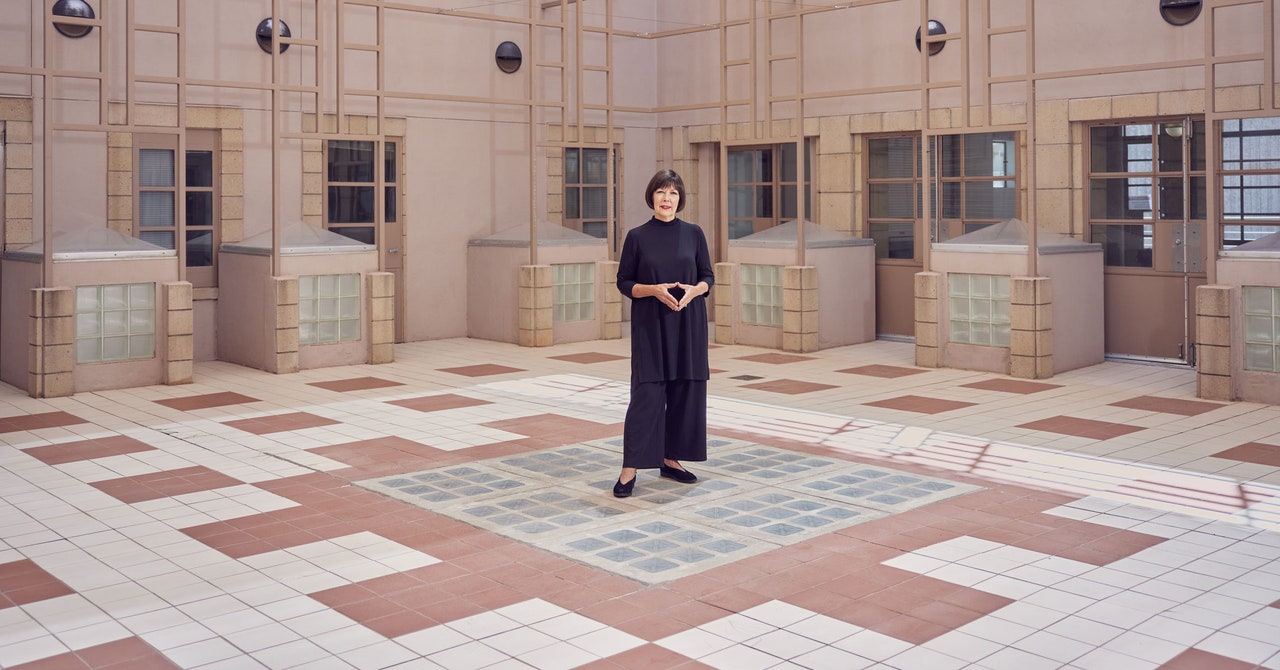
When Patricia Moore was 26, she looked in the mirror and saw an 85-year-old woman. Crow’s feet clustered at her eyes, her back hunched, and silver hair gathered around her face. Another person might be horrified. Moore held a hand to her cheek, astonished and thrilled at the transformation.
Back then—this was the spring of 1979—Moore was a young industrial designer living in New York City and working at Raymond Loewy Associates, the famous designer of everything from NASA’s Skylab space station to home appliances. At a planning meeting one afternoon, Moore mentioned that, growing up, she’d seen her arthritic grandmother struggle to open refrigerators. She suggested creating a fridge door that unlatched with ease. “Pattie,” a senior colleague told her, “we don’t design for those people.” The firm’s target users were middle-aged male professionals. Moore fumed at the injustice, to say nothing of the lost business opportunity. But, she thought, who was she to advocate on behalf of elderly consumers? Moore had never struggled to open anything. She left the meeting frustrated, with a feeling she couldn’t shake: If she could understand what it was like to be old, she could develop better products. Not just for elders, but for everybody.
Not long after, Moore attended a party where she met Barbara Kelly, a makeup artist for a new sketch comedy show called Saturday Night Live. Kelly, it turned out, had a specific talent: aging up actors. Moore had an idea. “Look at me. Look at my face,” she said to Kelly. “And tell me if you could make me look old.” Moore’s face was round, without high cheekbones—the perfect canvas for an ersatz wizening. “I could make you look very old,” Kelly replied. Within a few days, the makeup artist crafted custom flesh-toned prosthetic pieces for Moore. She created jowls, eye bags, and saggy neck skin. The result, once carefully adhered to Moore’s face and topped with makeup, was uncanny—as if Moore had stepped into a time machine, or fallen under a spell.
As “Old Pat,” Moore wore her grandmother’s clothing, a pillbox hat, glasses, orthopedic shoes, and gloves to hide the youthful texture of her hands. She darkened her teeth with smudges of crayon and clouded her eyes with dabs of baby oil. She also wanted to feel old; otherwise, she reasoned, the experiment wouldn’t work. So she plugged her ears with wax to dampen her hearing. Taped her fingers to simulate arthritis. Wrapped cloth over her shoulder to create a hump. Secured balsa wood splints behind her knees to restrict her movement.
Old Pat’s first outing was at a conference on aging in Ohio. When she fooled everyone there, she knew she was in business. For three years, Moore went undercover as Old Pat at least once a week, packing the costume in her suitcase when traveling. Old Pat visited 116 cities in 14 states and two Canadian provinces. Moore felt she wasn’t merely putting on a character; she was living part of her life as an old woman.
She chronicled her insights about navigating the world in a changed body—the connections she made with others, and the prejudice she faced—in a book, Disguised, published in 1985. Picture a Stephen King–esque cover with dramatic hot-pink font and eerie photographs of Young and Old Pat. “Old has become a synonym for being useless, ugly, unimportant, of less value,” Moore wrote. “That is the core perception which must be changed, and I think will be changed, in this generation.” She endeavored to be part of that shift by talking about her experiences and championing a new form of product design.
Read the full article here





