


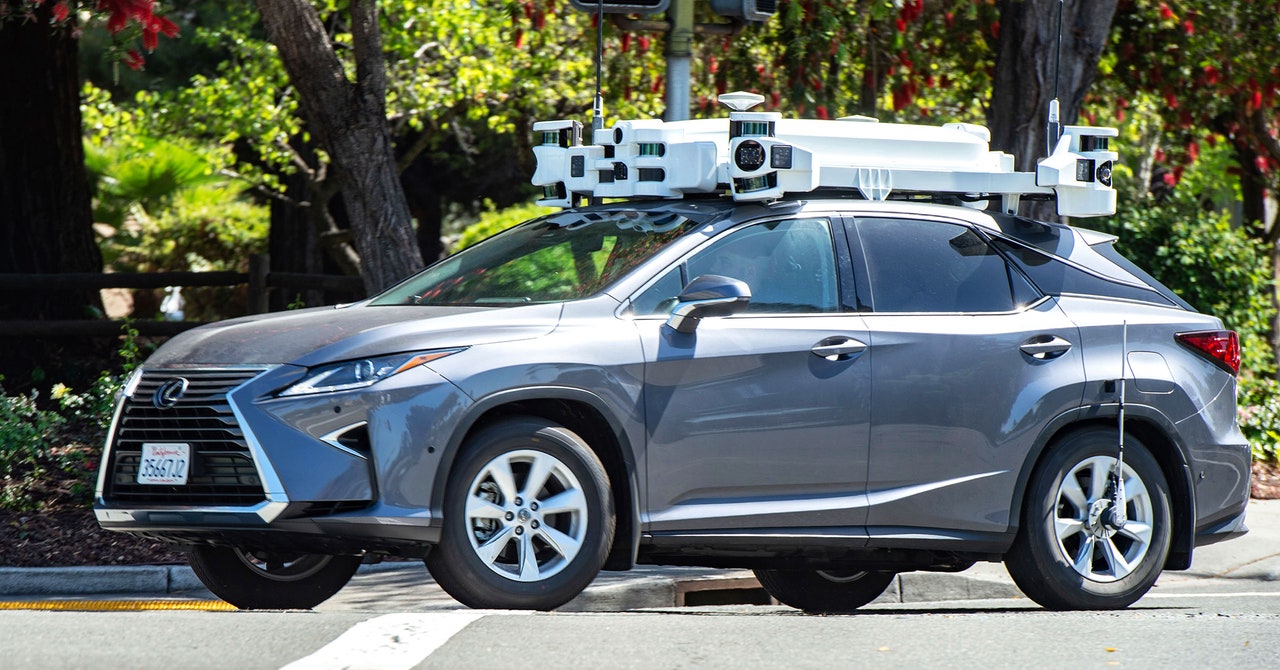
After a decade of rumors, secretive developments, executive entrances and exits, and pivots, Apple reportedly told employees yesterday that its car project, internally called “Project Titan,” is no more. Those working on the technology of some four-odd hype cycles ago—electric, autonomous vehicles—will reportedly now focus on the vaunted advancement of the day, generative AI. The project wind-down was first reported by Bloomberg; TechCrunch reports the restructuring of Project Titan will likely include layoffs.
“Prototypes are easy, volume production is hard, positive cash flow is excruciating,” Tesla CEO Elon Musk tweeted a few years back. It’s a lesson would-be car companies—as well as Tesla—seem to learn again and again. Even after a decade of work, Apple never quite got to the first step. (Granted: The company, not one for half-baked prototype reveals, reportedly blanketed any other firm that touched its automotive project with non-disclosure agreements.)
Designing and manufacturing a car is complex work. To pull it off, global auto manufacturers generally maintain relationships with thousands of suppliers responsible for their own individual hardware or software widgets. Apple seems to have concluded it is better off without that particular headache.
Any tech company hoping to break into the automotive space “needs partnerships,” says K. Venkatesh Prasad, the senior vice president and chief innovation officer at the Center for Automotive Research, a non-profit research organization. The same is true for any automaker hoping to compete with the tech natives, he says.
Contrast the Apple car’s fate with the trajectory of other tech giants still publicly pursuing auto projects, and this may be where the Cupertino company’s experiment went awry.
Rumors of manufacturing partnerships on the brink of building the Apple car have been endemic, with Canadian manufacturer Magna International, Korean battery-builder LG, Chinese ride-hail and autonomous software developer Didi Chuxing, and US electric carmaker Canoo all floated.
In 2021, Hyundai confirmed that the Korean automaker was in early talks to develop a car with Apple, which might have been manufactured at its Kia assembly plant in Georgia. Apple car representatives reportedly met with European manufacturers as late as last month.
But no partnerships officially came to be.
Partnerships, however, have been the crux of other tech-car schemes. Sony has formed a joint venture with Honda to build an electric prototype called Afeela, due to ship in 2026. Sony CEO Kenichiro Yoshida told the Wall Street Journal that visiting the tooling, welding, and paint shop at Honda’s Ohio assembly plant confirmed that working together was the right move for the electronics company. “That would be rough to do on our own,” he said. “It turns out you really do need a partner.”
Chinese smartphone-makers are particularly eager to break into selling cars, with the hopes of propping up flagging phone sales. And a lot of them are teaming with more traditional auto players to do it. Xiaomi unveiled its first electric vehicle late last year and has announced its intention to become a top global automaker, with a manufacturing assist from state-owned automaker BAIC Group. Baidu is working with the Geely Holding Group on its EV. Telecoms giant Huawei and manufacturer Chery Automobile unveiled an electric car last November under the new brand Luxeed.
Read the full article here





