As renewable energy sources like wind and solar ramp up, they can be used to sustainably generate hydrogen fuel. But implementing such a strategy on a large scale requires land and water dedicated to this purpose.
Recent research in Nature Communications led by Carnegie’s Lorenzo Rosa and visiting scholar Davide Tonelli from ULB and UCLouvain analyzes the challenges involved in sustainably meeting different hydrogen demand scenarios on a country-by-country basis.
Electrolysis is a method for producing hydrogen that involves splitting water into oxygen gas and hydrogen gas, which can be stored and used as fuel or feedstock to produce useful chemicals. This process can be powered by fossil fuels like coal or natural gas, or by renewable energy sources like wind and solar—both of which require space to deploy.
“Today, hydrogen is mostly used in refineries and the production of chemicals,” Rosa explained. “But in the future, demand for hydrogen could increase more than fivefold, due to adoption of hydrogen or hydrogen-derived products in transportation, industrial heating methods, and steel manufacturing techniques. There is an opportunity to meet this increased demand with sustainably produced hydrogen.”
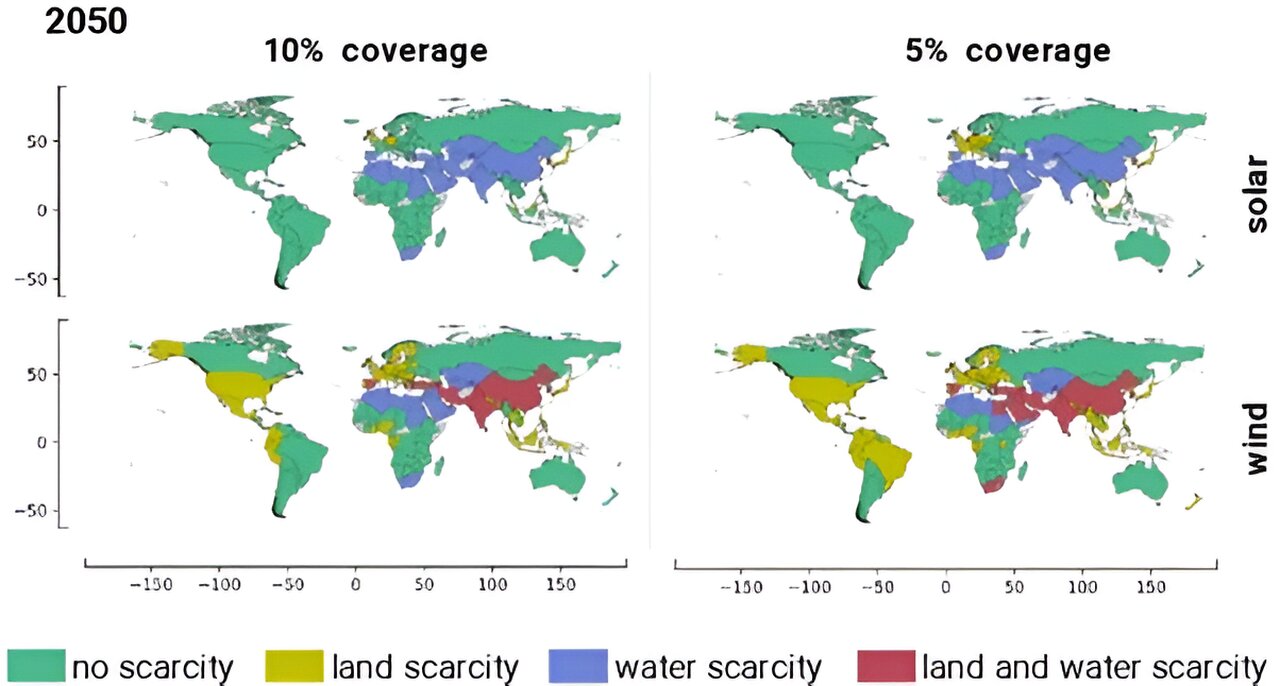
He and Tonelli—working with Carnegie visiting scholar Paolo Gabrielli (of ETH Zurich), Carnegie’s Ken Calderia, Alessandro Parente of ULB, and Francesco Contino of UCLouvain—found that due to land or water scarcity, less than half of the projected 2050 demand for hydrogen fuel could be both produced and used locally using wind or solar power.
“If you look at how much water would be needed globally to produce enough hydrogen to meet humanity’s needs in 2050, it’s only 0.6 percent of the world’s available water,” Tonelli said. “But when you look at local production for local use, the picture can be different.”
It turns out that in a net-zero world with no carbon emissions, some nations would need to rely on importing hydrogen, in pure form or in the form of hydrogen-derived products, from other countries that have greater abundances of land and more favorable solar and wind resources that could be deployed to sustainably produce it in mass quantities.
Rosa and Tonelli found that Southern Africa, Central-East Africa, West Africa, South America, Canada, and Australia have land and water availability that could make them potential leaders in exporting hydrogen. Conversely, Western Europe, Trinidad and Tobago, South Korea, and Japan would likely need to either import hydrogen fuel or downsize existing industrial output.
The researchers emphasize the importance of national assessments of resources that countries would be willing to expend on hydrogen production.
“Our work indicates countries that have the resources to ramp up sustainable hydrogen production for export,” Tonelli said. “But, of course, social, political, and economic factors will determine the extent of installation of renewable technologies and hydrogen production from each nation, which may differ from what would be feasible on paper.”
This research is part of Rosa’s overall program to probe opportunities and challenges at the intersection of energy, water, and food production, all of which are affected by climate change and population growth.
“As we strive to mitigate greenhouse gas pollution and prepare for the ways that climate change will affect where we live, how we build and sustain communities, and how we feed ourselves, it is crucial that we robustly examine various climate solutions to understand the possibilities that they present, as well as any unintended consequences,” Rosa concluded.
More information:
Davide Tonelli et al, Global land and water limits to electrolytic hydrogen production using wind and solar resources, Nature Communications (2023). DOI: 10.1038/s41467-023-41107-x
Carnegie Institution for Science
Read the full article here