


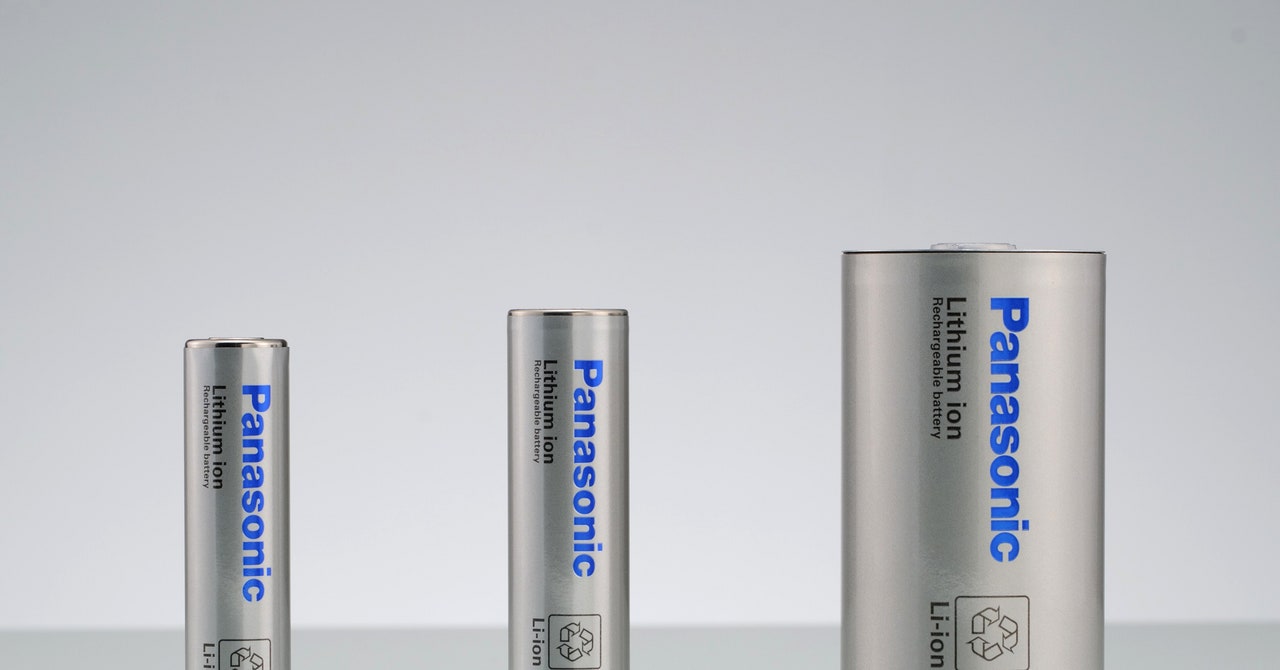
Sila, a Californian company cofounded in 2011 by Tesla’s seventh staffer, is going to supply Panasonic with a US-made silicon powder for EV batteries that could banish range anxiety, slash charge times, and even reduce reliance on China.
Panasonic’s main US customer is Tesla, and produces around 10 percent of EV batteries globally. Last year, Sila signed a supply agreement with Mercedes-Benz for its new long-range G-class electric SUV, expected to debut in 2025. (The German automaker led Sila’s Series E funding round in 2019.)
Sila’s Titan Silicon anode powder consists of micrometer-sized particles of nano-structured silicon and replaces graphite in traditional lithium-ion batteries. This switch-out for EVs could soon enable 500-mile nonstop trips and 10-minute recharges. What’s more, the anode swap doesn’t require new manufacturing techniques. The black powder already powers the five-day battery life of the latest Whoop activity-tracking wearable.
“It took us 12 years and 80,000 iterations to get to this point,” said Sila’s cofounder and CEO, Gene Berdichevsky. “It’s sophisticated science.” Berdichevsky started his career at Tesla, becoming the seventh employee in 2004. He was the lead for Tesla’s Roadster battery system, leaving when the company had about 300 employees. After further study, he cofounded Sila with Tesla colleague Alex Jacobs and Gleb Yushin, a materials science professor at Georgia Tech.
Compared to graphite, silicon stores up to 10 times more energy, so using silicon instead of graphite for anodes—the part that releases electrons during discharge—can significantly improve a battery’s energy density. However, the material swells during repeated charging, with the resulting cracks radically reducing battery life.
Sila’s technology allows for this expansion by using nanoscale carbon “scaffolding” to keep the silicon in check. “Titan Silicon is a nanocomposite material,” says Berdichevsky. “It’s like raisin bread, where the raisins are the silicon, and there’s the squishy matrix around the raisins with a big outer rind on the particle itself. The rind holds the space, and the bread moves aside when the raisins expand. The scaffold is not holding the silicon—it’s accommodating the expansion.”
The patented scaffolding process involves silicon-derived silane gas infiltrating custom carbon lattices. The resulting micron scale powder is shipped to battery makers.
Read the full article here





