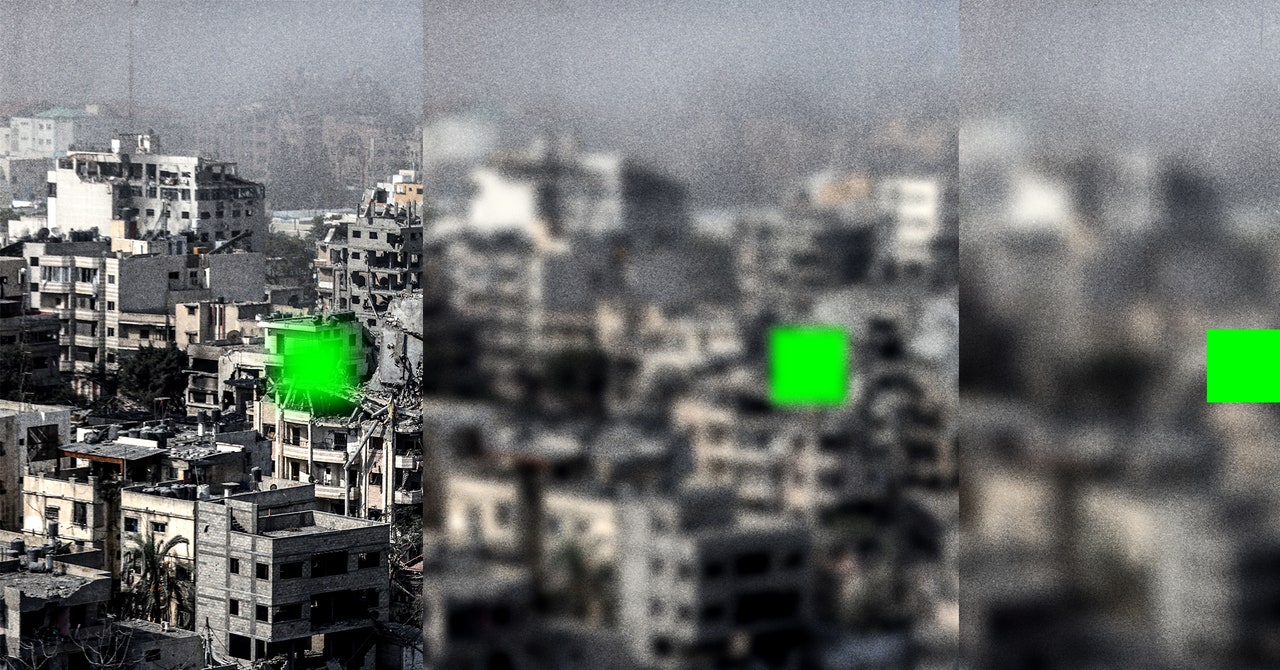
In the weeks since Hamas launched its October 7 surprise attack on Israel, the ensuing conflict has generated an unprecedented wave of disinformation, an “algorithmically driven fog of war” that has tripped up major new organizations and left social media companies floundering.
Yet, amid all of the deceptive images and video moving around on social media, the content generated by artificial intelligence tools has remained relatively peripheral. Even as some wondered if the Israel-Hamas war would be the first conflict dominated by false generative AI images, the technology has had a more complex and subtle impact.
“There are definitely AI images circulating but not to the degree where I think it’s playing a central role in the spread of information,” says Layla Mashkoor, an associate editor at the Atlantic Council’s Digital Forensic Research Lab, which studies online disinformation.
Primarily, Mashkoor says, AI-generated disinformation is being used by activists to solicit support—or give the impression of wider support—for a particular side. Examples include an AI-generated billboard in Tel Aviv championing Israel Defense Forces, an Israeli account sharing fake images of people cheering for the IDF, an Israeli influencer using AI to generate condemnations of Hamas, and AI images portraying victims of Israel’s bombardment of Gaza.
“In terms of general use that I’ve been seeing online, it’s mostly been to drum up support, which is not among the most malicious ways to utilize AI right now,” she says.
A key factor here is the sheer amount of misinformation circulating, which makes it difficult for AI images to shape conversation. “The information space is already being flooded with real and authentic images and footage,” says Mashkoor, “and that in itself is flooding the social media platforms.”
This point is reflected in a recent paper from the Harvard Kennedy School Misinformation Review about the role generative AI might play in the spread of false info worldwide. In it, the authors write that concerns about the effects of the technology are “overblown.” While, yes, gen AI theoretically lets people proliferate misinformation at a futuristic rate, those who seek out this misinformation—often those who have “low trust in institutions … [or are] strong partisans”—already have a surfeit of familiar nonsense to pursue, from conspiracy theory websites to 4chan forums. There is no demand for more.
Read the full article here