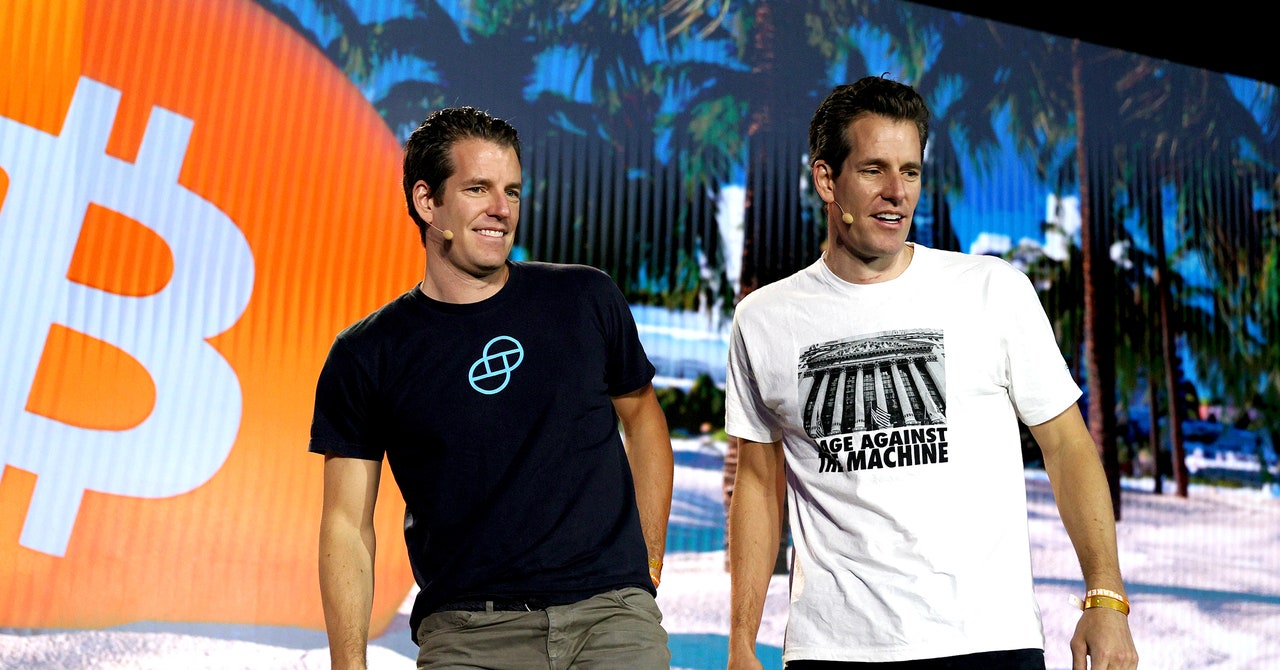
In the state of New York, where Sam Bankman-Fried, founder of fallen crypto exchange FTX, is standing trial for fraud, the attorney general has accused a further three high-profile crypto businesses of lying to their customers. Crypto exchange Gemini, run by the Winklevoss twins, Cameron and Tyler, as well as crypto lender Genesis and its parent company, Digital Currency Group, have been charged with causing a combined $1.1 billion in losses for hundreds of thousands of investors.
Filed today, the civil lawsuit pertains to a program called Gemini Earn, which was marketed to customers as a safe and secure way to earn interest (as high as 8 percent) on crypto holdings. The assets committed by Gemini customers were pooled and handed off to crypto lender Genesis, which loaned them out to large institutions and returned a cut of the profits.
These kinds of crypto services were pitched as a “better form of savings account to replace your bank,” says Cory Klippsten, CEO of trading platform Swan Bitcoin. “Whether you use that language or not, that’s how people understood these platforms.” But the Earn program, the New York attorney general alleges, was far more risky than the marketing let on. The complaint states that Gemini was aware from the program’s inception that loans handed out by Genesis were high-risk and concentrated among a small number of third parties—specifically Alameda Research, FTX’s sibling company, which at one point constituted 60 percent of the Genesis loan book. If any of Genesis’ large creditors were to default on their debt, Gemini customers stood to lose the funds they had invested.
Lo and behold, when Genesis was caught in the FTX blowback in November 2022 and forced to file for bankruptcy two months later, Gemini Earn customers lost access to about $900 million of their money.
Gemini and Genesis had already been sued by the Securities and Exchange Commission in January in relation to the Gemini Earn program, which the US financial regulator claimed amounted to an unregistered securities offering. But the charges brought by the New York attorney general are broader in scope.
While Gemini failed to alert customers to their risk exposure, the attorney general claims, Genesis and DCG failed to assess the quality of the loans it meted out, then attempted to conceal losses incurred in mid-2022 when hedge fund Three Arrows Capital and another smaller counterparty defaulted on loans amounting to $1.1 billion. Soon after, DCG CEO Barry Silbert and Genesis CEO Michael Moro, both named as defendants, are accused of making misleading public statements about the financial condition of Genesis.
Read the full article here