


We’re still waiting for the full promise of self-driving cars to be realized. After all, fleshy, unreliable humans are killing more people than ever on US roads. And now Apple fans could be waiting indefinitely as poor Project Titan has been killed off after its owner gave up on human-free control.
Still, there are glimmers of hope. Just this month, Waymo secured approval from California regulators for paid robotaxi rides on San Francisco freeways and other highways in the Bay Area, meaning that autonomous trips to San Francisco International Airport will be possible. In Germany, as of March 1, BMW is allowing Level 3 hands-off driving to be turned on in the 7 Series.
On the flip side, Tesla and General Motors have been grabbing most of the recent headlines when it comes to self-driving cars in the hands of the public, and for all the wrong reasons—mass recalls, suspended licenses, spending cuts, and huge losses.
But in China, a number of companies are steadily—and far more successfully—moving toward a similar destination, but via a different route.
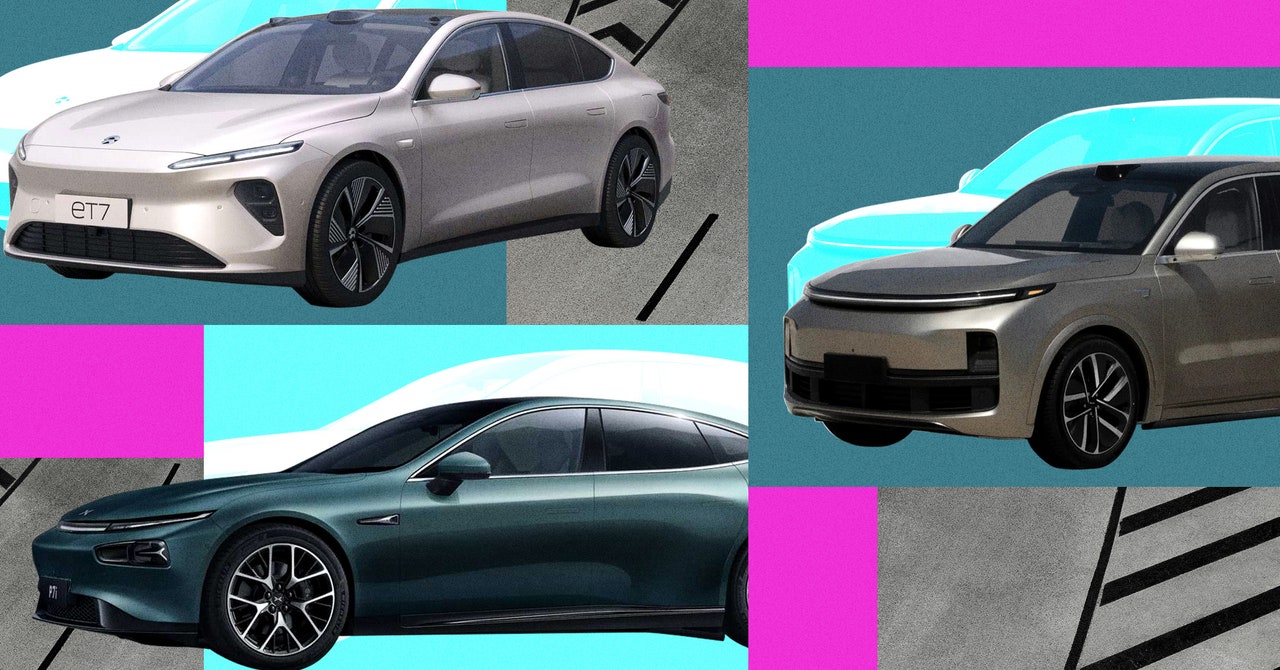
Since the introduction of XPilot with its first model, the G3, XPeng has been one of the leaders in autonomous driving in China. However, since then it has also been joined in the arena by the other two China EV startups, Nio and Li Auto.
There are other China-based companies with lidar-equipped cars—for instance, Huawei is cooperating with a number of brands such as Avatr to bring a solution—but here we’re going to focus on Xpeng, Nio, and Li Auto, as all are listed on US stock exchanges. All three also currently offer self-driving—or as they prefer to call them for legal reasons, “driving assistance features”—on their current vehicle line-ups.
So, how do the top-level systems from each compare, what can they currently do, and what is coming soon?
Tesla’s Elon Musk has been vehement in his dismissal of the need for lidar and has now even removed radars from US market models. However, recently he has admitted that Tesla is testing a custom-designed radar, but then insisted that there are no plans to integrate it. In China, the US-listed trio is taking an approach that embraces a variety of sensors, most notably including lidar.
Whereas XPeng cars have two lidar units mounted in the front bumper, both Li and Nio mount a single unit above the windscreen. Remaining sensors consist of 8-megapixel high-definition cameras, surround-view cameras, millimeter wavelength radars, and ultrasonic sensors.
XPeng and Nio have a similar total number, with 31 and 33 respectively. Li, on the other hand, takes a different approach, with a camera-first system which uses lidar as a backup and has a total of 18 sensors.
Like lidar, the Nvidia Orin X chip for processing all the information is a common denominator. Both XPeng and Li use a pair of chips to provide 508 trillion operations per second (TOPS) computing power, while the Nio Adam supercomputer uses four of the chips for a total of 1,016 TOPS. To give you some perspective on those numbers, the A17 Pro chip in Apple’s iPhone 15 Pro hits 35 TOPS.
Read the full article here