


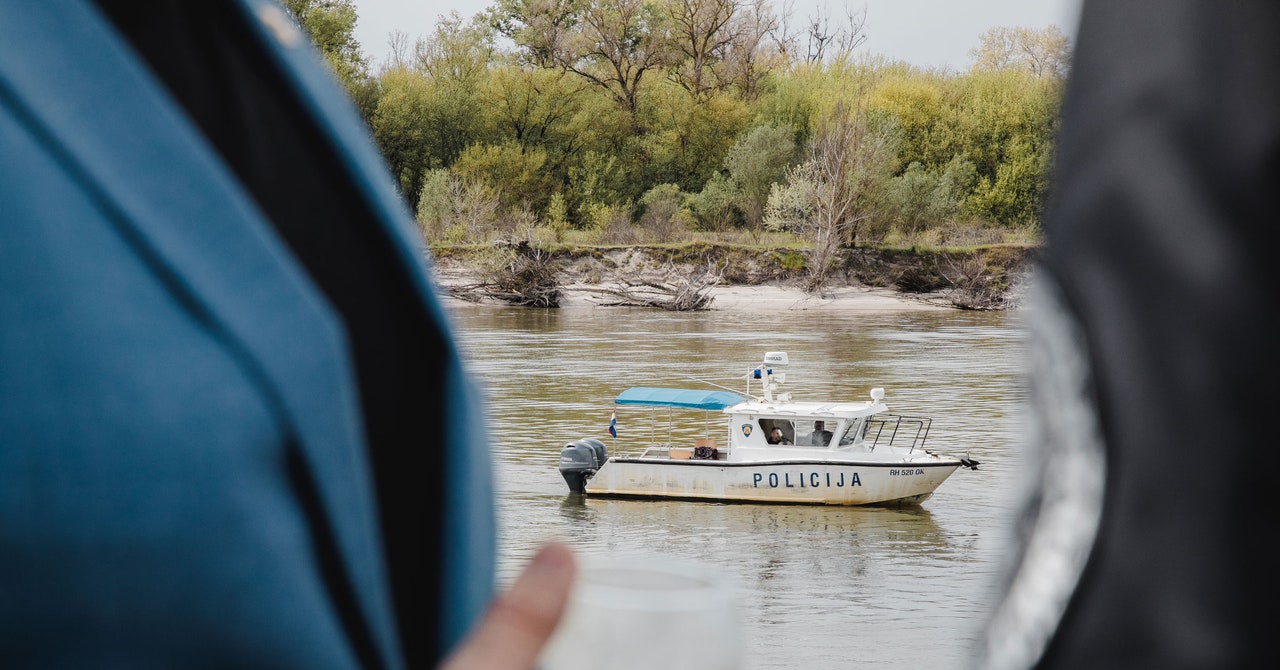
Late one morning in April, a boat called Liberty sailed down the Danube on a reconnaissance mission, toward a destination found on no map or atlas. It was decorated with the yellow livery of the Free Republic of Liberland—a tiny new country in the making on the border between Serbia and Croatia. As Liberty turned onto the river, at the rear of a small convoy, a Croatian police boat pulled out from among the waterside vegetation and began to follow.
One way to think about Liberland—a portmanteau of “liberty” and “land”—is as an experiment in ultra-libertarianism. The project is the baby of Vít Jedlička, a Eurosceptic politician from the Czech Republic who believes modern democracies are burdened by overtaxation and overregulation.
In 2014, frustrated with EU bureaucracy, Jedlička decided a fresh start was called for. A simple internet search yielded a promising result: an apparent legal no-man’s-land, a 7-kilometer-squared terra nullius in the Balkans, on the west bank of the Danube River. After the dissolution of Yugoslavia in the 1990s, there was a border mismatch: The Serbian government drew theirs along the deepest part of the Danube, the thalweg; the Croatians along the river course as it was in the 19th century, before engineering works and natural processes diverted its course. This created pockets of land on the western riverbank that are, technically, unclaimed by either nation.
The largest is known as Gornja Siga, but on April 13, 2015, Jedlička planted a flag and rechristened it Liberland. There, he is attempting to build “the freest country on the planet,” he says—“the Singapore of Europe,” in which tax is optional, bureaucracy minimal, and governance laissez-faire. The national motto: “To live and let live.”
The endeavor is largely funded by donations from the crypto nouveau riche. More than 700,000 people have registered their support for Liberland, 6,000 have signed up as paying e-residents, and roughly 1,000 have paid $5,000 or made an equivalent contribution to become full citizens.
A large chunk of that money has gone toward crypto tech: budget allocation, judicial processes, and property registration will all take place on a large public database—a new national blockchain. Jedlička—elected president of Liberland by a founding committee completed by his partner and a friend from college—says the approach will maximize transparency and minimize red tape. “Blockchain is the greatest tool to run a nation-state,” he claims. “We are just five years ahead of our time.”
But eight years on from Liberland’s founding, nobody lives there and next to nothing has been built. The Croatian government considers the territory part of an ongoing border dispute, not a terra nullius, and has previously said that all who visit must “abide by Croatian laws.”
Jedlička has twice been arrested by Croatian border police for attempting to cross into the territory, but in April, he and a band of supporters attempted a pilgrimage for Liberland’s eighth anniversary. It was a symbolic journey to mark what Jedlička hoped would be the start of permanent settlement—and a pivotal moment for this proto-cryptonation.
Read the full article here