


Topline
A Food and Drug Administration advisory committee met Friday to figure out ways to make pulse oximeters more accurate when doing readings on darker skin both in hospitals and at home, after research showed wrong readings led to treatment delays in minorities.
Key Facts
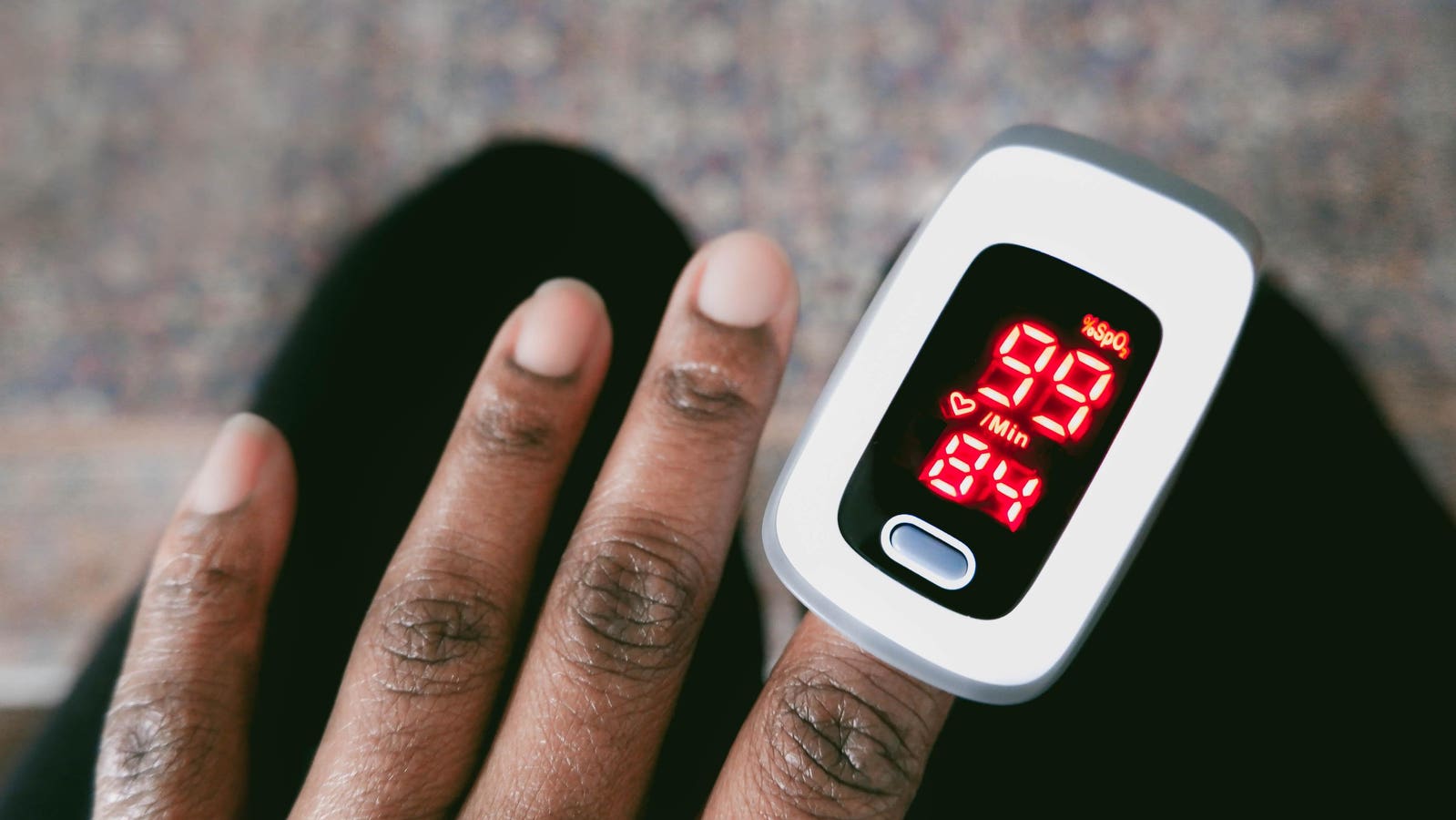
Pulse oximeters are devices usually placed on the tip of the finger and used to measure oxygen levels in the blood, and are typically used on people experiencing shortness of breath, or people with lung or heart conditions, according to the American Lung Association.
Because the use of pulse oximeters by patients at home and in hospitals by healthcare providers increased due to the Covid pandemic, the FDA released a notice in 2021 warning people that although the devices are useful, they have their limitations.
Some factors that may affect the accuracy of the devices’ readings are skin color, nail polish, ambient lighting, dyes or tattoos and severe anemia, James Lee, division director of the FDA’s Division of Sleep Disordered Breathing, Respiratory and Anesthesia Devices said during the meeting.
Over 20 state attorneys general sent a letter in November 2023 urging the FDA to update its guidelines to include warnings that address pulse oximetry’s inaccuracy on darker skin to “prevent additional severe illness and mortalities among darker skinned people.”
Research has shown darker skin tones receive more inaccurate readings than lighter ones: 11.7% of apparently normal readings in Black patients were wrong, compared to 3.6% of readings in white patients, a 2020 New England Journal of Medicine study found.
Crucial Quote
“We must keep in the forefront of our minds that this is a significant health equity issue,” Scott Lucas, vice president of device safety at nonprofit healthcare organization Ecri, said during the meeting. “The color of a patient’s skin should never degrade the quality or the effectiveness of tools that healthcare providers use to give lifesaving care.”
Key Background
Pulse oximeters are typically clipped onto a patient’s finger, and work by emitting light that passes through the skin, tissue and blood to the other side of the sensor, according to Yale Medicine. The sensor detects how much light passes through without being absorbed, and that measurement determines the blood oxygen levels. The devices are more inaccurate on darker skin tones because higher levels of melanin absorb higher levels of light, which limit the light’s ability to penetrate through the skin, a 2022 Sensors study found. Black patients have higher odds of having low blood oxygen noted in their blood-drawn readings than white patients, according to a separate 2022 study published in BMJ.
Tangent
The use of pulse oximeters increased during the Covid pandemic because they’re used to measure how severe the disease is. Compared to white patients, pulse oximeters overestimated blood oxygen levels by an average of 1.7% in Asian patients, 1.2% in Black patients and 1.1% in Hispanic patients, a 2022 JAMA Internal Medicine study found. These incorrect readings led to a delay in minorities receiving certain treatments for Covid, which researchers believe contributed to worse health outcomes in minorities during the pandemic. During the pandemic, inaccurate readings resulted in higher hospitalization in Black patients than white patients by 2.4%, and higher rates of readmission by 8.3%, a 2023 American Journal of Epidemiology study found.
Further Reading
Pulse Oximetry (Yale Medicine)
Read the full article here