FEDEX IS ONE OF THOSE COMPANIES that epitomizes the modern idea of efficiency: Deliver a document or a package anywhere in the U.S. overnight — guaranteed. The company stands as a symbol of operational wizardry, with a fleet of gleaming white airplanes and battalions of purple-shirted staff. The package handed across a FedEx counter in Orlando at 4 pm Tuesday appears in an office in San Diego before noon Wednesday.
To keep that happening, FedEx’s more than 700 jets need routine maintenance. That maintenance requires exactly the right parts from inventories of thousands of spares, and it requires the right mechanic in the right airport in a global network of 650. But FedEx can’t have planes sitting idly on the ground, waiting for a part or a mechanic.
Hence the puzzle: How to consistently get all three elements — plane, parts, and person — in the right place at the right time.
“It’s a ballet,” says Sheila Davis, manager of FedEx’s IT enterprise platform for geography. Airline operations turned to Davis’s IT group, an innovative FedEx team that uses location technology and spatial analytics — often, quite literally, maps loaded with data — to solve problems.
For this problem, like many others, the key is geography. You need to know where everything is, all the time.
As Davis explains, “there’s a lot of coordination that has to take place — getting the part of a plane on another plane, [and] once that plane with the part reaches the destination, coordinating having a mechanic available.
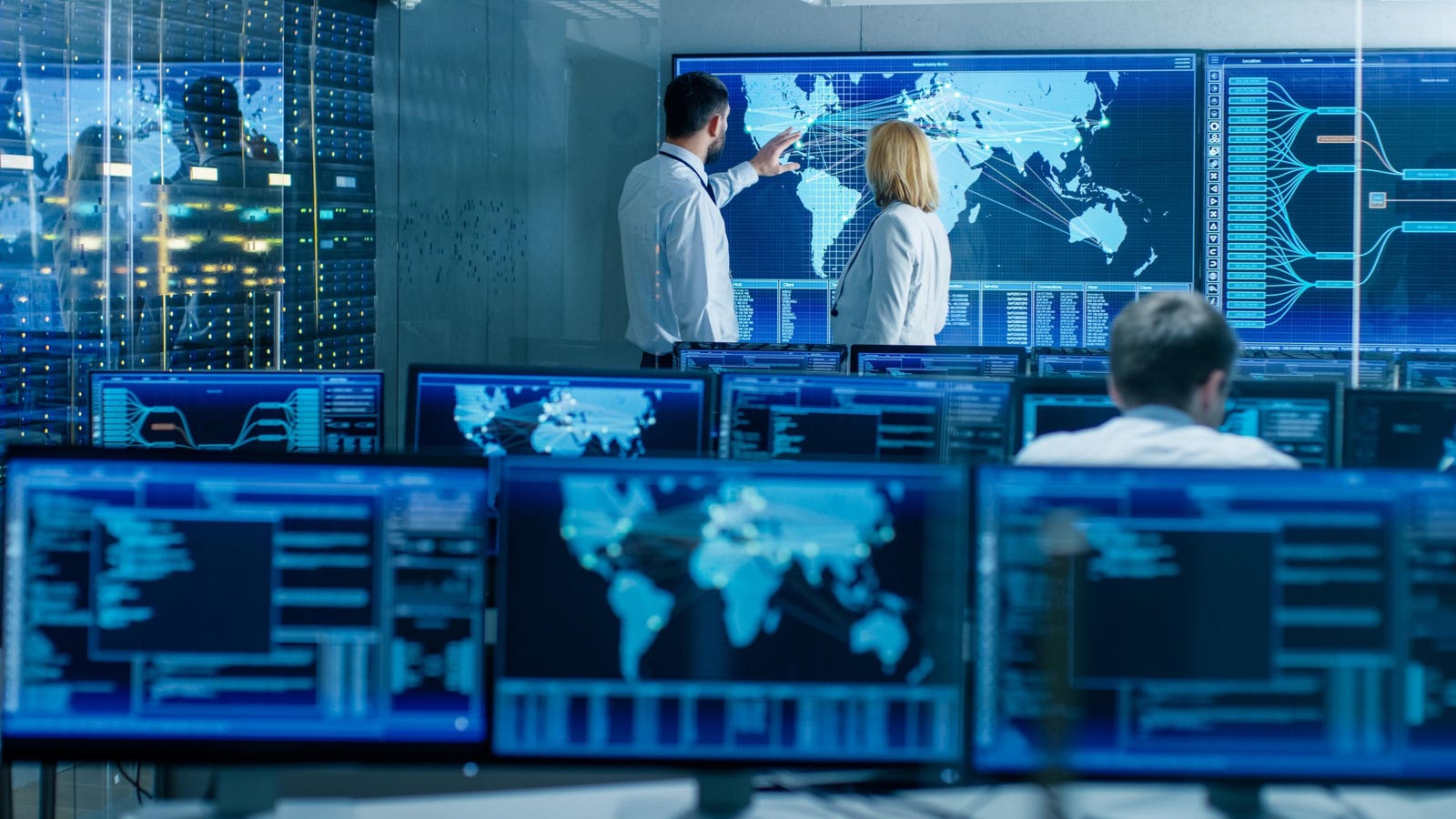
“We gave Air Ops some insight, mainly using visualization, looking — spatially — at all the planes in our network. Which planes were in flight, or about to take off? When would they arrive?”
At a glance, Fed Ex Air Ops could see how to get planes needing maintenance, and the parts they required, to the same place at the same time. Then they could schedule mechanics smartly. Seeing the status of the whole FedEx flight network in real time unraveled a puzzle that screens of data made worse.
The result: Maintenance happens more efficiently. Just as important, planning the maintenance process itself takes many fewer work hours. Costs are lower; maintenance performance is higher.
That’s the power — really, almost the magic — of bringing spatial analytics or the geographic approach to bear on a whole array of challenges, from communication to long-term strategy to risk reduction. Geography and visualization turn out to be a missing tool that unlocks remarkable insights, efficiencies, even hidden opportunities for growth.
The biggest companies in the world have discovered the impact of spatial thinking and are using it to tackle a surprising range of problem-solving.
Marriott International — with hotels in every major city in the world — is using spatial analytics, aka the geographic approach, to predict the physical risks that climate change poses to each of those 8000+ hotels, to better plan, prepare and manage that risk, region by region, hotel by hotel. “That is our quintessential thing right now,” says Rob Bahl, Marriott’s global VP of engineering and facilities. “We’re a bit early in our journey.” But Marriott is quickly finding all kinds of applications for spatial thinking. The company also uses it to track its fleet of US facility maintenance vehicles.
HOW IS IT POSSIBLE that a single approach — the geographic approach — could untangle aircraft maintenance for FedEx, and help Marriott to analyze and prepare for climate risks to their properties? And become a ubiquitous problem-solving strategy?
Many companies themselves have been caught off guard at the significance and usefulness of infusing geography into almost every analysis, every day-to-day operation, every long-term plan.
Bahl from Marriott says one of the hidden powers of spatial thinking is communication — maps are appealing and approachable. Putting critical data into geographic form has a way of making complicated ideas understandable.
“We’ve been on a journey for a long time to reduce our carbon footprint, and we’re getting more and more aggressive about that,” says Bahl. Using the geographic approach and geospatial technology, “We created a spinning globe imagery using ArcGIS that has the carbon footprint of every hotel around the world.”
Marriott’s own staff and property owners find the globe riveting.
“It’s fun to watch people pay attention to the globe,” Bahl says. “Who doesn’t like to play with maps? I was amazed and excited about the interest they had, much more than if I put a big spreadsheet up on a PowerPoint slide. There were a lot of questions asked.”
“A light bulb went off for me,” says Bahl. “This is a much better way to communicate things like ‘carbon footprint.’”
AT FEDEX, DAVIS’S GROUP HAS CREATED self-service tools, and spatial thinking is so broadly useful that groups inside FedEx are building their own maps, applications, and dashboards.
“It’s really interesting to see those teams able to answer their own questions,” Davis says. “We’re getting team members to think about solving problems in a different way — in a spatial way. That’s definitely rewarding.”
Spatial thinking or the geographic approach is a decision-making tool. A planning tool. A tool of data analysis, data modeling, and data presentation. It’s a collaboration tool, a communication tool, and a transparency tool. In other words, in the words of those in the best position to know in the first place, it’s an especially useful tool for an especially challenging time.
To learn more about how businesses can use spatial thinking to plan and manage complex supply chains on a global scale, visit esri.com/en-us/industries/technology/focus-areas/supply-chain-operations-and-analysis.
Read the full article here