


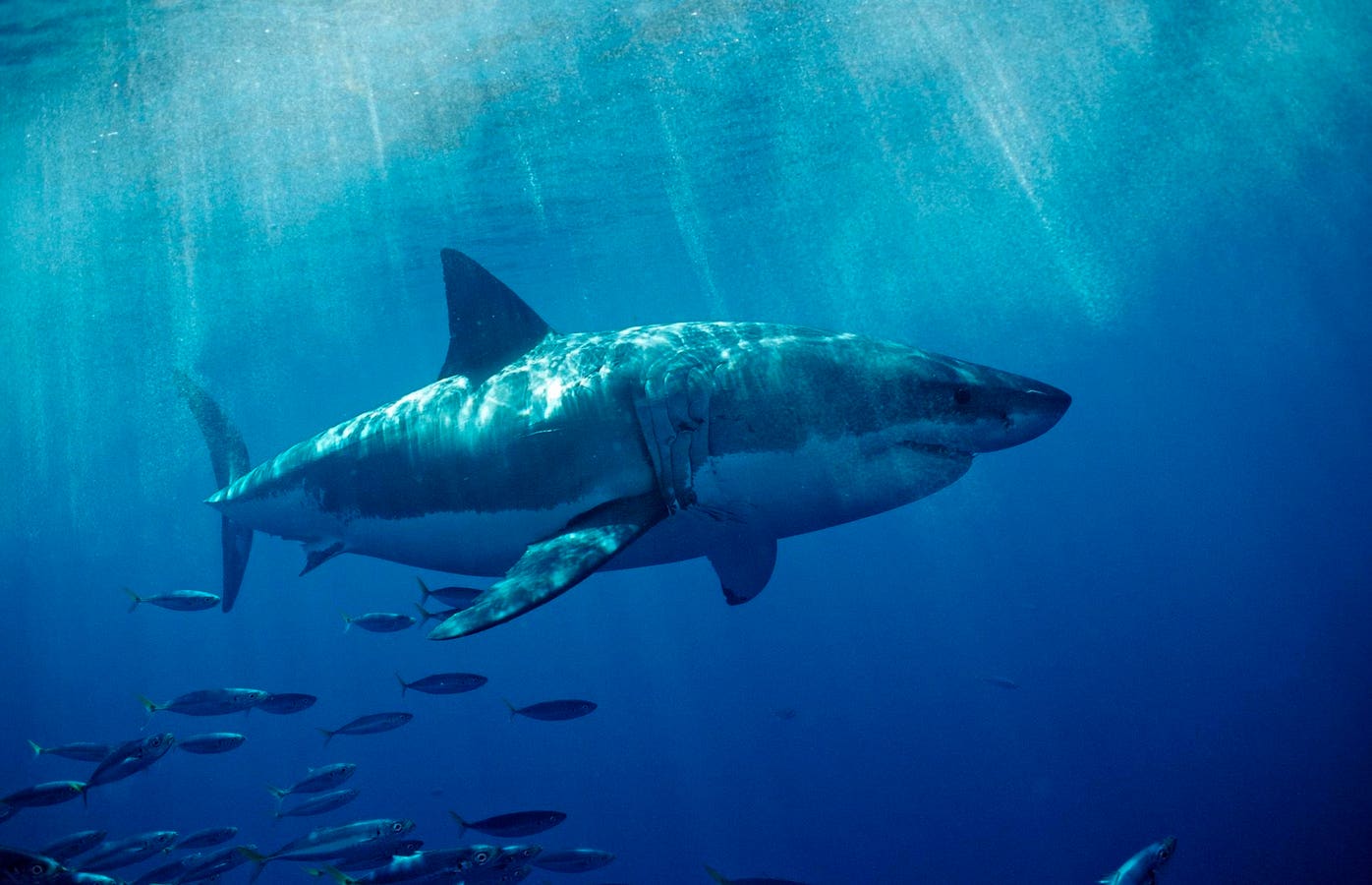
Large and highly migratory species, such as the iconic white shark (Carcharodon carcharias), have fascinated marine enthusiasts for decades (if not longer). Despite extensive efforts to study the white shark, scientific understanding has predominantly focused on ecological and behavioral aspects, leaving critical gaps in fundamental areas such as age, growth, and maturity. The difficulties in studying these creatures are compounded by the limitations imposed by protective measures, making data collection a formidable and often opportunistic endeavor.
Great white sharks have long been revered for their impressive size, power, and enigmatic presence. Sporting a sleek, torpedo-shaped body and rows of razor-sharp teeth, they are fouund in coastal waters worldwide. Primarily preying on marine mammals, fish, and seabirds, they utilize their keen senses and lightning-fast strikes to ambush their prey. Ranking among the largest predatory fish on Earth, great white sharks play a crucial role in maintaining the balance of marine ecosystems, regulating populations of prey species and promoting biodiversity. Yet, they face numerous threats, including habitat loss, overfishing, and accidental bycatch, underscoring the urgent need for conservation efforts to ensure the survival of these magnificent creatures for future generations.
The distribution of white sharks spans nine distinct populations in our ocean, each presenting its own unique challenges. One such population, residing in the western North Atlantic, has recently come into focus after decades of depletion. Enter OCEARCH, a privately owned vessel that allows researchers to capture, study, and release white sharks under controlled conditions. Utilizing the data from 17 OCEARCH research cruises conducted along the Atlantic coast of the USA and Canada, scientists employed cutting-edge Bayesian analysis to estimate the length-at-maturity (L50) for male and female white sharks in the western North Atlantic population in a new publication. Understanding the length at various life-history stages and estimating age contributes to determining the reproductive value of the population, enabling more accurate predictions of stock recovery, the impacts of fishing, and other vital parameters for the conservation of this highly migratory apex predator.
For females, the estimated L50 stands at 411.3 cm total length (TL), significantly smaller than previously assumed. In contrast, males reach maturity at 334.9 cm TL, echoing the trend of earlier maturation observed in various shark species. The findings challenge previous assumptions, suggesting that the L50 values for both male and female white sharks in the WNA are somewhat smaller than previously reported. These revelations, the authors argue, prompt a reevaluation of our understanding of the species’ life history, calling for a closer examination of size and maturity data.
“Conservation actions for this iconic species at regional and international levels must be adjusted accordingly,” the authors state. “An effective conservation initiative for highly migratory sharks relies on accurate life history data of the species and requires international coordination. For white sharks, threats from fishing pressure, essential habitats or migratory routes that need protection, or other needs for their effective conservation must be identified.” The authors suggest that for effective species conservation efforts, international data sharing should ensure that results are comparable through the adoption of standardized methods and statistical procedures.
Read the full article here