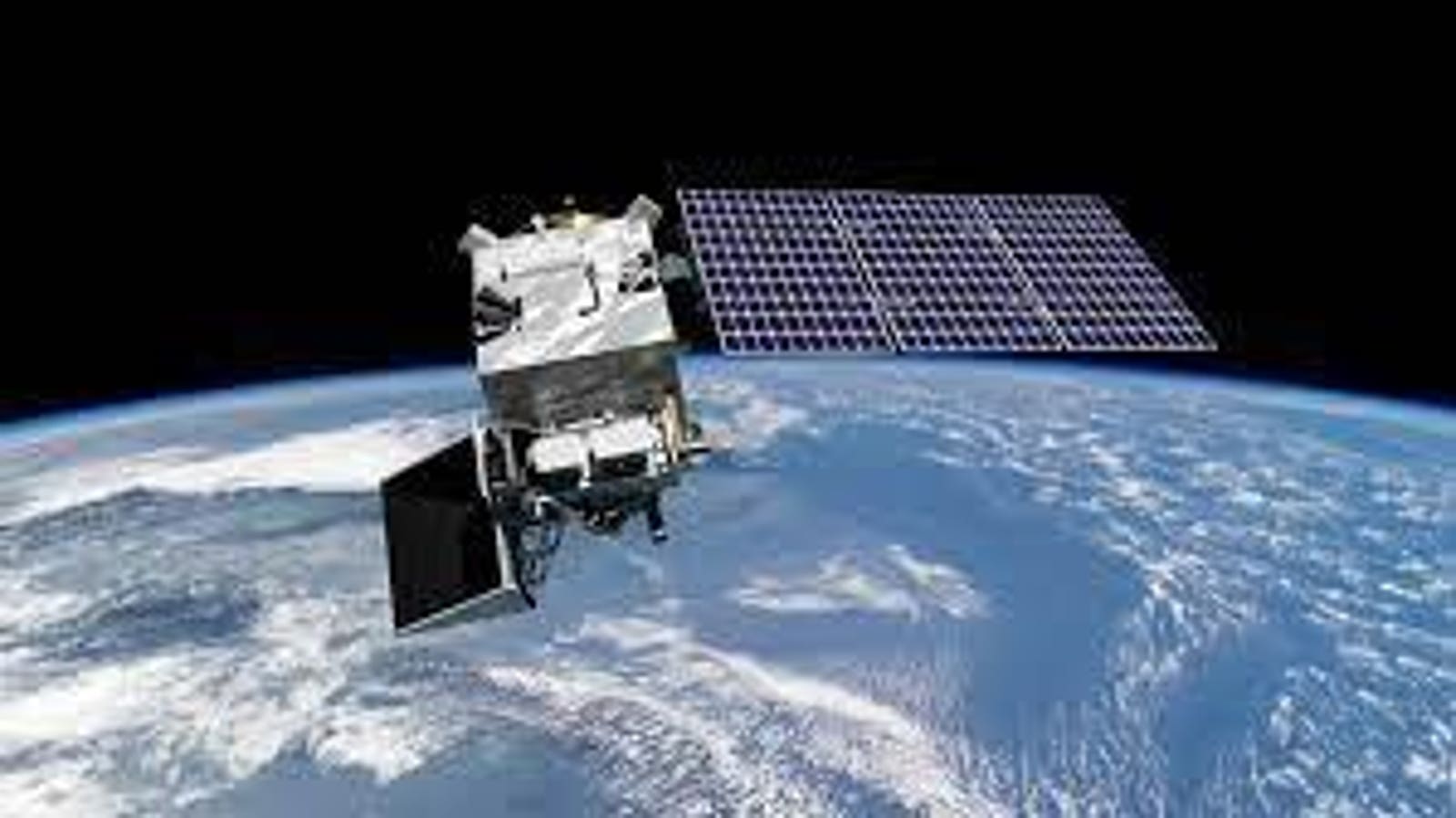
As a former scientist at NASA Goddard Space Flight Center, I still get very excited with the successful launch of a mission focused on Planet Earth. Unfortunately, NASA’s robust Earth Sciences program and its missions often do not get the same attention as past shuttle launches, large telescopes or Mars rovers. I cannot tell you how many times this research meteorologist was asked if I supported launches or knew any astronauts. That’s why I often use this platform to broaden the narrative. Let’s talk about NASA’s Plankton, Aerosol, Cloud, ocean Ecosystem (PACE) satellite mission.
On February 8th, the satellite was successfully launched from Cape Canaveral Space Force Station. It was injected into orbit by a SpaceX Falcon 9 rocket. What’s the so what here, Dr. Shepherd? Our oceans are feeling the impacts of climate change on multiple fronts including marine heatwaves, sea level rise, coral bleaching, and loss of biodiversity. A press release issues by the nation’s space agency points out, “With PACE, researchers will be able to study climate change’s effects on phytoplankton, which play a key role in the global carbon cycle by absorbing carbon dioxide from the atmosphere and converting it into their cellular material.”
Those tiny phytoplankton play a pivotal role in ecosystem processes and ultimately aspects of our food chain, well-being, and economic health. Karen St. Germain is the Director of the Earth Science Division at NASA Headquarters. She said, “As an open-source science mission with early adopters ready to use its research and data, PACE will accelerate our understanding of the Earth system and help NASA deliver actionable science, data, and practical applications to help our coastal communities and industries address rapidly evolving challenges.” But how does it work?
The primary instrument, the Ocean Color Instrument, is “hyperspectral.” It uses different portions of the electromagnetic spectrum (UV, visible, and near-infrared) to measure ocean color. Ocean color is a useful way of detecting and monitoring phytoplankton. According to NASA, “This will enable scientists to track the distribution of phytoplankton and – for the first time from space – identify which communities of these organisms are present on daily, global scales.” Such information is valuable to researchers as well as coastal resource managers trying to identify bad algal blooms or diagnose the health of fisheries.
As common with many NASA Earth science missions, the satellite is giving the nation maximum return on its investment. The spacecraft also has two polarimeter instruments, Hyper-Angular Rainbow Polarimeter #2 and Spectro-polarimeter for Planetary Exploration. These instruments will provide new information on cloud properties, aerosols, and air quality. While understanding such information is important from many climate perspectives, there are relationships between aerosols (small particles in the atmosphere), clouds, and phytoplankton. The post on the plaform X (below) by The Food Times is a good example of this aspect of the problem.
We cannot fight climate change without knowing more about oceans and their interactions with the atmosphere. PACE is another vital tool in the toolbox. Oceans are vast. They cover about 75% of the planet. The vantagepoint of space is increasingly needed to address the problem properly.
Read the full article here