


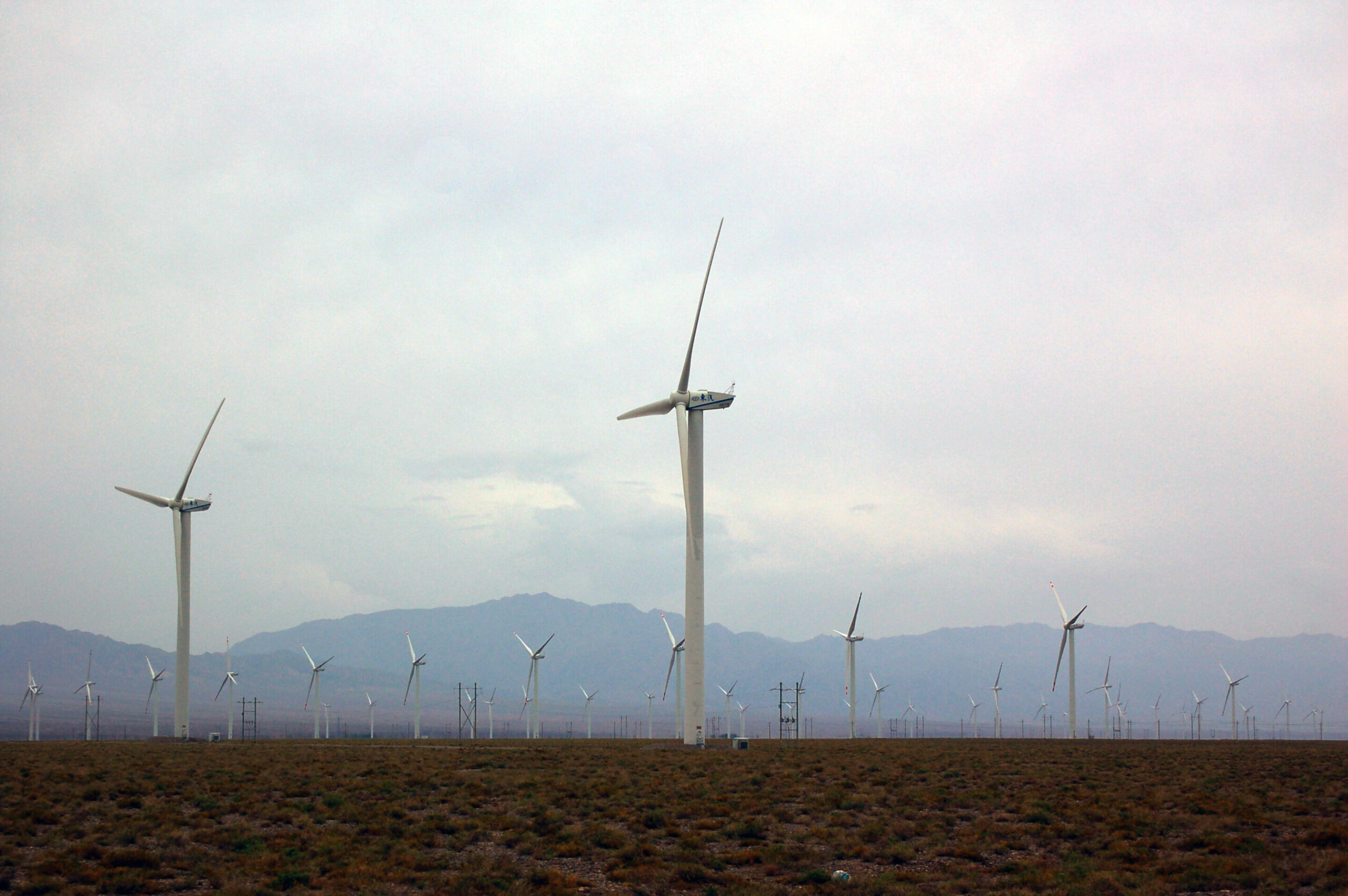
To become carbon neutral by 2060, as mandated by President Xi Jinping, China will have to build eight to 10 times more wind and solar power installations than currently exist in the country. Reaching carbon neutrality will also require major construction of transmission lines.
China land use policies will also have to be more coordinated and focused on a nationwide scale rather than be left to ad hoc decisions by local governments. That’s because 80% of solar power and 55% of wind power will have to be built within 100 miles of major population centers.
These are the conclusions of a new study from researchers at Tsinghua University in Beijing and at the University of California San Diego. The team publishes their findings in the Feb. 26, 2024 issue of the Proceedings of the National Academy of Sciences.
“We know China has a very ambitious pathway to achieve carbon neutrality. We wanted to find out exactly what that entails,” said Michael Davidson, a senior author of that study and a professor at the School of Global Policy and Strategy and the Jacobs School of Engineering at UC San Diego.
One of the goals of the study is to inform renewable energy planning and policy in China. But the information is also crucial because China is currently the world’s biggest greenhouse gas emitter. So the country’s policies impact the global climate change picture and the planet’s future. Other countries can also learn from China’s successes and failures.
The study is based on an ambitious model that simulated China’s carbon-neutral power grid in 2060 and what it would take to get there. The model looks at power generation resources and transmission line installations at an unprecedented resolution, considering parcels of land as small as 20 to 30 square kilometers. The model can also be applied to other countries.
As the researchers built and ran the model, the importance of land use became clearer. For example, China’s east, near the coast, will run out of land that can be used for renewable energy plants. As a result, any solar installations in that area need to be built on a smaller scale, on residential and commercial buildings, for example.
The model shows that China will need to build two to four terawatts each of solar and wind capacity. Construction of terawatt-level energy storage will also be required. Ultra-high voltage transmission between the country’s provinces should double or triple to ensure power supplies are delivered where they are needed.
Next steps include building flexible demand into the model; considering a larger range of land use factors, such as conservation priorities; and examining the implication of large changes in the mix of power resources and emissions reduction activities in sectors other than electricity.
More information:
Spatially resolved land and grid model of carbon neutrality in China, Proceedings of the National Academy of Sciences (2024). DOI: 10.1073/pnas.2306517121. doi.org/10.1073/pnas.2306517121
University of California – San Diego
Read the full article here


