


Water could play a crucial role in reducing global carbon dioxide (CO2) emissions, according to Johns Hopkins engineers.
A team led by A. Shoji Hall, an assistant professor of materials science and engineering and an associate researcher with the Ralph O’Connor Sustainable Energy Institute (ROSEI), has developed a new strategy that optimizes water availability to improve the efficiency of the electrochemical conversion of CO2 into valuable chemical products such as ethylene and ethanol. Their results appeared in Nature Catalysis.
“This could spark the advent of more efficient methods for converting CO2 into valuable chemicals and fuels,” said Hall, who worked on the study with first author Nick Zhang, a Ph.D. candidate in the Department of Materials Science and Engineering. “Our discovery not only bolsters efforts to combat climate change but also reveals fresh opportunities within the green chemistry and sustainable energy sectors. In essence, this research could play a key role in our transition towards a more sustainable and environmentally conscious future.”
The usual process for conversions like this involves copper metal and electricity to convert CO2, but that resulted in producing a lot of methane and carbon monoxide. Hall decided to look at how water could change the equation because it’s a universal solvent and is abundant and non-toxic.
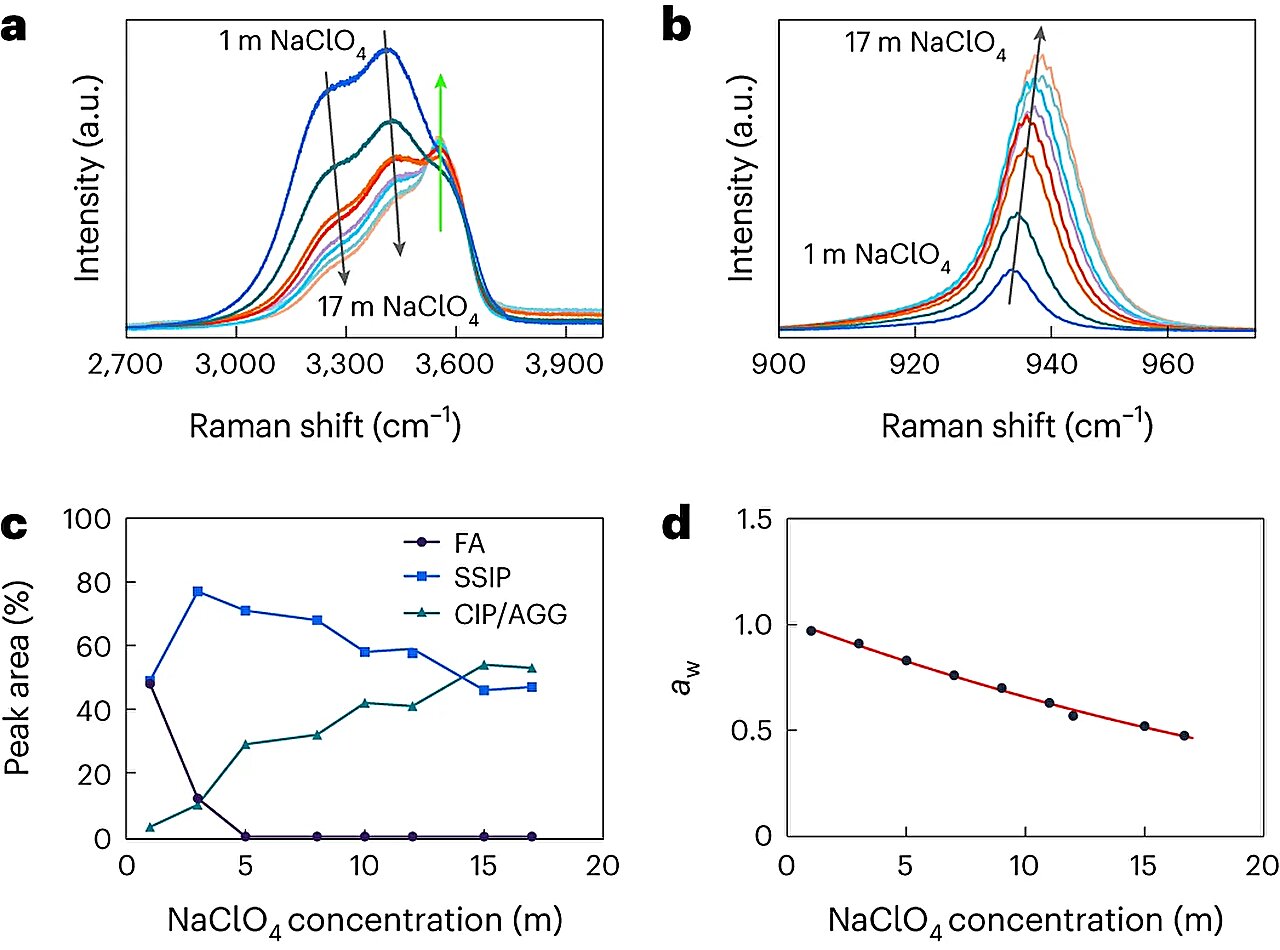
The group’s approach focuses on manipulating the thermodynamic activity of water in highly concentrated salt solutions. The researchers ran electricity through CO2-saturated water, gradually reducing the concentration of the water, and found that lowering the amount of water activity—in other words, the availability of water molecules in an interaction—resulted in the production of more ethanol and ethylene with less methane and carbon monoxide emissions.
This was the result of CO, a key intermediate in the reaction, sticking to the copper surface, sparking the chemical reactions that produced the chemicals that Hall and his group were after.
“This implies that water activity plays a pivotal role in enhancing CO surface coverage and promoting C-C coupling, leading to the creation of desirable C2 products,” Hall said.
While ethanol and propranol are potential products, Hall identifies ethylene as the primary form of carbon being generated. Ethylene is valued in the manufacturing sector with a variety of potential applications, including serving as the foundational ingredient for an array of materials including polyethylene, ethylene oxide, and ethylene glycol. Global demand for ethylene approached 180 million metric tons as recently as 2018.
Hall believes the findings have the potential to be particularly useful in reducing the amount of CO2 emitted by industrial activity, which comprises more than 30% of total global emissions of carbon dioxide.
“The significance of our findings is anchored in their potential applications within the realm of CO2 reduction,” Hall said. “Our study presents a substantial stride forward by unveiling a strategic approach to optimizing the electrochemical reduction of CO2 into coveted C2+ products. Given that water serves as a universal solvent, understanding its central role in regulating electrochemical reactivity has transformative implications.”
More information:
Hao Zhang et al, Promoting Cu-catalysed CO2 electroreduction to multicarbon products by tuning the activity of H2O, Nature Catalysis (2023). DOI: 10.1038/s41929-023-01010-6
Johns Hopkins University
Read the full article here


