

Close Menu
  • Home
  • News
  • Startups
  • Innovation
  • Industry
  • Business
  • Green Innovations
  • Venture Capital
  • Market Data
    • Economic Calendar
    • Stocks
    • Commodities
    • Crypto
    • Forex
Facebook X (Twitter) Instagram
[gtranslate]
Facebook X (Twitter) Instagram YouTube
Innovation & Industry
Banner
  • Home
  • News
  • Startups
  • Innovation
  • Industry
  • Business
  • Green Innovations
  • Venture Capital
  • Market Data
    • Economic Calendar
    • Stocks
    • Commodities
    • Crypto
    • Forex
Login
Innovation & Industry
Green Innovations

Study shows AI could help power plants capture carbon using 36% less energy from the grid

News RoomNews RoomJanuary 15, 2024No Comments2 Mins Read
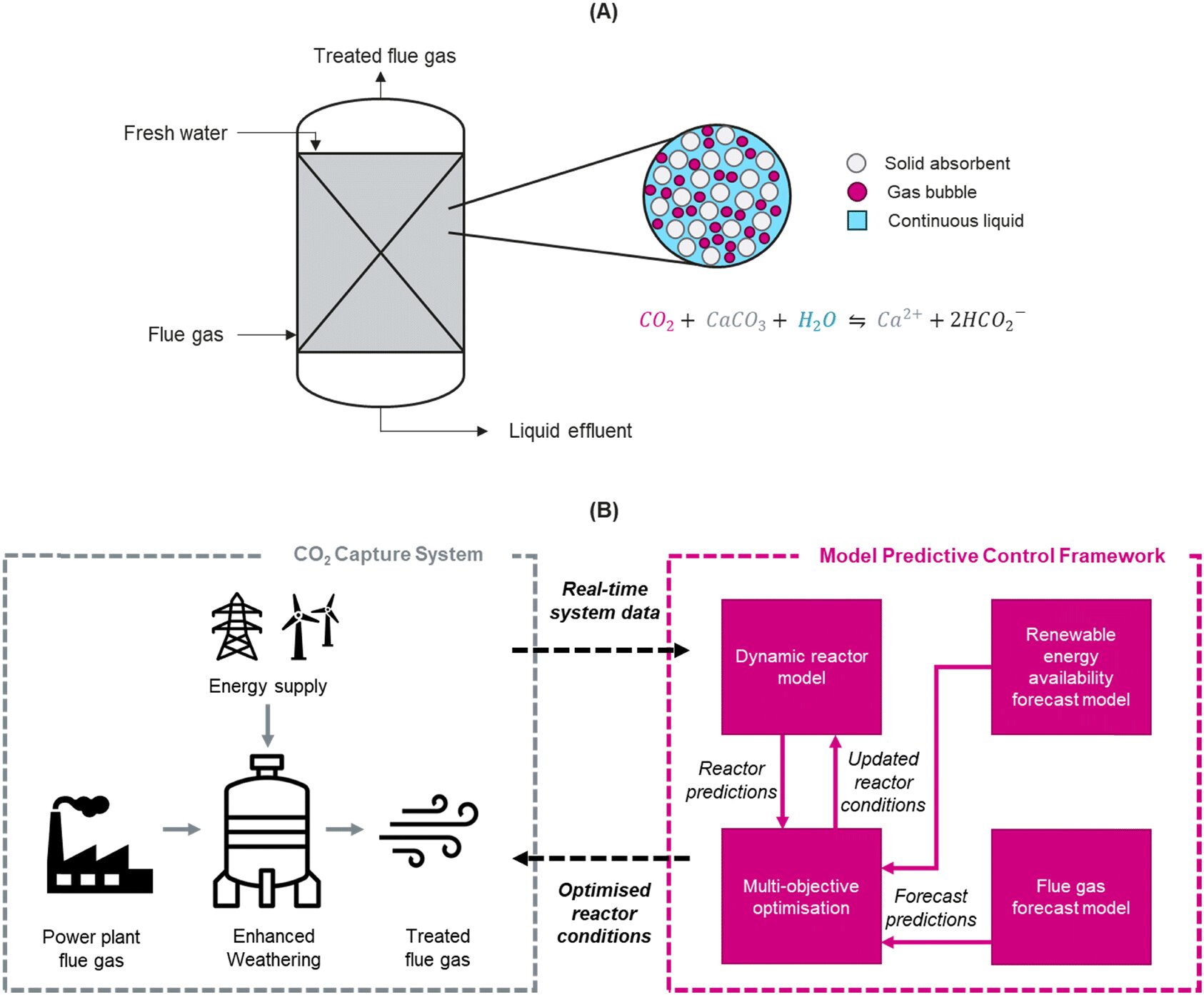
Schematic representation of (A) enhanced weather packed bubble column reactor and (B) the model predictive control framework developed to maximize enhanced weathering reactor CO2 capture rate, while simultaneously minimizing non-renewable energy consumption. Credit: Reaction Chemistry & Engineering (2023). DOI: 10.1039/D3RE00544E

Using artificial intelligence (AI), scientists from the University of Surrey adjusted a system based on a real coal-fired power station. The model could capture 16.7% more carbon dioxide (CO2) while using 36.3% less energy from the U.K.’s national grid. The research is published in the journal Reaction & Chemistry Engineering.

Professor Jin Xuan, chair of sustainable processes at the University of Surrey’s School of Chemistry and Chemical Engineering, said, “Usually, carbon capture systems run constantly, at the same rate—regardless of the externally changing environment. But we showed that teaching the system to keep making small adaptations can produce big energy savings—and capture more carbon at the same time.”

When power plants burn fuel, they produce CO2—a greenhouse gas. But it can be captured by bubbling the flue gas through water containing limestone. CO2 reacts with the calcium carbonate in the limestone. This produces harmless bicarbonate, in a process known as “enhanced weathering.”

It takes energy to pump the water and the CO2. The CO2 capture plant had its own wind turbine—but in calmer weather, it took energy from the grid.

Using AI, researchers taught a model system to predict what would happen—so it could pump less water when there was less CO2 to capture, or when less renewable energy was available.

The team hope their findings can be used more widely throughout the industry, contributing towards UN Sustainability Goals.

Dr. Lei Xing, lecturer in chemistry and chemical engineering at the University of Surrey, said, “Although we tested our model on enhanced weathering, the principles apply more widely. Our model could help anybody trying to capture and store more CO2 with less energy—whatever the process they’re using.”

More information:
Oliver J. Fisher et al, Responsive CO2 capture: predictive multi-objective optimisation for managing intermittent flue gas and renewable energy supply, Reaction Chemistry & Engineering (2023). DOI: 10.1039/D3RE00544E

Provided by
University of Surrey


Read the full article here

Related Articles

Neutron scattering study points the way to more powerful lithium batteries

Green Innovations April 16, 2024

Researchers can help shipowners achieve ambitious climate targets

Green Innovations April 16, 2024

Solar energy can uplift rural Ethiopians, but is hard to come by

Green Innovations April 16, 2024

A timer can shorten your shower even when you have no incentive to save water

Green Innovations April 16, 2024

High electric bills threaten California’s clean future: This plan could help

Green Innovations April 16, 2024

New insight about the working principles of bipolar membranes could guide future fuel cell design

Green Innovations April 16, 2024
Add A Comment
Leave A Reply Cancel Reply

Copyright © 2026. Innovation & Industry. All Rights Reserved.
  • Privacy Policy
  • Terms of use
  • Press Release
  • Advertise
  • Contact

Type above and press Enter to search. Press Esc to cancel.

Sign In or Register

Welcome Back!

Login to your account below.

Lost password?