


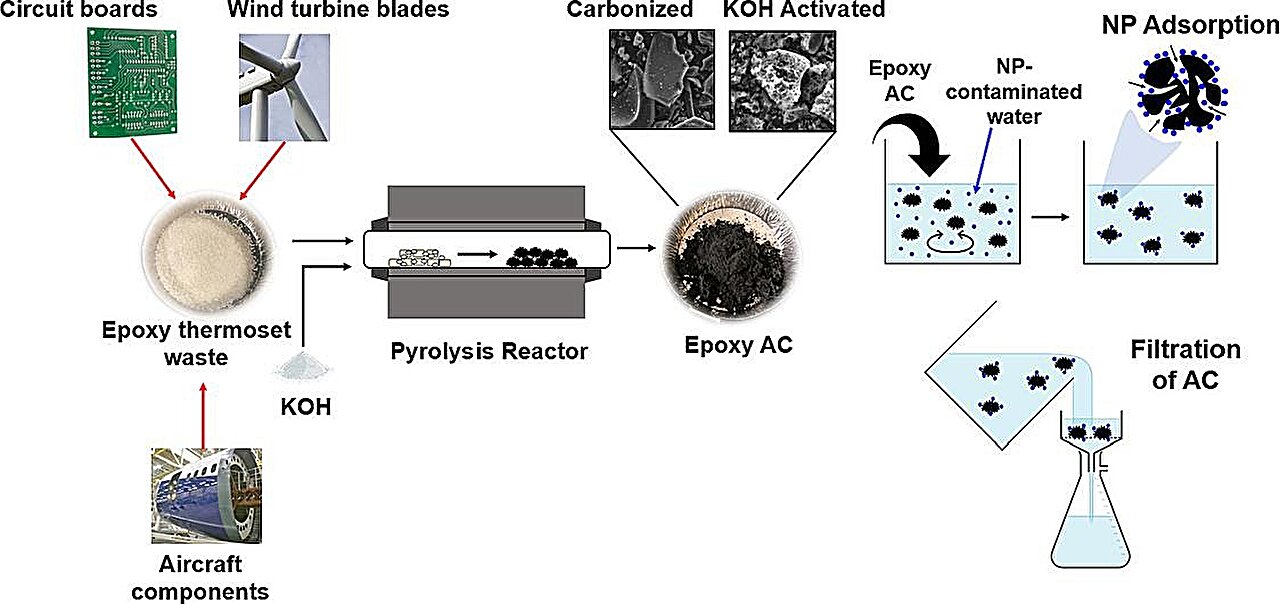
University of Waterloo researchers have created a new technology that can remove harmful nanoplastics from contaminated water with 94% efficiency. The study, “Utilization of epoxy thermoset waste to produce activated carbon for the remediation of nano-plastic contaminated wastewater,” was published in the journal Separation and Purification Technology.
The amount of plastic pollution in our ecosystem has become an increasingly alarming concern globally. Concerns have frequently been flagged about the impact that plastic pollution has on the toxicity to the environment and humans.
The impact of nanoplastics, material that is a thousand times smaller than microplastics, has been found to have a significant detrimental effect on aquatic and human life. However, the options that can eliminate nanoplastics from oceans and lakes are limited.
A team of researchers led by Waterloo Chemical Engineering professor Tizazu Mekonnen, who specialize in polymer engineering, tackled a new method to address small plastic waste and remove nanoplastics from wastewater systems.
“Rationally designed plastics not only can be part of the solution to reduce climate change but can have a positive impact in economic development and create jobs,” Mekonnen said. “This technology has the potential to significantly reduce the carbon footprint of the plastics industry.”
Mekonnen and his graduate student Rachel Blanchard used epoxy, a waste polymer that can’t be reused or reprocessed and often ends up in landfills or finds its way into water system networks like lakes or streams.
Using a process called thermal decomposition, the researchers converted epoxy into activated carbon, a material capable of removing nanoplastics.
The researchers then used the activated carbon to treat water contaminated by nanoplastics after producing nanoplastics from polyethylene terephthalate, a form of polyester often used in plastic water bottles and clothing such as fleece.
These tiny contaminants pose a greater health risk compared to microplastics as they can penetrate cells and are hard to detect. The 94% removal efficiency of nanoplastics was achieved by physically trapping the nanoplastics in the porous structure of the waste plastic, which generated activated carbon.
“To end the plastic waste crisis and reduce the environmental impact of plastics production, we need to implement a circular economy approach that considers every stage of the plastic journey,” Mekonnen said.
The researchers’ next steps in their research will look to apply this clean-up process with other types of plastics and scale-up testing in municipal wastewater treatment facilities, which often contain a variety of other contaminants in addition to microplastics.
More information:
Rachel Blanchard et al, Utilization of epoxy thermoset waste to produce activated carbon for the remediation of nano-plastic contaminated wastewater, Separation and Purification Technology (2023). DOI: 10.1016/j.seppur.2023.124755
University of Waterloo
Read the full article here


