


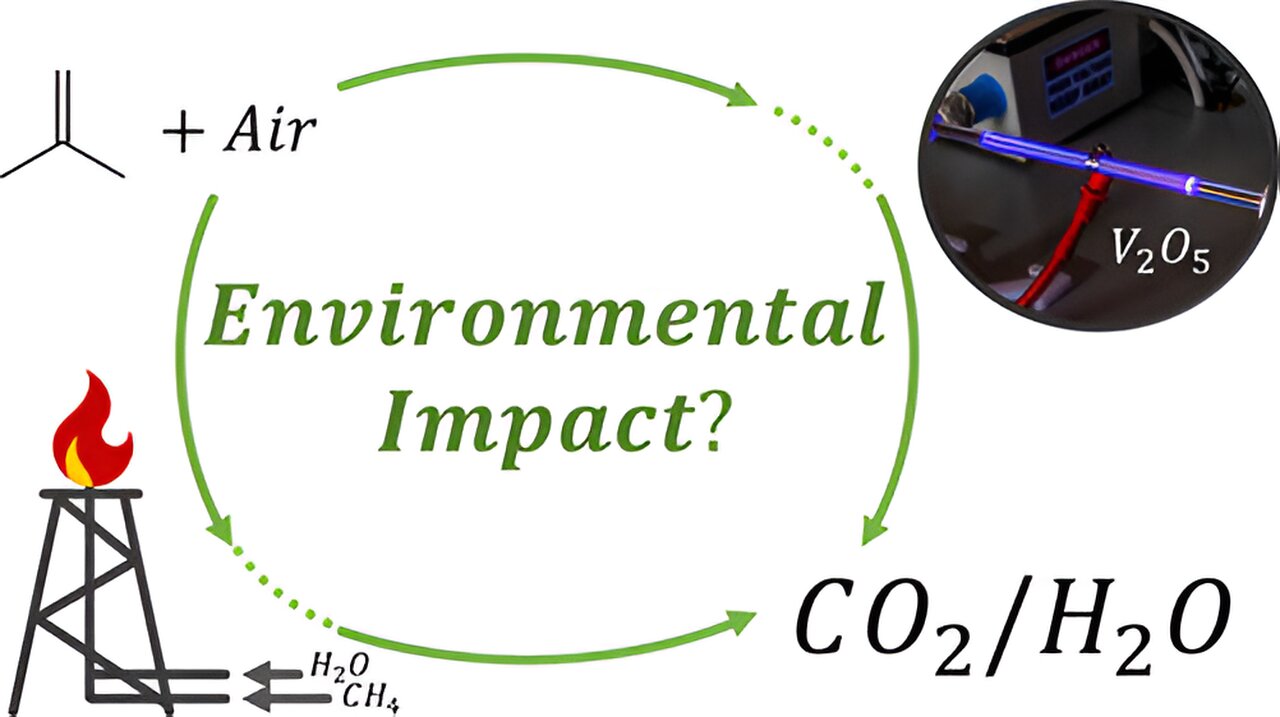
Researchers have used new technology to create an electric flare stack that significantly reduces CO2 emissions compared to gas flares that are currently used by oil refineries to control pollution.
Scientists from the University of Nottingham’s School of Chemistry worked with industry partner Lubrizol and the University of Warwick to develop a nonthermal plasma electric flare stack to reduce carbon emissions.
The team showed that by eliminating the “fuel” of the flare, which is the gas isobutylene, the “electric flare stack” consumes 6.6% less energy than an equivalent steam-aided methane flare, with significant CO2 emission reductions (between 2.0× and 11.4× lower).
Gas flare stacks are the current benchmark technology for industrial pollution control. Gas flare stacks are ubiquitous with oil recovery and are often seen flickering above refineries and chemical plants where volatile by-products need to be disposed of with minimal environmental impact.
Recent BBC reports suggested the impact of gas flares on human health and the environment is much larger than earlier thought, with pollutants from flaring including PM2.5, Ozone, NO2, and benzo(a)pyrene (BaP), which at high levels or continued exposure have been linked to strokes, cancer, asthma, and heart disease according to international experts including the World Health Organization (WHO).
The research was carried out by Post-doctoral researcher Matteo Molteni from the University of Nottingham alongside experts from Lubrizol and the University of Warwick. The project is part of the University of Nottingham’s partnership with Lubrizol, a global leader in the specialty chemicals industry, and Warwick. The partnership aims to create cleaner and greener chemical processing methods in a bid to help the government meet its carbon-neutral targets.
“This project underlines the importance of industry partnerships in driving innovation in sustainability in chemical processes. The solution we have developed in this research offers benefits to environmental performance, which, in the context of this industry, is critical. The next phase would be to explore whether this technology can be used in petchem flaring at scale,” says Professor Peter Licence, School of Chemistry and lead for the industry partnership at Nottingham.
“This is an exciting piece of technology that potentially allows manufacturing plants to meet their environmental responsibilities without the need to burn natural gas, which in turn could reduce scope one emissions. Lubrizol will continue its collaborations with the University of Nottingham and third parties to investigate the scalability of nonthermal plasma for VOC destruction,” says Elizabeth Grove, Vice President, Sustainability and Public Affairs at Lubrizol.
The paper is published in the journal Industrial & Engineering Chemistry Research.
More information:
Matteo Molteni et al, Can “Electric Flare Stacks” Reduce CO2 Emissions? A Case Study with Nonthermal Plasma, Industrial & Engineering Chemistry Research (2023). DOI: 10.1021/acs.iecr.3c02909
University of Nottingham
Read the full article here


