


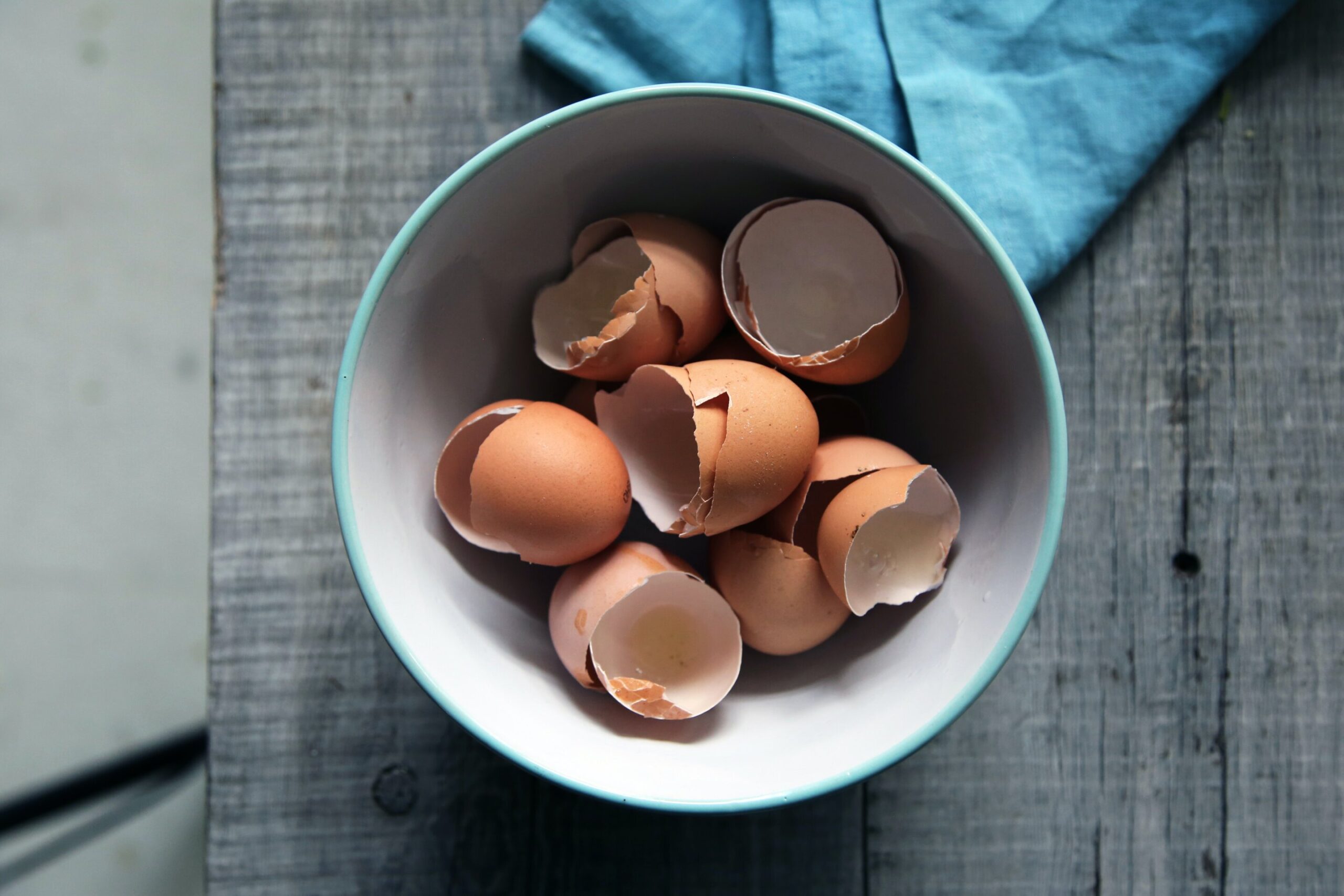
Chicken eggshells may be the answer to developing safer, sustainable and cost-effective rechargeable battery storage systems, according to new research.
Murdoch University Associate Professor Dr. Manickam Minakshi Sundaram, from the Center for Water, Energy and Waste at Harry Butler Institute, for a doctoral thesis has successfully developed a new mechanism associated with electrode materials and electrolytes, offering an alternative to the expensive and impractical power storage technologies of the past and present.
“We’ve found that chicken eggshells can be used as electrodes—a conductor of electricity—in powering batteries. Eggshells contain a high level of calcium carbonate, and when they are baked and crushed, their chemical compositions change and they become a more efficient electrode and conductor of power,” Dr. Minakshi said.
“The current lithium-ion batteries used for renewable energy storage typically use fossil fuels.
“Repurposing a bio-waste product like eggshells could add considerable value to the renewable energy market. They also offer a potentially safer option, as the current lithium battery technologies are high-cost and potentially unsafe in the event of catastrophic failure.”
As the world continues to prioritize renewable energy sources, this breakthrough marks a significant step forward, offering hope for a greener and more sustainable future.
The study, conducted by Dr. Minakshi as part of his higher doctorate thesis with Flinders University, focused on the development of sustainable electrodes in aqueous-based energy storage technology.
“The implications of this study go beyond scientific discovery,” Dr. Minakshi said.
“Chicken eggs and related products are used in large quantities in the food processing and manufacturing sectors, households, the nutrition industry and even in the pharmaceutical industry, but their shells are typically sent as solid waste to landfill.
“However, eggshell and shell membranes contain a range of active chemical compounds that can be used. The reversibility of this new approach allows for efficient energy storage and retrieval. The study demonstrates that highly conductive aqueous lithium and sodium electrolytes with varying salt concentrations have the potential to replace existing non-rechargeable primary batteries. The discovery holds the promise of high energy capacity, long cycle life and affordability in aqueous batteries.”
By incorporating suitable additives such as biodegradable redox polymers, titanium boride/sulfide (TiB2, TiS2), or bismuth oxide (Bi2O3) compounds, the electrodes can be further modified to improve their performance.
“The potential applications of this breakthrough are immense,” Dr. Minakshi said. “We could transition from a linear economy to a circular economy, reducing, reusing and recycling waste improving both sustainable development and addressing waste management.”
The studies on sustainable electrode materials have also been extended to other biowaste including chitosan derived from crustaceans, mango seed husk, and grape marc from wineries. From these biowastes, N-doped carbon was derived, which exhibits excellent electrochemical performance.
More information:
Studies on oxides, phosphates, molybdates, and other sustainable materials for batteries and supercapacitors with electrochemical insights. flex.flinders.edu.au/file/e982 … ndaramThesis2023.pdf
Murdoch University
Read the full article here


