


Amid the rubble of large-sale earthquake, war or other disaster—and as aging buildings and infrastructure are replaced—mountains of concrete are often taken to landfill or pounded into rubble for roads.
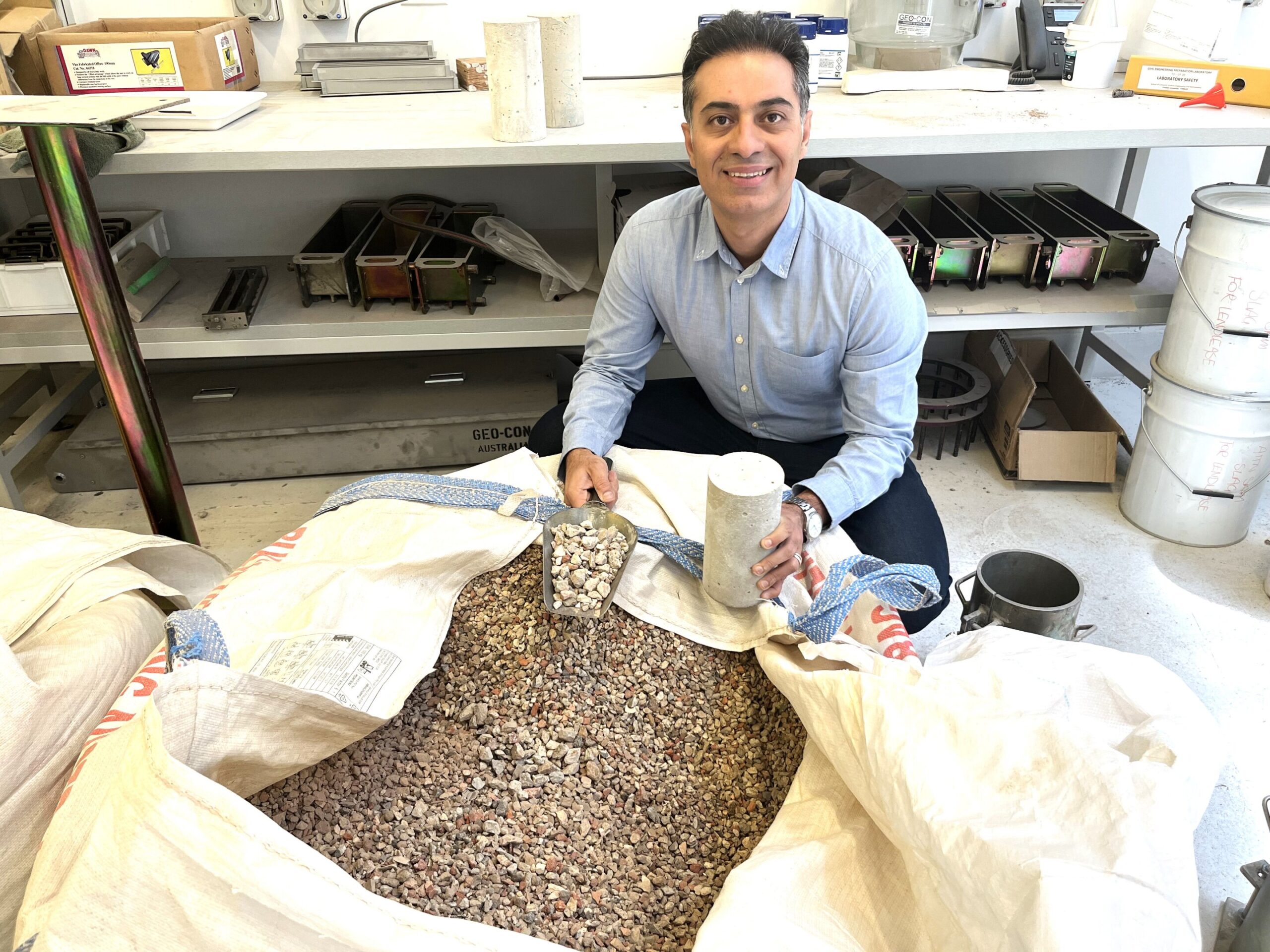
For a more sustainable approach, Flinders University and The University of Melbourne experts are developing a ‘value add’ for old broken concrete to ‘upcycling’ coarse aggregate to produce a strong, durable and workable concrete using a small amount of a secret ingredient—graphene.
The novel method is gaining ground every day as new graphene deposits are discovered and mined—bringing the price of that raw material down as the cost of cement and aggregates continues to rise, the researchers say.
They have tested results using a weak graphene solution on recycled aggregates to produce concrete potentially superior to untreated recycled aggregates in cement-based mixtures. The paper, “Performance of concrete containing pristine graphene-treated recycled concrete aggregates,” is published in the journal Resources, Conservation and Recycling.
Such methods are urgently needed in waste management with demolition and construction waste products expected to rise to almost 2.6 billion metric tons by 2030 globally. At the same time, the production of concrete is adding to climate change with greenhouse gas emissions and extraction methods adding to the ecological impacts.
Improving the quality of recycled concrete aggregates will also play a vital role in the quality, performance and workability of recycled concrete aggregates while reducing the environmental footprints.
“This new form of treated recycled concrete aggregates may be more expensive to make right now, but when considering circularity and the life cycle of the materials, the costs are coming down rapidly,” says Flinders University’s Dr. Aliakbar Gholampour, the first author of the article.
Dr. Gholampour, Senior Lecturer in Civil and Structural Engineering at Flinders, says the new method’s success could also help to meet increasing demand for building materials around the world.
Dr. Gholampour has filed a patent for the approach, with University of Melbourne co-author and Senior Research Fellow Dr. Massoud Sofi, who is Deputy Director (Research) at the Center for Recovered Resources (CoRR).
More information:
Aliakbar Gholampour et al, Performance of concrete containing pristine graphene-treated recycled concrete aggregates, Resources, Conservation and Recycling (2023). DOI: 10.1016/j.resconrec.2023.107266
Flinders University
Read the full article here


