


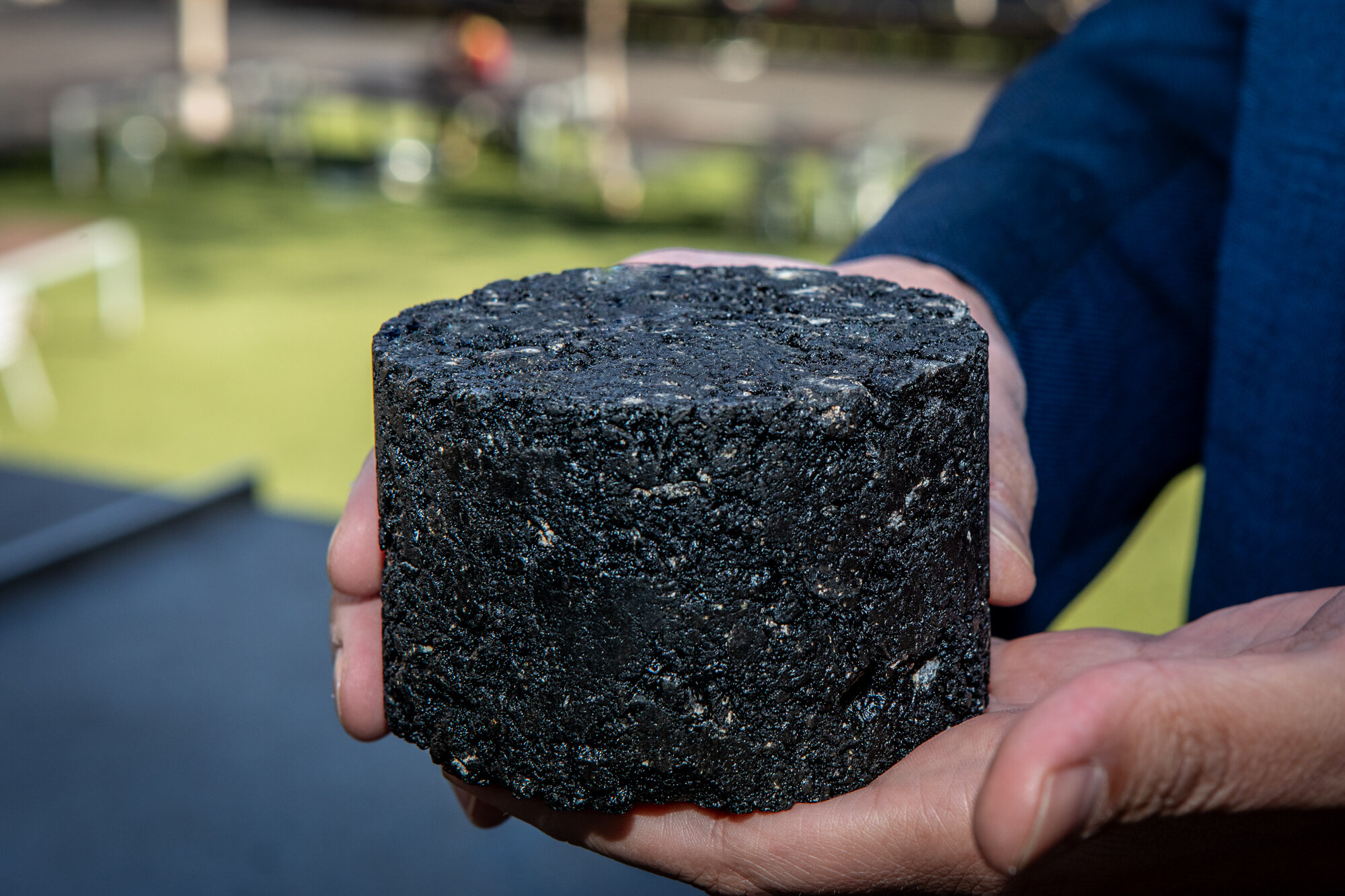
New roads mixed with recycled plastics at ten sites across Victoria will demonstrate a viable circular-economy solution to the nation, experts say.
The RMIT University-led project—supported by the Australian Research Council, Austroads and 10 Victorian councils—will incorporate recycled plastic from consumer and industrial waste, including notoriously stubborn soft plastics, into asphalt as a performance enhancer.
With Australians generating 2.6 million metric tons of plastic waste each year and landfill space expected to reach capacity by 2025, this project is helping to address an urgent challenge.
Project lead, RMIT Associate Professor Filippo Giustozzi, said the team will also produce best-practice guidelines on the use of recycled plastics in asphalt roads.
“These guidelines will enable local governments, which control 80% of the nation’s roads, to begin widescale adoption of this innovative recycling solution,” said Giustozzi from RMIT’s School of Engineering.
The City of Melbourne and nine suburban and regional councils will lead the way, each having sections of recycled road up to 900 meters long paved over coming months.
The 10 project sites will use an estimated 21,000 kg of recycled plastic, but the potential scale of this solution is considerable given the several hundred thousand kilometers of roads across Australia, Giustozzi said.
“If Australia’s 537 local governments each used a small amount of recycled plastic in the many roads they resurface each year, then nationally we’ll have created a large end-market for recycled plastic.”
New roads built on quality research
Extensive laboratory studies conducted by RMIT for Austroads—the collective of the Australian and New Zealand transport agencies—show these mixes are mechanically, chemically, and environmentally sound, he said.
“The performance of roads can actually be improved with the additions of recycled material, such as plastic and rubber, to be more durable against traffic and resistant against aging,” Giustozzi said.
The team’s latest study, published in the journal Science of The Total Environment, found the recycled plastic asphalt mixtures had 150% less cracking and 85% less deformation under pressure testing than conventional asphalt.
“These studies tell us that adding specific types of plastic in the right way can generate greater rutting and fatigue resistance,” he said.
“In some instances, the performance of the mix was similar to some of the more expensive polymers used in roads and substantially higher than conventional asphalt mixes.”
The partnership with Victorian councils and Austroads will now translate these findings into applied solutions that enhance the sustainability of our roads.
“This is a critical step in demonstrating the feasibility of this approach to tackling a problematic waste stream in Australia, while establishing a trusted network for plastics recycling in road applications,” he said.
Supporting widescale adoption
Austroads Chief Executive Geoff Allan noted increasing interest in exploring the viability of repurposing recycled waste plastic, and said Austroads was leading ground-breaking work to investigate the most suitable types of plastics for use in roads.
“This project builds on the work completed last year that confirmed recycled plastics can be successfully incorporated in road infrastructure without detrimental effects on the environment, the health and safety of the workers, or the future recyclability of plastic-modified asphalt,” Allan said.
“A major contribution of this project will be to develop evidence-based guidance that will provide certainty to road managers about the use of recycled plastics in road surfacing applications and thus lay the foundations for this solution to be embraced nationally.”
Along with Austroads, the collaboration includes Australia’s leading pavement authorities and specialists, including public works and building bodies, recyclers and contractors.
More information:
Yeong Jia Boom et al, Engineering properties, microplastics and emissions assessment of recycled plastic modified asphalt mixtures, Science of The Total Environment (2023). DOI: 10.1016/j.scitotenv.2023.164869
RMIT University
Read the full article here


