


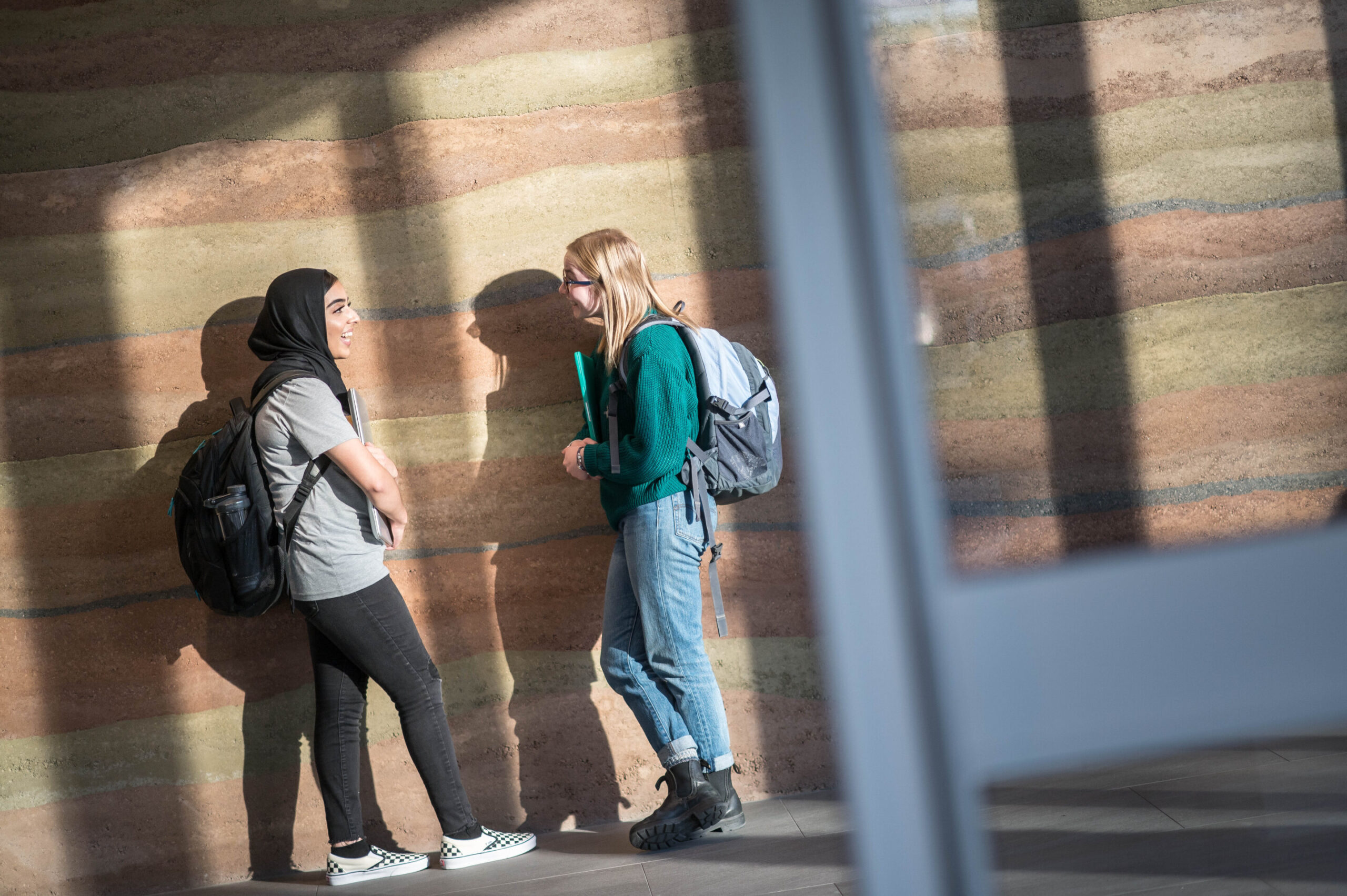
Researchers at UBC Okanagan are revisiting old building practices—the use of by-products and cast-offs—as a way to improve building materials and the sustainability of the trade.
A technique known as rammed earth construction uses materials that are alternatives to cement and are often more readily available in the environment. One such alternative is wood fly ash, a by-product of pulp mills and coal-fired power plants, explains Dr. Sumi Siddiua with UBC Okanagan’s School of Engineering.
Industry has been trying to find a use for materials like fly ash that predominantly end up in landfills, she explains. Better described as a fine powder, fly ash shares the same strength and texture characteristics as cement, which is often added to concrete to enhance its strength.
“There are many benefits to using this material,” explains Dr. Siddiqua, Civil Engineering Professor and lead researcher with UBC’s Advanced Geomaterials Testing Lab. “Using local soil along with rammed earth products reduces sand exploitation. And just as importantly, this material is not affected by wildfires to the same extent as current wooden structures.”
Together with BC Housing, UBC’s Build Better Cluster is partnering with Indigenous communities to integrate rammed earth into the construction of new homes. With international shortages in construction sand—which is much different than sand found on beaches—builders are searching for cheap and readily available materials that are equally as strong for next-generation cement.
“Everything old is new again, and that is precisely why we’ve been investigating rammed earth construction,” says Dr. Siddiqua. “By integrating industrial by-products, we’re addressing an increasing need for readily available building materials and being sustainable in the process.”
Under most circumstances, test results show fly ash enhances the structure’s properties and makes it suitable for use in cold and hot climates as load-bearing, non-load-bearing, and isolation panel walls. Fly ash also has the added benefit of being available in remote communities while providing increased insulation properties.
Although Dr. Siddiqua doesn’t foresee a huge uptick in rammed earth homes and buildings sprouting up in the short term, the addition of materials like fly ash into composite cements has already begun. And she suggests it might be the way of the future when it comes to the building trades.
“There is an increasing demand for sustainable building products here in Canada and around the world, and materials like fly ash are just the start of a new and important trend.”
The research is published in the journal Construction and Building Materials.
More information:
Kianoush Alasvand Zarasvand et al, Thermal insulation enhancement of rammed earth using wood fly ash and calcium bentonite, Construction and Building Materials (2023). DOI: 10.1016/j.conbuildmat.2023.134097
University of British Columbia
Read the full article here


