


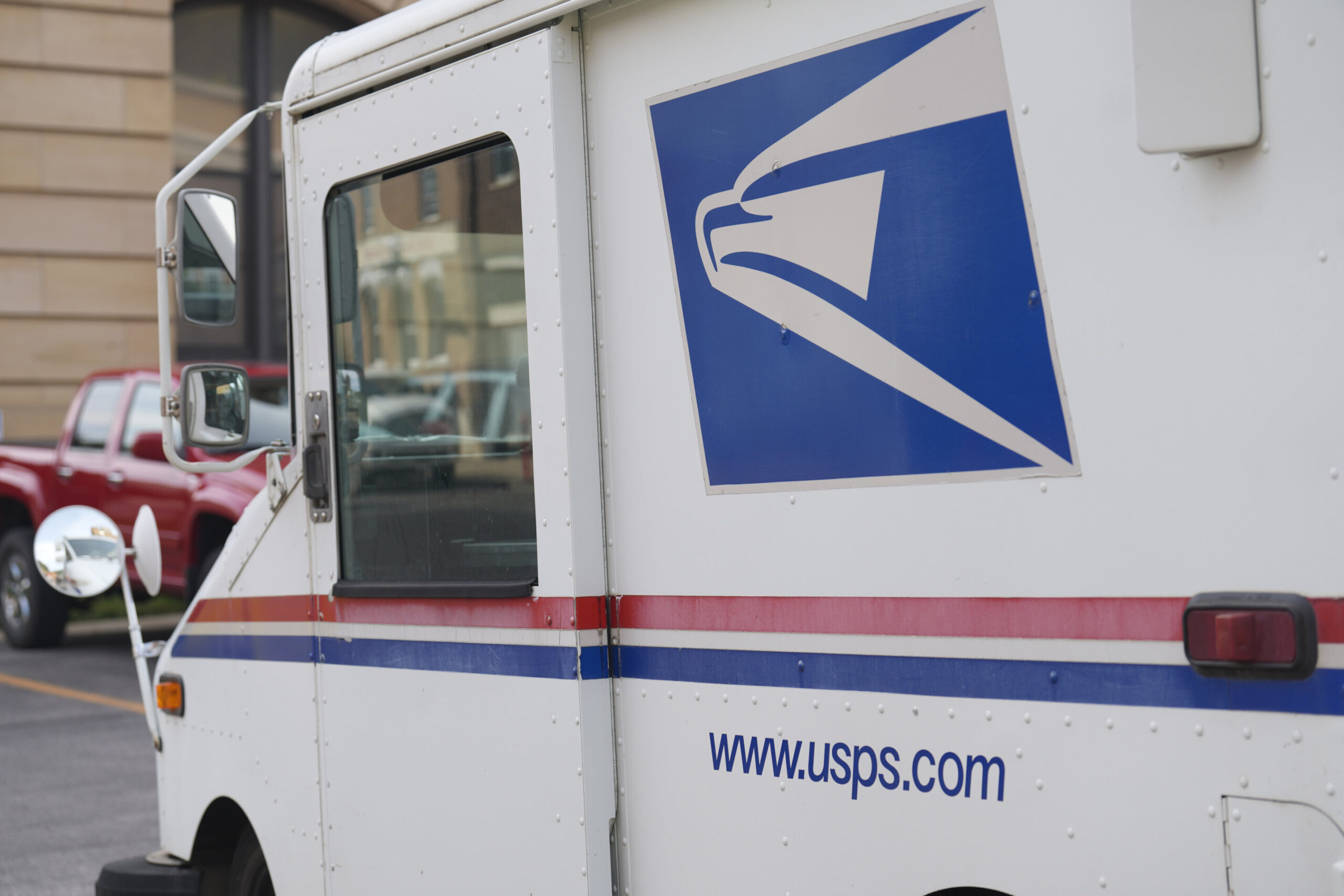
The U.S. Postal Service announced sweeping plans Tuesday to reduce greenhouse emissions by diverting more parcels from air to ground transportation, boosting the number of electric vehicles, cutting waste sent to landfills and making delivery routes more efficient.
Postmaster General Louis DeJoy described a mix of environmental initiatives and cost-cutting business practices that together would combine to reduce the Postal Service’s contribution to planet-warming greenhouse gas emissions by 40% over five years, meeting the Biden administration environmental goals in the process.
“We reduce costs, we reduce carbon. It’s very much hand in hand,” said DeJoy, who acknowledged being impatient with the pace of change, including the rollout of electric vehicles.
All told, the Postal Service intends to save $5 billion by consolidating smaller facilities into larger sorting and processing hubs that eliminate thousands of trips a day, along with operational changes such as modernizing facilities and reducing outsourced work, officials said.
Those efficiency-driven changes will help the environment by reducing carbon emissions by eliminating wasteful activities, in addition to electric vehicles and other efforts.
“These initiatives represent the strongest and most aggressive actions the Postal Service has ever taken to reduce greenhouse gas emissions,” said Jennifer Beiro-Réveillé, the organization’s senior director of environmental affairs and corporate sustainability.
The Postal Service’s announcement follows criticism that it was moving too slowly in reducing emissions from one of the largest fleets of civilian vehicles in the world.
But efforts picked up steam after the approval of $3 billion in funding for electric vehicles and charging infrastructure under a landmark climate and health policy adopted by Congress.
Last month, the Postal Service unveiled new EVs and charging stations at a new distribution center in Georgia, one of many updated sorting and delivery centers that are opening. Workers may have to drive farther to work at a new facility, but there are no plans to cut jobs, DeJoy said.
The Postal Service plans to take delivery of 66,000 electric vehicles over five years. That includes about 10,000 vehicles from Ford this year and a handful of next-generation delivery vehicles by year’s end from Oshkosh, which won a contract to convert the fleet of aging vehicles. The bulk of the deliveries from Oshkosh won’t come until the 2026-2028 period, he said.
Postal carriers have been soldiering on with overworked delivery trucks that went into service between 1987 to 1994. But not everyone is thrilled by the focus on electric vehicles.
Craig Stevens, chair of a group called Grow America’s Infrastructure Now, questioned the cost of EVs and infrastructure. He also cast doubt on their effectiveness in colder climates, citing a recent bout of extreme cold in the Midwest that hampered EVs there.
“How will Americans living in cold climates rely on the USPS if their delivery trucks don’t work in cold weather?” he wrote in a statement.
© 2024 The Associated Press. All rights reserved. This material may not be published, broadcast, rewritten or redistributed without permission.
Read the full article here


