

Close Menu
  • Home
  • News
  • Startups
  • Innovation
  • Industry
  • Business
  • Green Innovations
  • Venture Capital
  • Market Data
    • Economic Calendar
    • Stocks
    • Commodities
    • Crypto
    • Forex
Facebook X (Twitter) Instagram
[gtranslate]
Facebook X (Twitter) Instagram YouTube
Innovation & Industry
Banner
  • Home
  • News
  • Startups
  • Innovation
  • Industry
  • Business
  • Green Innovations
  • Venture Capital
  • Market Data
    • Economic Calendar
    • Stocks
    • Commodities
    • Crypto
    • Forex
Login
Innovation & Industry
Green Innovations

Nissan is reusing the batteries from old Leaf electric vehicles to make portable power sources

News RoomNews RoomAugust 31, 2023No Comments2 Mins Read
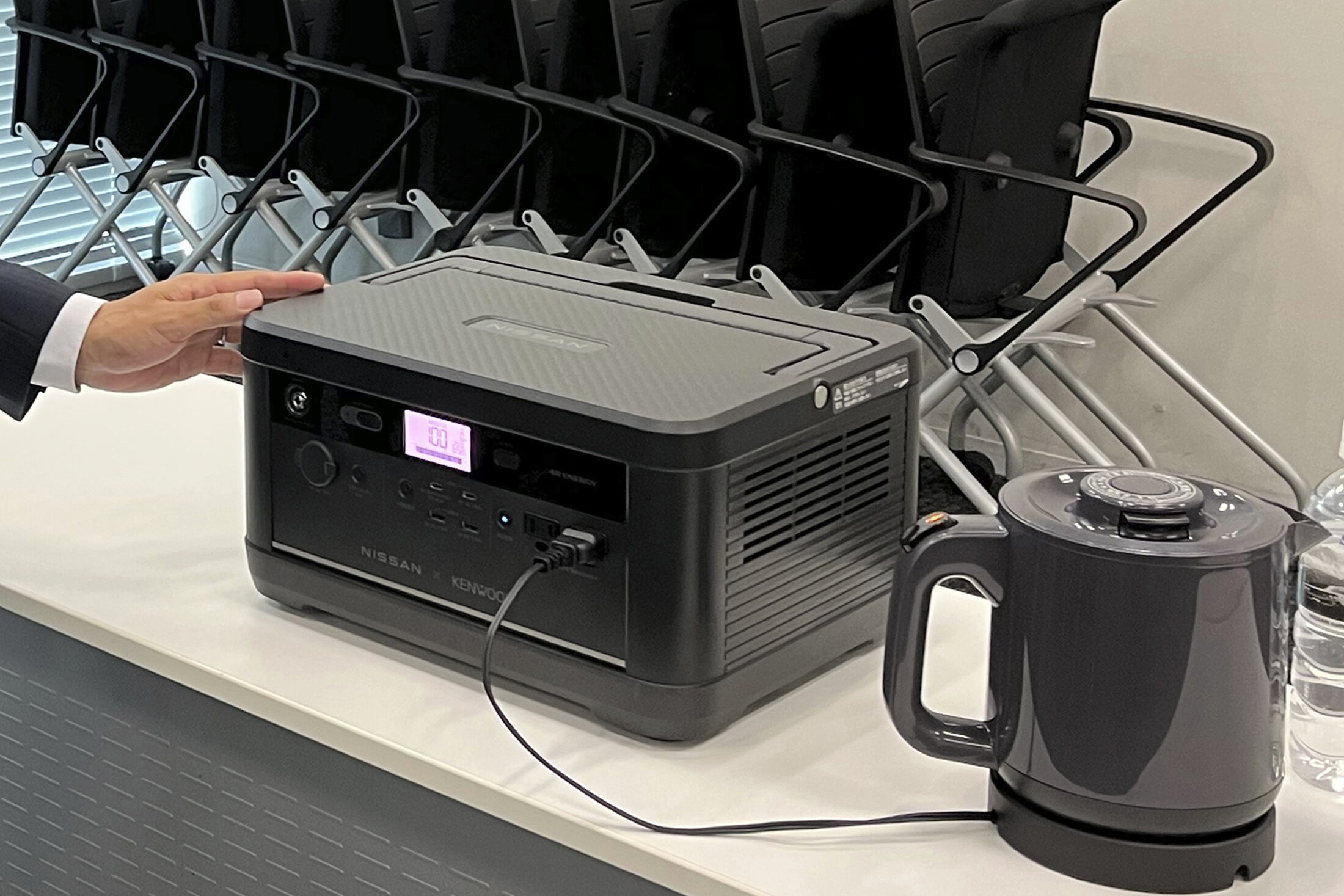
Nissan’s new portable power station is displayed at Nissan headquarters in Yokohama, south of Tokyo, Thursday, Aug. 31, 2023, reusing battery stacks from the Nissan Leaf electric car. Batteries in Nissan Leaf electric cars are getting a new life as portable power sources that can be used to charge gadgets on the go, rev up guitars at outdoor concerts and deliver emergency power in disasters.Credit: AP Photo/Yuri Kageyama

Batteries in older Nissan Leaf electric vehicles are getting a new life as portable power sources that can be used to run gadgets on the go or deliver emergency power in disasters.

Japanese automaker Nissan Motor Co. has sold more than 650,000 Leaf EVs. Their batteries often retain a charging capacity longer than the car’s life span.

Nissan says it is using the old batteries in portable power sources it developed with electronics maker JVCKenwood Corp. and 4R Energy Corp., a company co-owned by Nissan and Sumitomo Corp. which works on ecological vehicles and power storage systems.

The 14.4-kilogram (32-pound) power source sells for 170,500 yen ($1,170) in Japan. Overseas sales are not yet set.

Each Leaf uses 48 battery modules. The portable power stations contain two modules.

Nissan officials said they are testing the batteries in Leafs after their owners stop driving them, and reusing those that can still hold a charge.

EV batteries use expensive rare metals and other raw materials, and their manufacture produces carbon gases, so reusing them for other purposes helps sustainability.

Balakumar Balasingam, an associate professor of electrical and computer engineering at the University of Windsor who isn’t involved in the Nissan project, said batteries can no longer be used to drive electric cars when their charge capacity declines to about 80%, but can still be used for other purposes.

“Retired EV batteries have great potential in energy storage applications,” he said.

“Without such a solution, billions of EV battery packs will be made and then prematurely recycled in the next decade. That will be a problem for sustainability.”

© 2023 The Associated Press. All rights reserved. This material may not be published, broadcast, rewritten or redistributed without permission.


Read the full article here

Related Articles

Neutron scattering study points the way to more powerful lithium batteries

Green Innovations April 16, 2024

Researchers can help shipowners achieve ambitious climate targets

Green Innovations April 16, 2024

Solar energy can uplift rural Ethiopians, but is hard to come by

Green Innovations April 16, 2024

A timer can shorten your shower even when you have no incentive to save water

Green Innovations April 16, 2024

High electric bills threaten California’s clean future: This plan could help

Green Innovations April 16, 2024

New insight about the working principles of bipolar membranes could guide future fuel cell design

Green Innovations April 16, 2024
Add A Comment
Leave A Reply Cancel Reply

Copyright © 2026. Innovation & Industry. All Rights Reserved.
  • Privacy Policy
  • Terms of use
  • Press Release
  • Advertise
  • Contact

Type above and press Enter to search. Press Esc to cancel.

Sign In or Register

Welcome Back!

Login to your account below.

Lost password?