


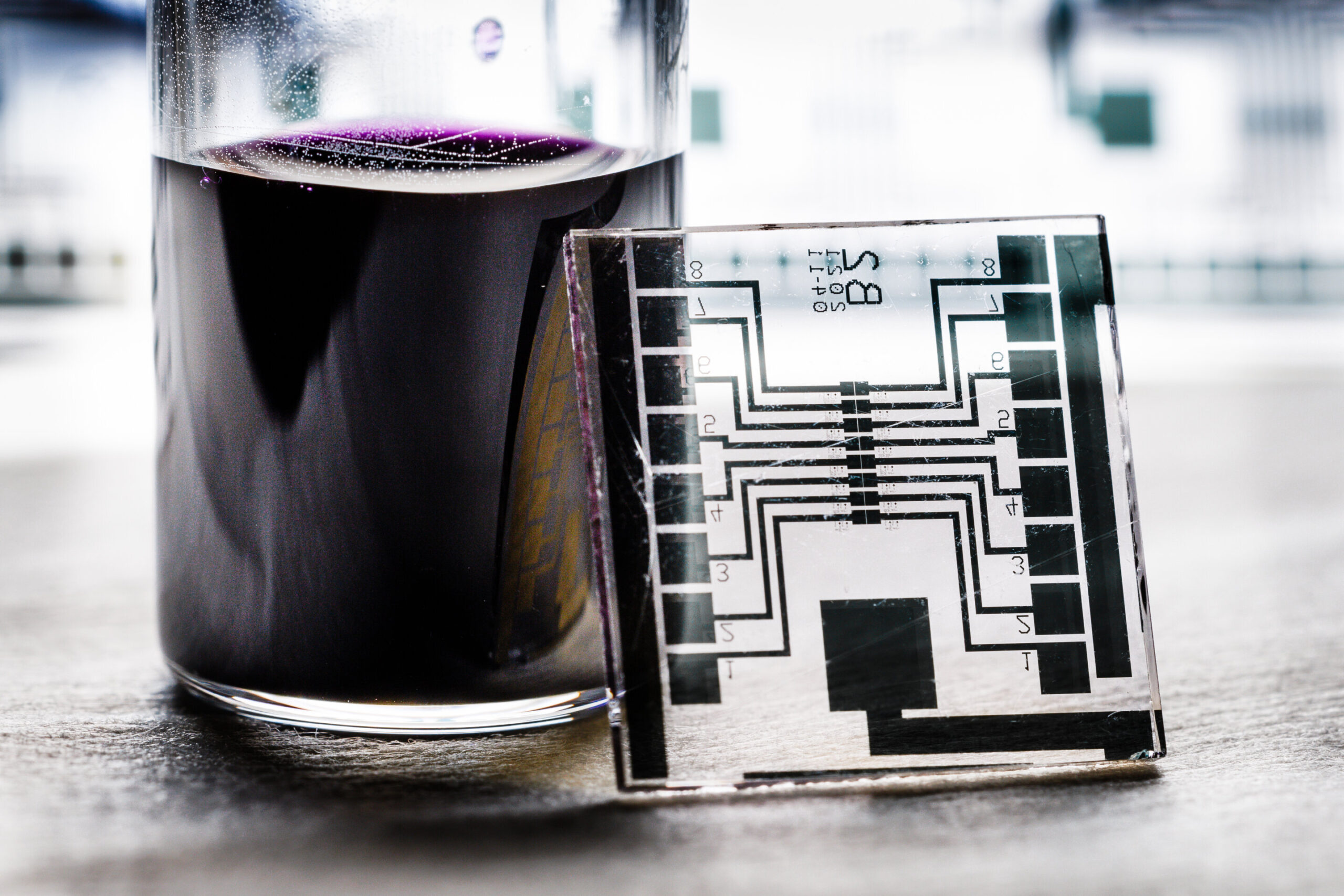
Researchers at Linköping University, Sweden, have developed a new, more environmentally friendly way to create conductive inks for use in organic electronics such as solar cells, artificial neurons, and soft sensors. The findings, published in the journal Nature Communications, pave the way for future sustainable technology.
Organic electronics are on the rise as a complement and, in some cases, a replacement to traditional silicon-based electronics. Thanks to simple manufacturing, high flexibility, and low weight combined with the electrical properties typically associated with traditional semiconductors, it can be useful for applications such as digital displays, energy storage, solar cells, sensors, and soft implants.
Organic electronics are built from semiconducting plastics, known as conjugated polymers. However, processing conjugated polymers often requires environmentally hazardous, toxic, and flammable solvents. This is a major obstacle to the wide commercial and sustainable use of organic electronics.
Now, researchers at Linköping University have developed a new sustainable method for processing these polymers from water. In addition to being more sustainable, the new inks are also highly conductive.
“Our research introduces a new approach to processing conjugated polymers using benign solvents such as water. With this method, called ground-state electron transfer, we not only get around the problem of using hazardous chemicals, but we can also demonstrate improvements in material properties and device performance,” says Simone Fabiano, senior associate professor at the Laboratory of Organic Electronics.
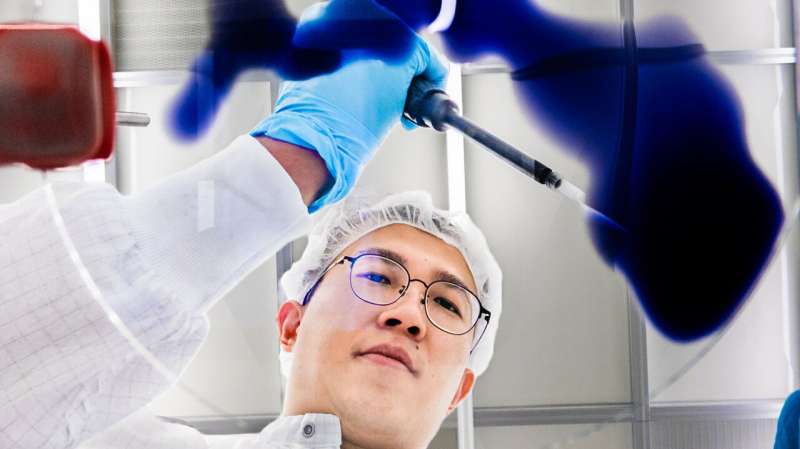
When researchers tested the new conductive ink as a transport layer in organic solar cells, they found that both stability and efficiency were higher than with traditional materials. They also tested the ink to create electrochemical transistors and artificial neurons, demonstrating operating frequencies similar to biological neurons.
“I believe that these results can have a transformative impact on the field of organic electronics. By enabling the processing of organic semiconductors from green and sustainable solvents like water, we can mass-produce electronic devices with minimal impact on the environment,” says Simone Fabiano, a Wallenberg Academy Fellow.
More information:
Tiefeng Liu et al, Ground-state electron transfer in all-polymer donor:acceptor blends enables aqueous processing of water-insoluble conjugated polymers, Nature Communications (2023). DOI: 10.1038/s41467-023-44153-7
Linköping University
Read the full article here


