


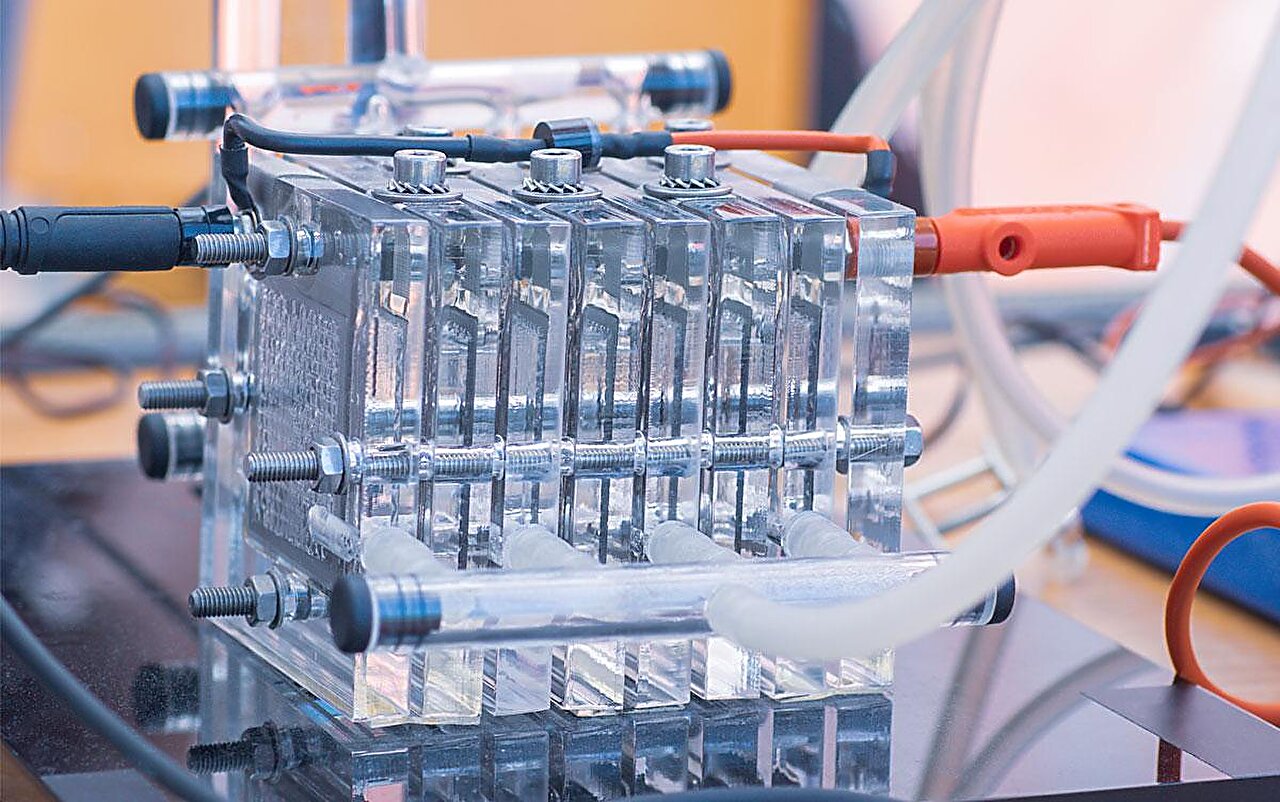
Researchers from the University of Tsukuba have developed a method for the real-time visualization of the current distribution inside a fuel cell through non-destructive diagnostics using magnetic sensors.
The researchers have clarified that, in contrast to voltage, the current distribution has a recovery delay. In addition, the researchers have realized a control system that enables the stable operation of fuel cells using only the current distribution as a control index.
Fuel cells are attracting attention as a clean energy source technology because the cells do not produce carbon dioxide and emit only water during power generation. However, two contradictory phenomena can hamper their performance: flooding, wherein water remains inside the fuel cell and interferes with power generation, and dry-out, wherein an excess of water is removed and the polymer membrane, through which hydrogen ions permeate, dries out.
To detect such issues, devices and sensors have been used in analyses based on substantial amounts of data.
A research team has been investigating a method for detecting and controlling fuel cell malfunctions using magnetic sensors. By improving the diagnostic method, the team developed a system to visualize and control the current distribution in the fuel cell in real time. Their work has been published in Applied Energy.
The researchers found that control based on voltage indices stabilizes voltage, while the current distribution is biased in the same manner as a malfunction. However, a simple control method based solely on the current distribution kept the current distribution in the fuel cell constant, enabling the fuel cell to operate in a stable state.
In future research, the aim is to establish a comprehensive fuel cell diagnostic and control system with the objective of incorporating this method into real-world fuel cell systems.
More information:
Yutaro Akimoto et al, In-situ on-board evaluation and control of proton exchange membrane fuel cells using magnetic sensors, Applied Energy (2023). DOI: 10.1016/j.apenergy.2023.121873
University of Tsukuba
Read the full article here


