


The construction industry is recognized for its high resource consumption and large waste generation. Among the waste products generated are construction-generated sludge (CGS) and construction-generated surplus soil (CGSS). These can be used for various applications such as backfilling, creating environmentally friendly building materials like bricks, and soil stabilization.
However, these highly alkaline materials pose a risk of soil and water contamination, adversely impacting plant and animal life. Furthermore, the large volume of CGS and CGSS generated and its unlawful dumping pose further challenges. Therefore, newer solutions are required for their management and recycling.
In a recent study led by Professor Shinya Inazumi from the College of Engineering at Shibaura Institute of Technology in Japan, a team of researchers has now addressed this issue by presenting a new, cost-effective strategy for using CGS. They have proposed the use of “aeration curing,” a technique that converts carbon dioxide to carbonate, as a solution.
Their work was published in Case Studies in Construction Materials.
Prof. Inazumi explains, “The initiation of the study on aeration curing was driven by the growing need to align construction practices with the sustainable development goals (SDGs). There is an urgent need for innovative solutions to effectively manage waste and reduce carbon footprints of the construction industry.”
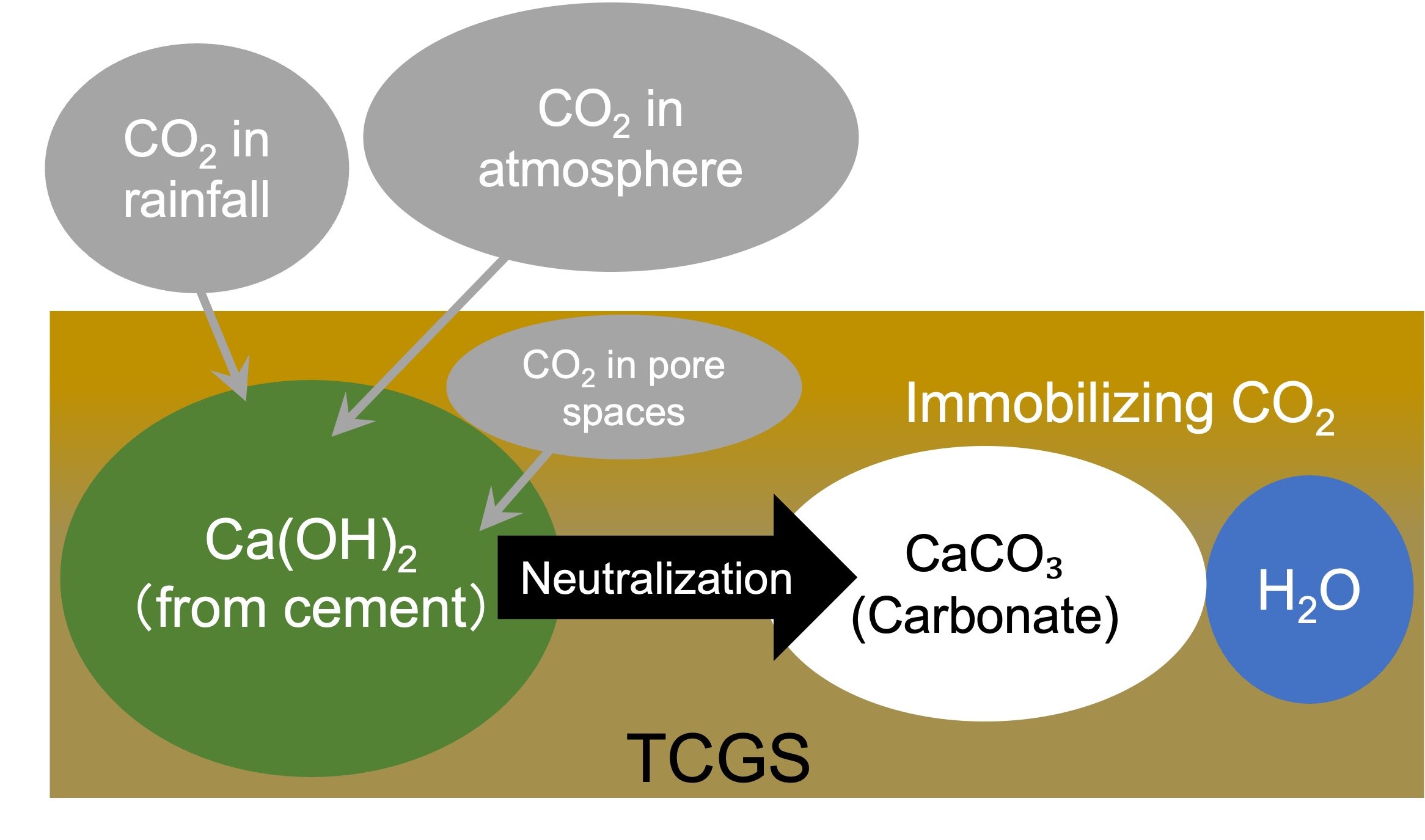
The process of aeration curing involves carbon dioxide reacting with alkaline calcium hydroxide in the CGS to form less alkaline calcium carbonate. Notably, this neutralization method reduces the need for additional neutralizers, like sulfuric acid, typically required in more conventional treatment methods. Furthermore, traditional management practices are fighting rising transportation, processing, and disposal costs.
For this study, aeration curing of CGS samples was conducted under various conditions. This involved manipulating factors, such as the agitation speed, performing aeration curing within a drying oven, altering the surface area of the aerated region, and introducing a neutralizer to the samples.
The findings revealed that the reduction in pH (a measure of alkalinity) was more pronounced at higher agitation speeds, during curing in a drying oven, and with a larger aerated surface area. Additionally, the aeration curing process required less neutralizer. These results highlight the potential of aeration curing as a sustainable construction practice for CGS management and carbon sequestration.
There are far-reaching implications of these findings, spanning various domains. Aside from waste management in the construction industry, the ability of the proposed method to neutralize soil can prove useful in land reclamation and remediation by preparing acidic or contaminated land for construction or agricultural use.
Subsequently, this will help increase soil yields by improving overall soil health. Furthermore, this approach can be incorporated into academic curricula and research projects focusing on environmental science and engineering, helping institutes explore sustainable waste management practices.
In the long term and from a big-picture perspective, Prof. Inazumi speculates, “By aligning with the SDGs, aeration curing provides a practical tool for policymakers to promote sustainable waste management and carbon sequestration practices. This, in turn, can influence regulations and guidelines related to construction and environmental protection. However, further theoretical model refinement is needed to accurately reflect real-world neutralization reactions.”
In summary, aeration curing, which can serve the dual purpose of soil neutralization and carbon sequestration, holds significant promise for influencing various disciplines and marks a crucial advancement in sustainable and environmentally responsible construction practices.
More information:
Shinya Inazumi et al, Aeration curing for recycling construction-generated sludge and its effect of immobilizing carbon dioxide, Case Studies in Construction Materials (2023). DOI: 10.1016/j.cscm.2023.e02704
Shibaura Institute of Technology
Read the full article here


