


Solar energy is one of the most promising ways to power the world of the future. However, creating more efficient solar cells requires finding new and better materials.
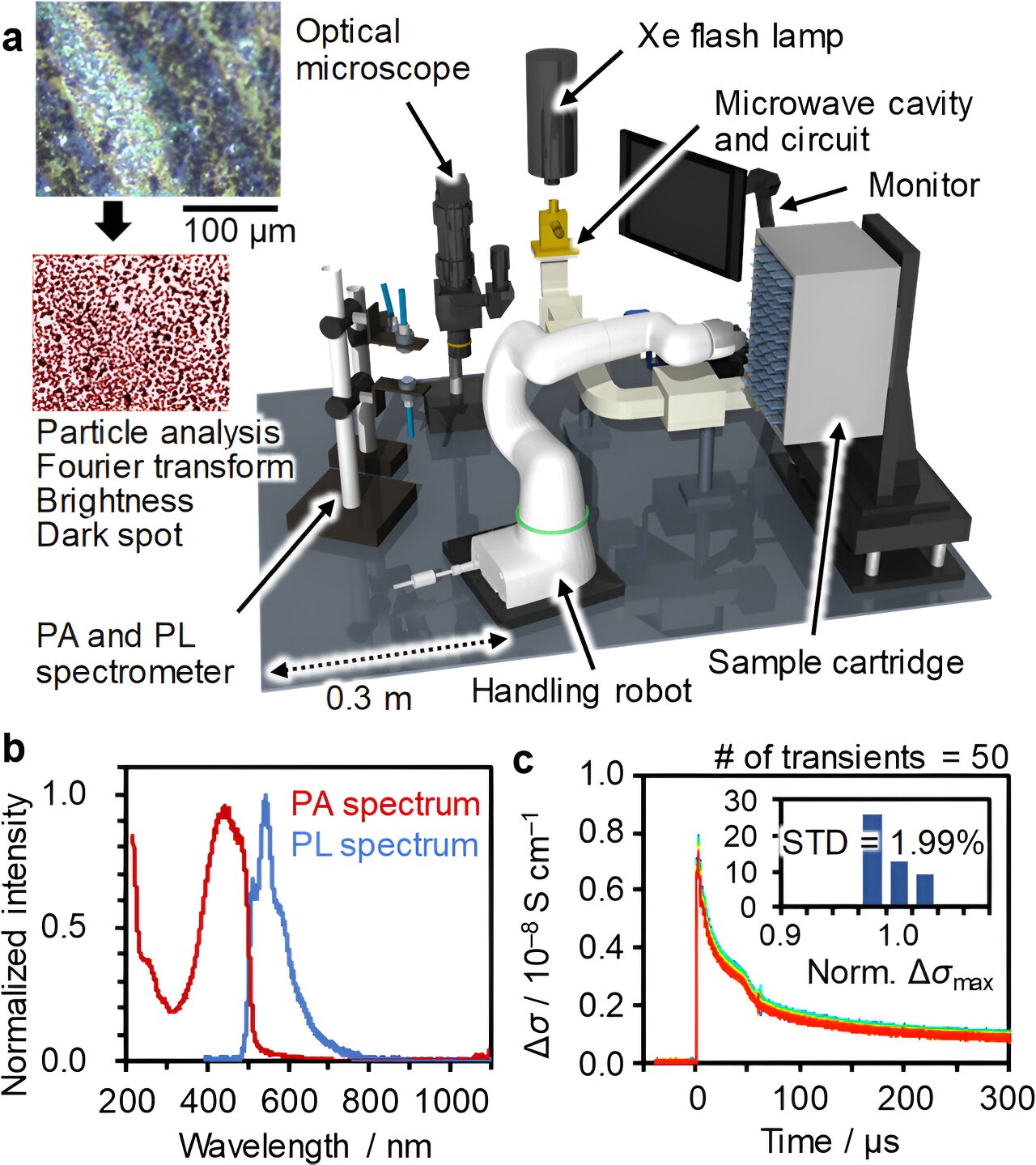
Now, in a study published in JACS Au, researchers at Osaka University have unveiled a solution: a system that automates key experimental and analytical processes to speed up research on solar materials considerably.
There’s more to solar cells than just silicon, and other potential materials may be even more effective. To be used on a large scale, though, these materials need to meet a few important requirements—they must be highly efficient, made from common chemical elements, and have low toxicity.
So far, not many candidates have the potential to check all three of these boxes. Furthermore, studies into new materials are currently done by hand and are costly and time-consuming.
To speed up the discovery of these materials, the researchers created a unique robotic measurement system that’s able to perform photoabsorption spectroscopy, optical microscopy, and time-resolved microwave conductivity analyses. They then used the robot to evaluate 576 different thin-film semiconductor samples.
“Current solar cells are made of inorganic semiconductors containing silicon and gallium, but next-generation solar cells need to reduce both cost and weight,” explains lead author Chisato Nishikawa. “Safety is also a concern; perovskite solar cells are efficient enough to rival silicon solar cells, but they contain toxic lead.”
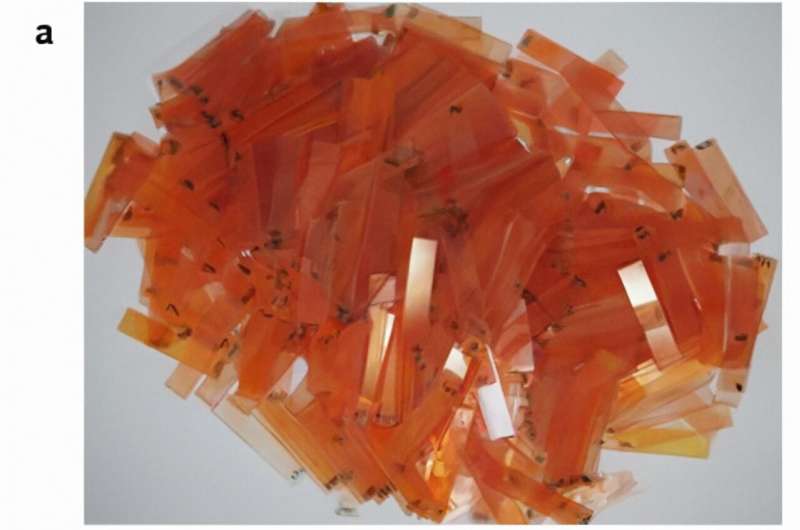
The samples tested in this study were all made from a varying blend of cesium, bismuth, tin, and iodine. They were also annealed at different temperatures and treated with different organic salt additives. To thoroughly characterize the material properties as well as automate the experimental process, the researchers also examined the data using artificial intelligence—specifically, machine learning.
“In recent years, machine learning has been very helpful in better understanding the properties of materials. These studies require vast amounts of experimental data, and combining automated experiments with machine-learning techniques is an ideal solution,” says senior author Akinori Saeki.
The authors hope to automate even more of the process in the future, making it easier to examine completely new materials. As Nishikawa notes, “This method is ideal for exploring areas where there’s no existing data.”
The research team have had promising results with their robotic system so far. The measurement process is both fully automated and highly accurate, allowing work to be completed in one-sixth of the usual time needed.
The automated system makes the task of finding efficient and non-toxic solar materials considerably easier. With the help of robots and AI, the future of solar energy may be closer than we realize.
More information:
Chisato Nishikawa et al, Exploration of Solution-Processed Bi/Sb Solar Cells by Automated Robotic Experiments Equipped with Microwave Conductivity, JACS Au (2023). DOI: 10.1021/jacsau.3c00519
Osaka University
Read the full article here


