


In pursuit of a carbon-neutral society, advancement of the battery technology becomes imperative. Primary batteries, though non-rechargeable, hold promise as power sources for sensors and disaster scenarios because of their cost-effective production and voltage stability. However, most of these batteries employ expensive metal electrodes, such as lithium electrodes, necessitating exploration of alternative electrode materials.
Using carbon-based materials for the cathode, magnesium (Mg) for the anode, oxygen from the atmosphere as the cathode active material, and brine for the electrolyte, Mg-air primary batteries can be constructed using inexpensive and abundant materials. Theoretically, these batteries are expected to match lithium-air batteries with regard to performance. However, they do not perform well in terms of battery capacity and operational stability.
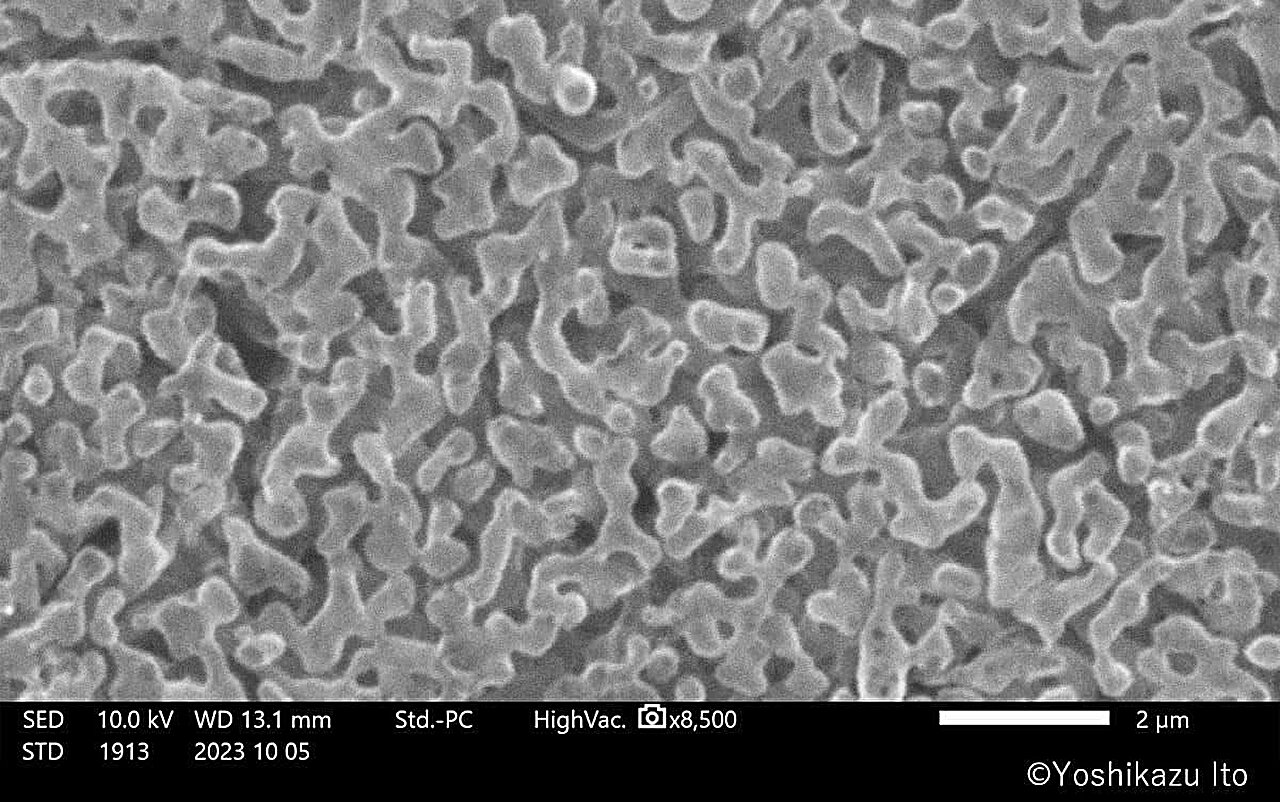
Researchers assembled a Mg-air primary battery using the prepared nitrogen-doped nanoporous graphene as the air cathodes and commercially available Mg sheets as the anodes, with a brine solution-soaked sodium polyacrylate gel constituting the solid electrolyte. Performance tests demonstrated that this battery exhibits comparable or superior performance to platinum cathode-based batteries. This is attributed to the porous electrode structure facilitating air transport as well as the ability of the solid electrolyte to prevent rapid corrosion of the Mg electrode.
The study, “All-Solid-State Mg-Air Battery Enhanced with Free-Standing N-Doped 3D Nanoporous Graphene,” has been published in Small.
This achievement is expected to broaden the applications of primary air batteries and promote the utilization of primary air batteries comprising materials more cost-effective and readily available than platinum and lithium.
More information:
Zeyu Xi et al, All‐Solid‐State Mg–Air Battery Enhanced with Free‐Standing N‐Doped 3D Nanoporous Graphene, Small (2023). DOI: 10.1002/smll.202308045
Small
University of Tsukuba
Read the full article here


