


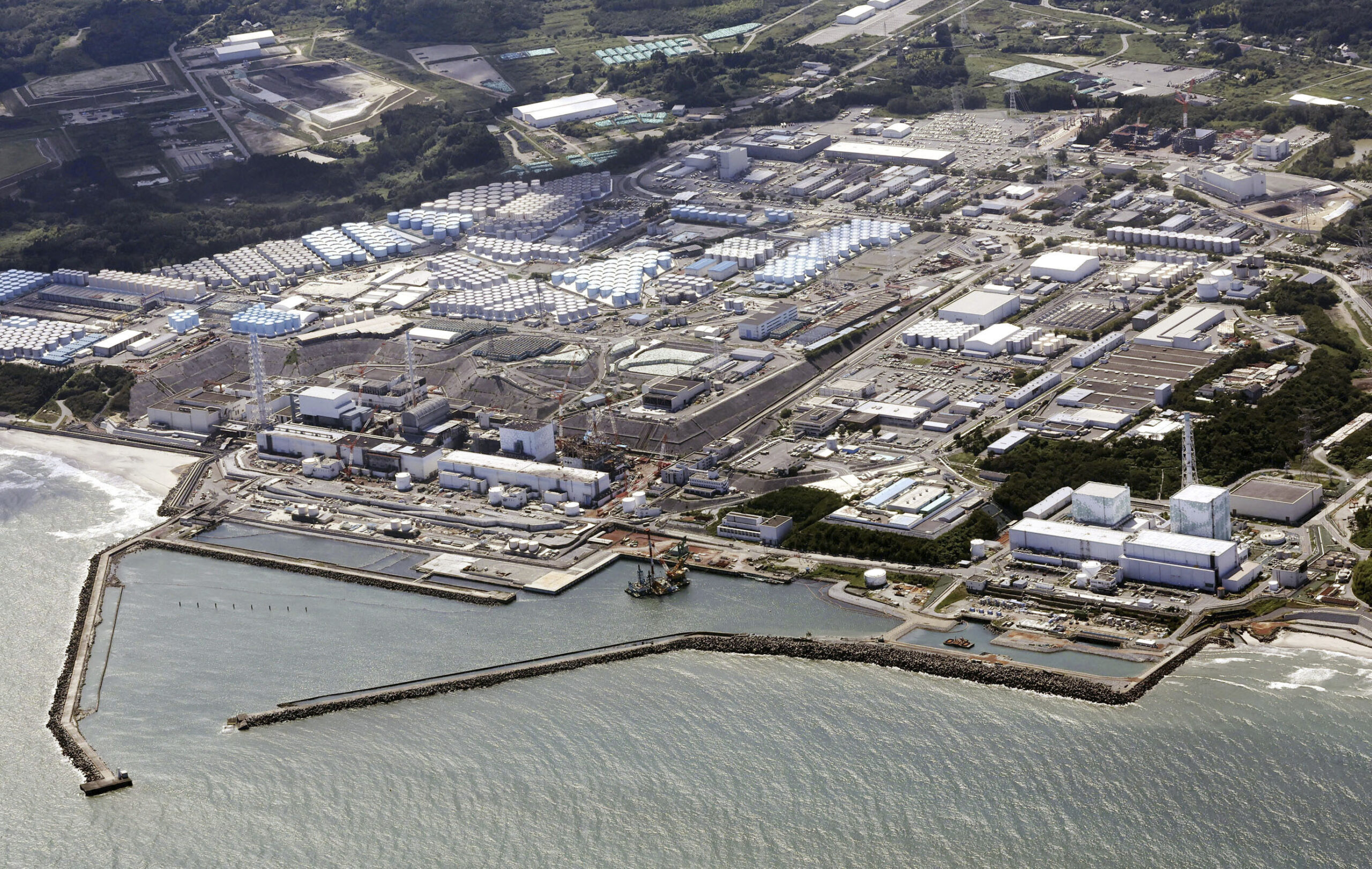
Japanese authorities said they were forced to abandon plans Thursday to send in drones for a second day to probe one of the damaged reactors at the Fukushima Daiichi nuclear power plant because of equipment failure.
Two drones successfully flew inside the reactor for the first time on Wednesday, to examine some of the molten fuel debris and other damages in areas where earlier robots failed to reach. Thursday’s development delayed the probe further and underscored the difficulty of the task.
The government and TEPCO plan to remove the massive amount of fatally radioactive melted nuclear fuel that remains inside each reactor since a magnitude 9.0 quake and tsunami in March 2011 destroyed the plant’s power supply and cooling systems, causing a triple meltdown.
The daunting decommissioning process has already been delayed for years and mired by technical hurdles and a lack of data.
TEPCO had prepared since July to fly a fleet of four drones, one at a time, inside the hardest-hit No. 1 reactor’s primary containment vessel, in which most of the fuel in the core melted and fell to the concrete bottom, experts say.
The first two drones Wednesday captured images showing enough space for the other two to reach the particular area that TEPCO’s experts wanted to examine.
Thursday’s flights were canceled after a snake-shaped crawling robot, designed to transmit data from a drone’s high-definition camera to the control room, stalled before reaching a targeted position, said TEPCO spokesperson Kenichi Takahara.
The cause of its failuire is under investigation, Takahara said without elaborating or saying when the next drone flight might take place.
Fukushima Daiichi decommissioning chief Akira Ono was cautiously optimistic.
“We should not force it because it could cause bigger trouble for our future work,” he said “We just want to be careful.”
On Wednesday, the first of what was supposed to be a two-day project, the two drones inspected the area around the exterior of the main structural support in the vessel, called the pedestal. It is located directly under the reactor’s core. Officials hoped to film the core’s bottom to find out how overheated fuel dripped there in 2011.
TEPCO officials said they plan to use the new data to develop technology for future probes as well as a process to remove the melted fuel from the reactor.
About 880 tons of highly radioactive melted nuclear fuel remain inside the three damaged reactors. Critics say the 30- to 40-year cleanup target set by the government and TEPCO is overly optimistic. The damage in each reactor is different, and plans need to accommodate their conditions.
TEPCO has sent a number of probes—including a crawling robot and an underwater vehicle—inside each reactor but was hindered by debris, high radiation and the inability to navigate through the rubble, though they were able to gather some data. In 2015, the first robot to go inside got stuck on a grate.
© 2024 The Associated Press. All rights reserved. This material may not be published, broadcast, rewritten or redistributed without permission.
Read the full article here


