


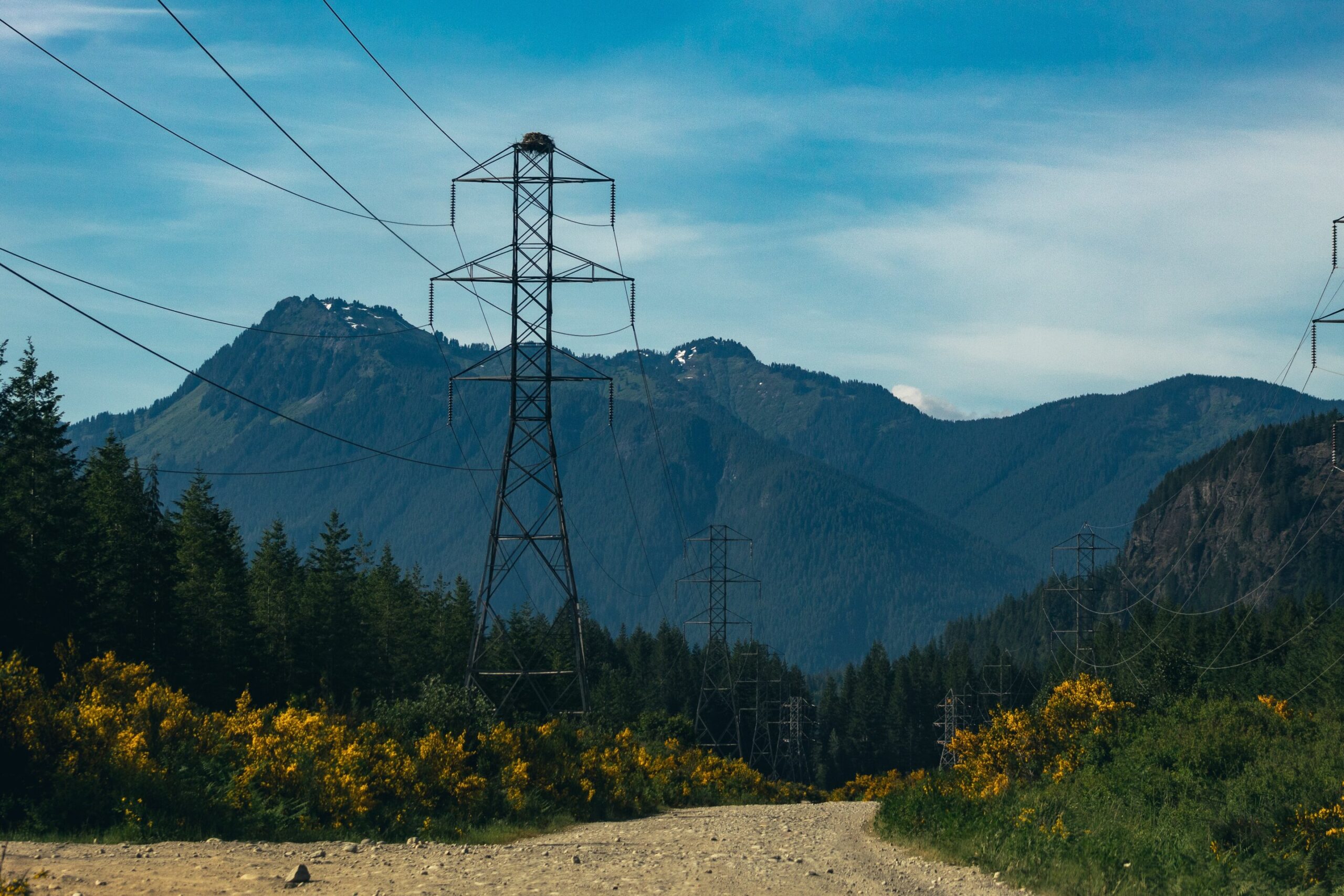
Some of Victoria’s worst bushfires have been started by power lines. So, power distribution companies have installed devices that limit the energy flowing to the fault to cut the fire risk. However, in networks equipped with these devices, communities might experience power outages for hours while network operators attempt to track down a fault along tens of kilometers of power line.
“In trials in China and Switzerland we demonstrated that our technology can find the fault location to within hundreds of meters in a few minutes, instead of hours or days,” says Monash University engineering researcher, Dr. Reza Razzaghi.
“In Australia, that would allow power to be restored to the community quickly, which can be vitally important for air conditioning during extreme heat, for people who rely on life-supporting electric medical devices, and for the many other home and business users.”
Australian grids have different characteristics to those in the trial countries. So, a proof-of-concept project was undertaken recently, supported by the Center for New Energy Technologies (C4NET) and two major distribution network service providers in Victoria.
And an Australian Research Council Discovery Early Career Researcher Award (DECRA) is supporting Reza’s theoretical work on the technology. The theoretical advances made in the project will form a crucial step in developing commercial products to pinpoint power line faults at scale in real electricity networks, specifically for the Australian context.
Inside the technology
Following the Black Saturday fires, Victoria’s Distribution Network Service Providers widely adopted devices called Rapid Earth Fault Current Limiters (REFCLs) across power networks in high fire risk areas. These devices are installed at substations and function like a safety switch. When a fault is detected on one of the three wires that make up a high voltage power distribution line, the device rapidly reduces the amount of energy flowing to the fault.
Since their roll out, they have been effective in reducing fire risks associated with power line faults. However, in networks with REFCLs, faults leave little or no visible evidence. This means repair crews can spend hours patrolling tens of kilometers of power lines, some inaccessible by road, to find the problem so they can fix it.
A fault in a power line, caused say by a falling tree, generates a series of characteristic electrical signals that travel on the line. Reza and his team realized that they could analyze these signals to locate the fault.
They use a technique known as Time Reversal, which has been used in other applications such as medical imaging and telecommunications.
“Our system automatically records and analyzes the fault signals propagating through the power line,” says Reza. “Then it uses a model of the power network in an embedded computer to play back the signal transmission in reverse. This involves many real time calculations, but in seconds to minutes, it can locate the fault, to within hundreds of meters.”
While competing technologies are in development, the time reversal technology’s advantage is that it needs many fewer devices to be installed in a power network. This was demonstrated in an extensive trial in Switzerland. The tests in Switzerland involved a mixed overhead and underground 22 kV distribution network. The fault location technology was installed in a zone substation and successfully found the location of those faults in the branched network.
Provided by
Monash Energy Institute
Read the full article here


