


Countries worldwide have been introducing new policies aimed at mitigating climate change and reducing carbon emissions. Many of these interventions focus on deploying more sustainable systems to supply electricity on a large scale and introducing new technologies powered by electric power, such as electric vehicles and electrolyzers (i.e., electrically powered devices that can split water into hydrogen and oxygen atoms).
The use of electrolyzers has recently gained particular attention as a way of producing and storing hydrogen gas (H2), which is of vital importance for various applications, ranging from the synthesis of ammonia for fertilizers to the fabrication of fuel cells to power large vehicles or trains.
While electrolyzers can be powered using renewable energy sources, if powered by current electricity grids these devices could potentially lead to even higher carbon emissions than conventional methods of producing H2.
Assessing the impact of grid-connected electrolyzers on decarbonization efforts is thus of utmost importance, particularly in the United States (US) where an emissions-indexed production tax credit (PTC) for those producing H2 was established. This financial incentive gives projects with low lifecycle greenhouse gas emissions a tax credit of up to $3 per kilogram of hydrogen produced.
Researchers at Massachusetts Institute of Technology (MIT) examined how different interpretations of contracted variable renewable energy (VRE) sources (i.e., sources of energy that rely on changing weather conditions, such as solar and wind energy) and energy system policies can affect the costs and emissions of electrolytic hydrogen production.
Their paper, published in Nature Energy, shows that different assumptions about the VRE used to power grid-connected electrolyzers can significantly influence estimations of resulting carbon emissions.
“The literature provides conflicting guidance about the appropriate time-matching requirement between electricity consumption by electrolyzers and contracted variable renewable energy (VRE) for qualifying hydrogen (H2) as ‘low carbon,'” Michael A. Giovanniello, Anna N. Cybulsky and their colleagues wrote in their paper. “We show that these findings are highly influenced by different interpretations of additionality.”
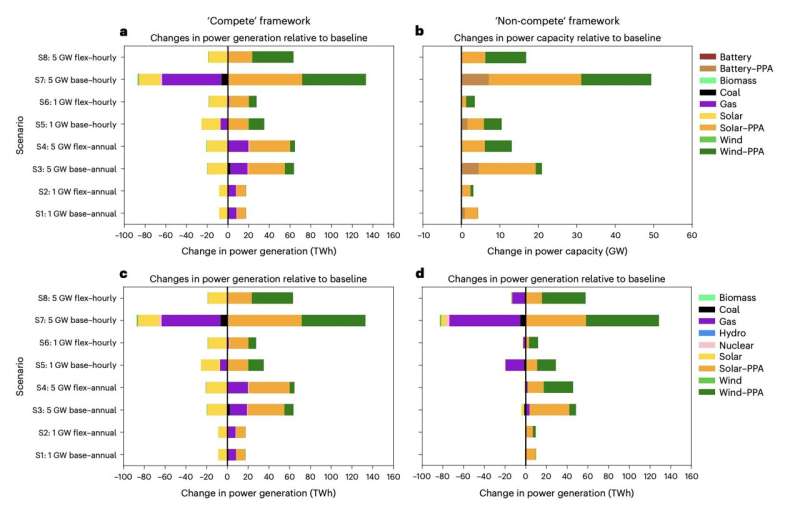
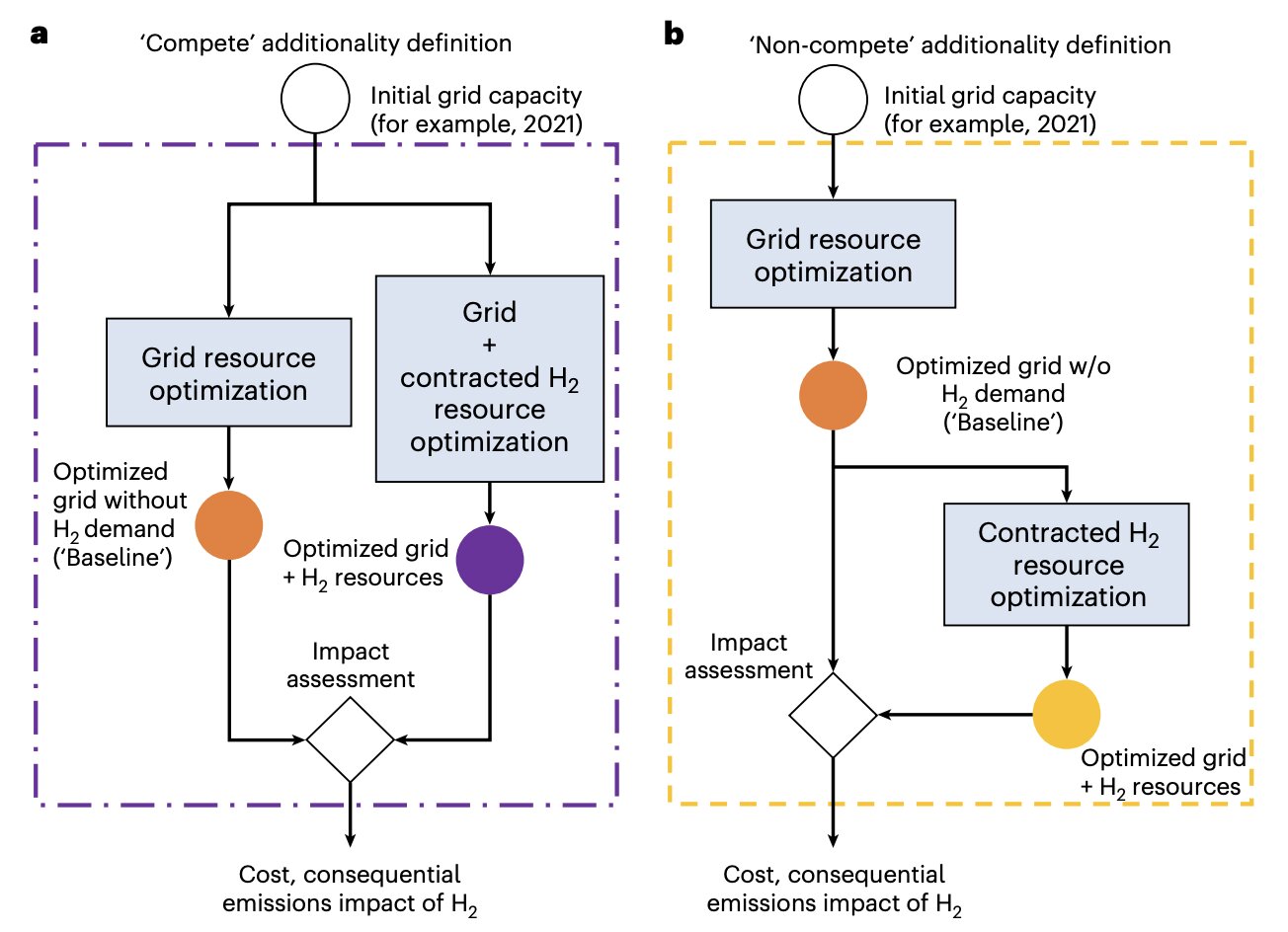
Giovanniello, Cybulsky and their colleagues carried out their analyses using an energy systems model called DOLPHYN. This model allowed them to estimate the emissions and costs of grid-connected electrolyzers under different hypothetical scenarios or conditions.
The researchers specifically explored the differences between scenarios in which VRE resources helping to meet electricity demands beyond the production of hydrogen compete or do not compete with VRE contracted for H2 production. In addition, they focused on distinct scenarios in which VRE requirements were either hourly or annual.
The results of the team’s analyses suggest that these varying interpretations result in different carbon emission estimates. Therefore, approaches to define the time-matching requirements to determine PTC eligibility and assess the actual impact of grid-connected electrolyzers on emissions should take these influencing factors into account.
More information:
Michael A. Giovanniello et al, The influence of additionality and time-matching requirements on the emissions from grid-connected hydrogen production, Nature Energy (2024). DOI: 10.1038/s41560-023-01435-0
© 2024 Science X Network
Read the full article here


