


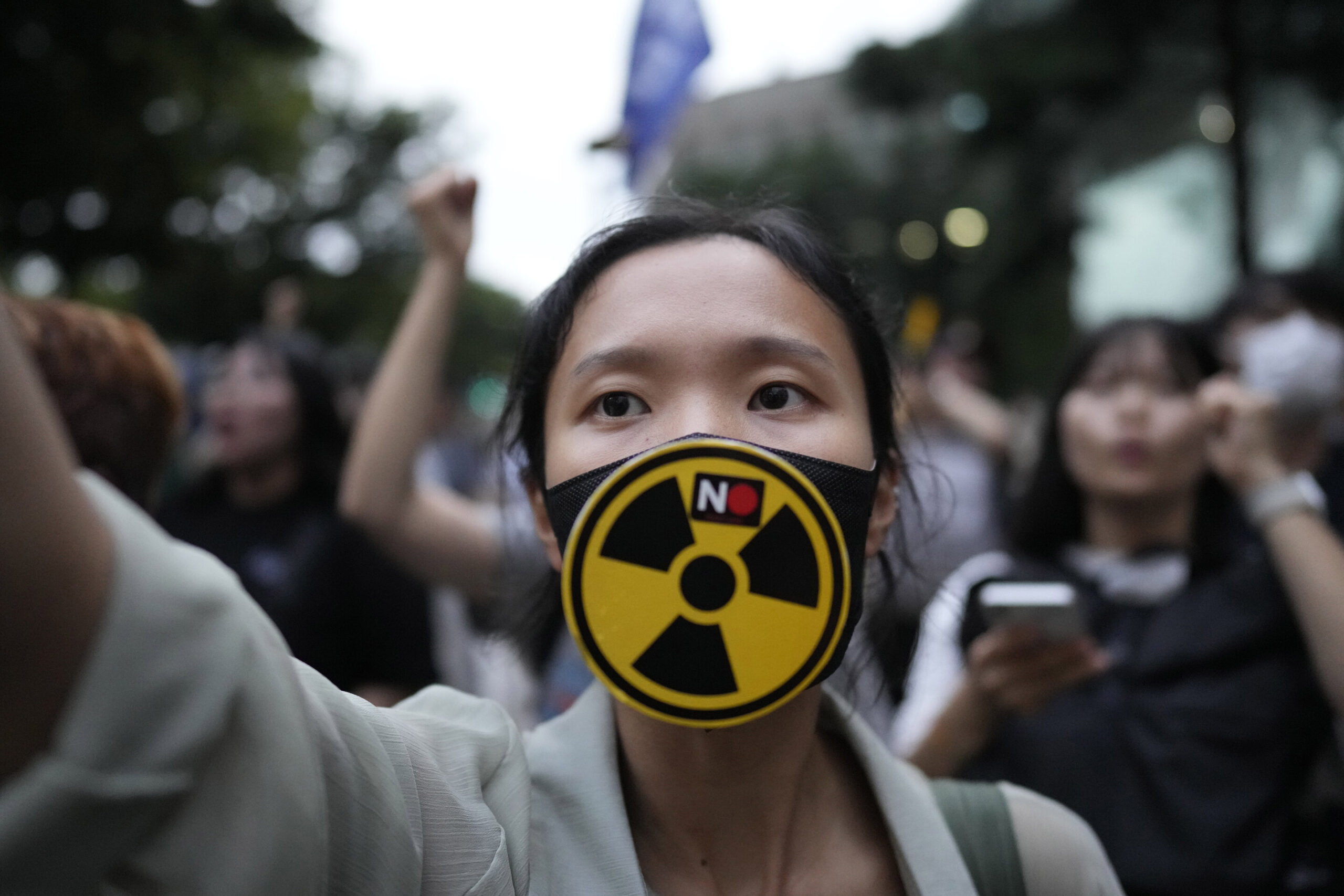
Japanese officials plan to start releasing treated but still slightly radioactive wastewater from the wrecked Fukushima Daiichi nuclear power plant into the Pacific Ocean as early as Thursday, 12 years after a massive earthquake and tsunami caused the meltdowns of three of its reactors and the continuing leakage of cooling water. Here is a timeline of events:
—March 11, 2011: A magnitude 9.0 earthquake strikes off the coast of northeastern Japan, triggering a towering tsunami that smashed into the Fukushima nuclear plant, knocking out power and cooling systems and triggering meltdowns in three reactors.
—March 12, 2011: A hydrogen explosion occurs at the plant’s No. 1 reactor, sending radiation into the air. Residents within a 20-kilometer (12-mile) radius are ordered to evacuate. Similar explosions occur at the two other damaged reactors over the following days.
—April 4, 2011: The plant operator releases more than 10,000 tons of low-level radioactive water into the sea to empty a storage facility so it can be used to hold more highly contaminated water, affecting fish and angering local fishing groups.
—April 12, 2011: Japan raises the accident to category 7, the highest level on the International Nuclear and Radiological Event Scale, from an earlier 5, based on radiation released into the atmosphere.
—Dec. 16, 2011: After months of struggle to stabilize the plant, Japan declares a “cold shutdown,” with core temperatures and pressures down to a level where nuclear chain reactions do not occur.
—July 23, 2012: A government-appointed independent investigation concludes that the nuclear accident was caused by a lack of adequate safety and crisis management by the plant’s operator, Tokyo Electric Power Company Holdings (TEPCO), lax oversight by nuclear regulators and collusion.
—March 30, 2013: An Advanced Liquid Processing System begins operating to improve the treatment of contaminated water.
—Dec. 22, 2014: TEPCO completes the removal of spent nuclear fuel rods from the No. 4 reactor cooling pool, an initial milestone in the plant’s decades-long decommissioning.
—Aug. 25, 2015: The government and TEPCO send a statement to Fukushima fisheries groups pledging to never release contaminated water into the sea without their “understanding.”
—March 31, 2016: TEPCO introduces an underground wall that is cooled to freezing temperatures around four reactor buildings as a way of reducing the amount of groundwater seeping into reactor basements and mixing with highly radioactive cooling water leaking from the melted reactors.
—Feb. 10, 2020: As the amount of leaked radioactive cooling water stored in tanks at the plant rapidly increases, a government panel recommends its controlled release into the sea. TEPCO says its 1.37 million-ton storage capacity will be reached in the first half of 2024.
—Feb. 13, 2021: A magnitude 7.3 earthquake hits off the Fukushima coast, leaving one person dead and injuring more than 180. It causes minor damage at the nuclear plant.
—March 31, 2021: Fukushima fisheries cooperatives announce their return to normal operations after almost all of their catch meets safety standards. The catch is still recovering and remains one-fifth of pre-disaster levels.
—April 13, 2021: The government announces plans to start releasing treated radioactive water from the plant into the Pacific Ocean in about two years.
—July 5, 2023: International Atomic Energy Agency chief Rafael Mariano Grossi visits the plant to see the water release facilities and says he is satisfied with safety measures.
—Aug. 22, 2023: Prime Minister Fumio Kishida, after visiting the plant to highlight the safety of the water release plan and pledging long-term support for fisheries groups, announces the discharge will begin as early as Thursday if weather and sea conditions allow.
-
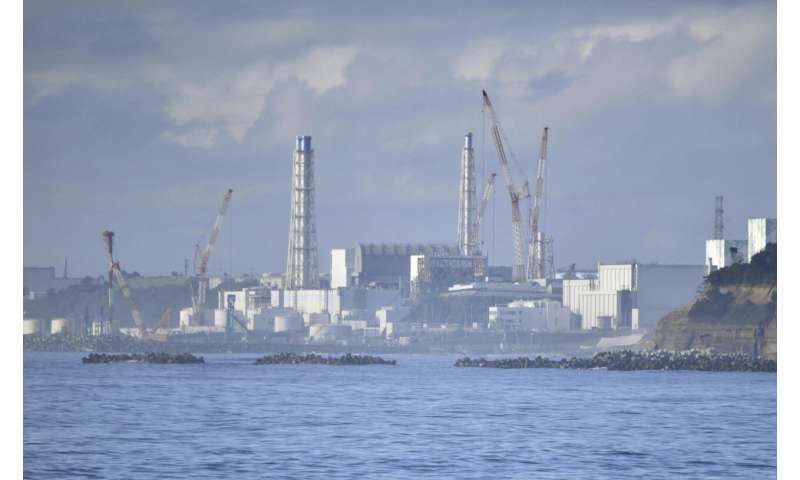
Fukushima Daiichi nuclear plant is seen from Namie, Fukushima prefecture, Japan Tuesday, Aug. 22, 2023. Japan will start releasing treated and diluted radioactive wastewater from the Fukushima Daiichi nuclear plant into the Pacific Ocean as early as Thursday, a controversial but essential early step in the decades of work to shut down the facility 12 years after its meltdown disaster. Credit: Kyodo News via AP
-
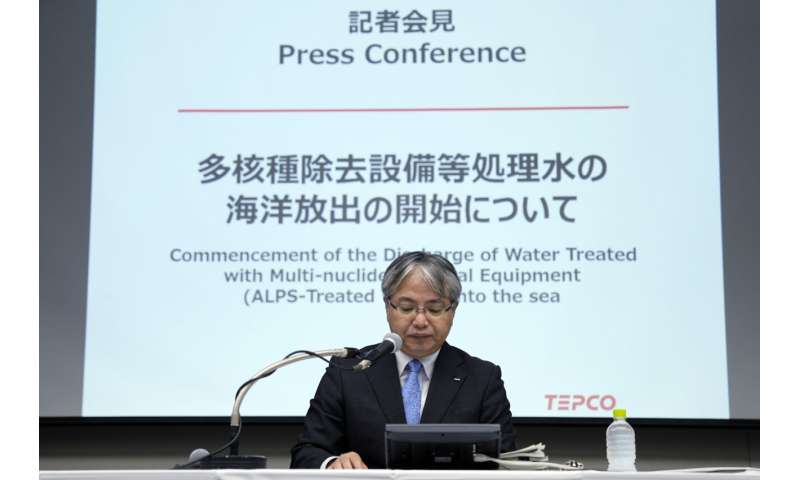
Junichi Matsumoto, the corporate officer in charge of treated water management for Tokyo Electric Power Co. (TEPCO) Holdings, which operates the Fukushima No. 1 nuclear power plant, speaks during a press conference at TEPCO headquarter building Tuesday, Aug. 22, 2023, in Tokyo. Credit: AP Photo/Eugene Hoshiko
-
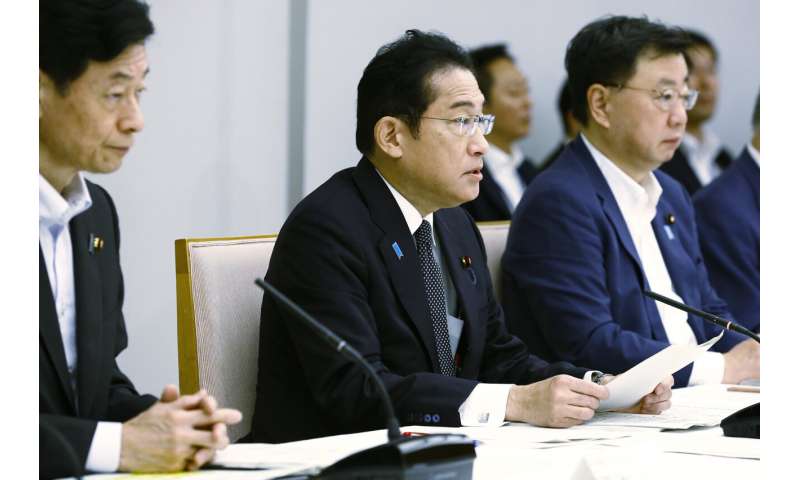
Japanese Prime Minister Fumio Kishida, center, speaks during a meeting with representatives of the Inter-Ministerial Council for Contaminated Water, Treated Water and Decommissioning Issues and the Inter-Ministerial Council Concerning the Continuous Implementation of the Basic Policy on Handling of Advanced Liquid Processing System (ALPS) Treated Water, at the prime minister’s office in Tokyo Tuesday, Aug. 22, 2023. Credit: Rodrigo Reyes Marin/Pool Photo via AP
-
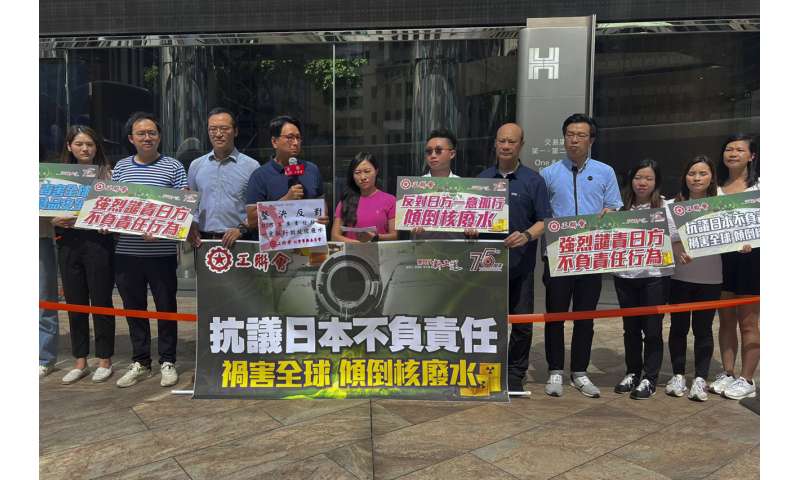
Joephy Chan, Hong Kong legislative councillor, center in pink, and members of the pro-Beijing labor group, the Hong Kong Federation of Trade Unions, hold posters as they stage a protests against the release of treated radioactive water from Fukushima near the Japanese embassy in Hong Kong, Tuesday, Aug 22, 2023. Hong Kong will ban Japanese seafood products imported from 10 prefectures after Japan announced to release Fukushima waste water from Thursday. Credit: AP Photo/Katie Tam
© 2023 The Associated Press. All rights reserved. This material may not be published, broadcast, rewritten or redistributed without permission.
Read the full article here


