


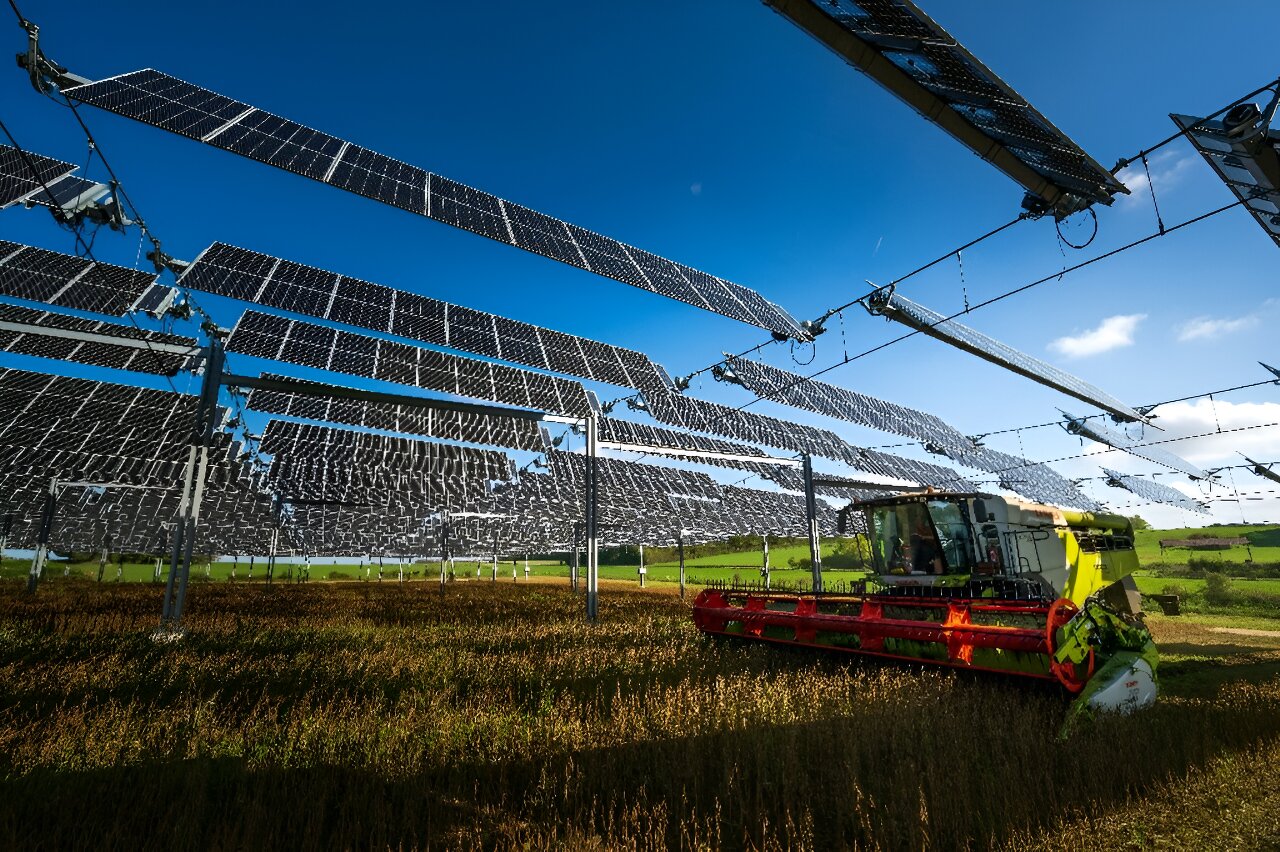
EU states and lawmakers clinched a deal on Tuesday to expand Europe’s clean tech production, from solar and wind to carbon capture, as the bloc faces off with China and the United States.
Brussels wants to reduce its reliance on China and make Europe more attractive for investment after the United States unleashed a $369 billion bonanza of clean technology subsidies last year.
The European Union announced the plans last year, spurred by concerns the US program, which includes tax credits, would lure European manufacturers away.
Belgium, which holds the rotating EU presidency, announced that negotiators had reached a provisional agreement.
The European Commission, the EU’s executive arm, wants at least 40 percent of green tech used in the EU to be produced in the bloc by 2030.
The law lists “strategic” technologies including nuclear energy as well as renewable energies like solar and wind.
The 40 percent target features in plans for a Net-Zero Industry Act to support the EU’s bid to become a carbon-neutral economy by 2050.
Under the law, public tenders would be weighed on criteria that could favor European companies, to counter similar moves by Beijing and Washington.
The draft also seeks to make sure businesses can obtain permits faster.
The law will enter into force after formal approval by EU states and the parliament.
“The most important thing is just to bring investment back to Europe and create a level playing field,” said Anja Lange, the Europe chief for the US-based manufacturer Solar First.
Shadow over Europe
Access to clean tech—and avoiding an overreliance on imported technology—is a major source of concern in Europe, and many fear the draft law alone may not be enough to change the equation.
China dominates the solar power industry, and Europe’s solar panel manufacturers have made repeated pleas for help from Brussels, accusing Beijing of not playing fairly.
The industry says more than 90 percent of Europe’s solar panel supply is processed in China, and China is the EU’s largest import partner for solar panels and wind turbines, according to official data.
Brussels has learned bitter lessons from the fallout of Moscow’s invasion of Ukraine, which left the bloc scrambling to find alternatives to Russian energy sources.
The EU has taken a tougher line on Beijing in recent years, seeking to “de-risk” its economy from China, as part of its efforts to ramp up domestic production.
“We cannot allow ourselves to be dependent on China. We already allowed ourselves two years ago with Russia. We cannot make that mistake again,” said Solar First’s Lange.
The “oversupply” from China is not limited to wind and solar, Lange told AFP, adding that the heat pump, electrolyser and battery industries are also under pressure.
Last year, the EU opened a probe into Chinese electric car subsidies, and there are hopes among some in the industry that it will launch another investigation into Chinese solar panels.
But the EU’s financial services commissioner, Mairead McGuinness, tamped down any such hopes on Monday, saying the bloc must carefully consider the impact of its actions.
“Any potential measure needs to be weighed against the objectives we have set ourselves when it comes to the energy transition,” she told lawmakers in Strasbourg.
© 2024 AFP
Read the full article here


