


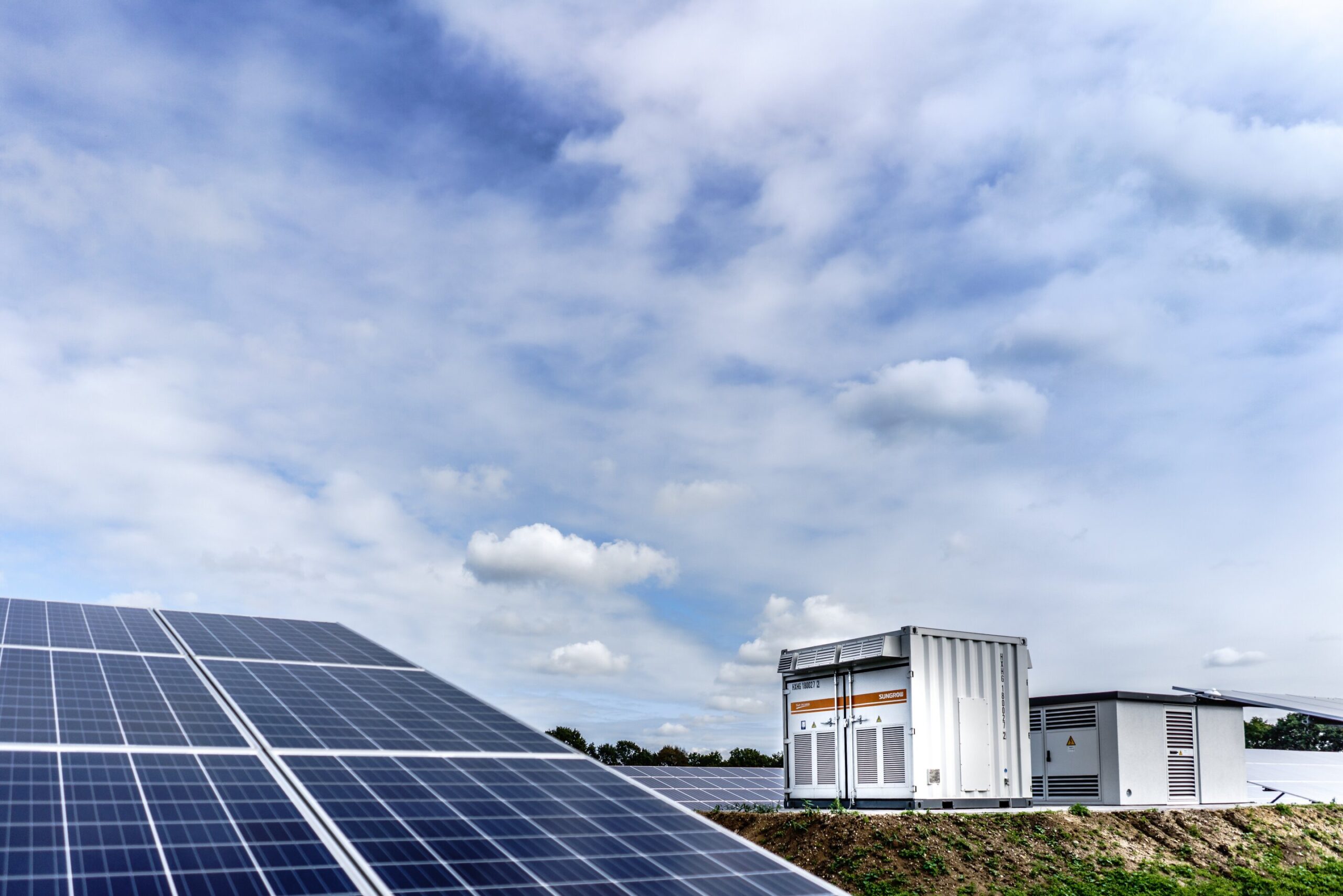
Better, more affordable energy storage is key to accelerating the transition away from fossil fuels toward renewable energy sources.
That was the message U.S. Department of Energy officials delivered Tuesday at Georgia Tech. Gene Rodrigues, assistant secretary for electricity, addressed attendees at an energy storage conference organized by the department as the federal government seeks new ways beyond lithium and other conventional batteries to store energy.
“If we can find ways to make long-duration energy storage cost effective, then we will have made all the difference in the world,” Rodrigues said. “Utilities in every corner of the country, all around the globe, will start investing in them in a way that’s massive.”
On Tuesday, the department announced $30 million from its annual appropriations to help fund innovations in energy storage. The funds could be made available to support research and development at colleges and universities, businesses, nonprofits, as well as state, local and Tribal governments.
The DOE has set a goal to develop and domestically manufacture energy storage technologies that can meet all U.S. market demands by 2030—a tall order given that so many of the essential components for current battery technology are expensive and come from overseas.
President Joe Biden has made renewable energy a key piece of his climate plan. The issue of battery storage is also a critical one for Georgia, which has seen a wave of investment in solar manufacturing and in electric vehicles and the supply chain for the batteries that power them. Last year, Georgia also announced energy storage company Freyr will build a more than $2.6 billion factory in Coweta County.
Eric Hsieh, the DOE’s deputy assistant secretary for energy storage, pointed to promising experiments in energy storage using more widely available, cheaper materials such as zinc, iron or even compressed air. Those are examples of the kind of innovation the department is hoping to promote, he added.
“We’re at a stage today where very large versions of your phone batteries can keep a home or business or campus powered for a few hours,” he said. “We want to get to a point where it makes sense to invest in batteries to keep someone powered for … entire days or weeks.”
It was the second high-profile visit by federal energy officials to Georgia Tech in recent weeks, following an event with U.S. Energy Secretary Jennifer Granholm last month that was co-hosted by The Atlanta Journal-Constitution. While touting the priorities of the Biden administration, Rodrigues told the AJC that modernizing America’s energy grid isn’t political.
As Georgia has become a major manufacturing hub for green tech, with billions in private investment flowing into the state to build new electric vehicle, battery and solar plants, there’s been plenty of political jockeying for credit. Georgia is also a fiercely contested swing state that Biden won in 2020 by fewer than 12,000 votes.
Not only have billions in federal incentives been directed to boosting green tech, but Georgia state and local leaders have also richly incentivized green tech companies to build here.
Rodrigues defended the DOE’s use of government resources to fund private sector innovation.
“We’re not investing in the private sector, we’re investing in research that can be used by the private sector,” he said. “We’re trying to help the market move along faster than it would on its own.”
2023 The Atlanta Journal-Constitution.
Distributed by Tribune Content Agency, LLC.
Read the full article here


